

Home Posts tagged exclusive (Page 9)
Education Sections

An architect’s rendering of the planned Pope Francis High School.

An architect’s rendering of the planned Pope Francis High School.

Many of the decisions hanging over Cathedral High School — and Catholic education in this region — since the tornado ripped through Springfield in 2011 have been answered. The diocese will rebuild, it will merge Cathedral with Holyoke Catholic, it will name the new high school after Pope Francis, and it will build the new facility for a population of roughly 500 students. But much work remains, principally the task of generating momentum for Catholic education at all levels, and creating a system that is truly sustainable.

Paul Gagliarducci says it’s likely ground won’t be broken for the new Pope Francis High School — the institution resulting from the merger of Springfield Cathedral and Holyoke Catholic High Schools — until September 2016.

While the location for the school (the site of the old Cathedral, destroyed by the 2011 tornado) has been chosen — after months of weighing various options — as has the name and nickname (Cardinals), and a working architect’s rendering of the facility has been circulated, much work remains to be done before a shovel can be put on the ground, he noted.

Indeed, administrators must decide how many classrooms to include, the nature and size of those facilities, and myriad other specifics before architects can begin, let alone finalize, designs, said Gagliarducci.

And from the big picture perspective, administrators involved in this endeavor have much more to do than construct a new school, he went on. They are also building enthusiasm — and a student body — for this facility, while also ensuring its long-term sustainability.

And all this is reflected in the unofficial title Gagliarducci, former school superintendent for the Minnechaug region and Somers, Conn., and long-time education consultant, now carries with regard to this endeavor.

That would be ‘interim executive director of the Pope Francis High School project,’ an assignment of indeterminate length — “I’m here as long as it takes to get the job done” — that will involve everything from coordinating the merger of the two schools to building the new facility, to designing a new governing structure for the diocese, all at a time when there are huge question marks hanging over the institution of Catholic education in this region and around the country.

Those question marks are reflected in statistics kept by the National Catholic Educational Assoc. (NCEA), based in Arlington, Va. They show that enrollment is not only down considerably from the peak years for Catholic education in the early ’60s, when there were 5.2 million students enrolled in 13,000 schools across the nation, but that the decline is an ongoing phenomenon, with no apparent bottom in sight.
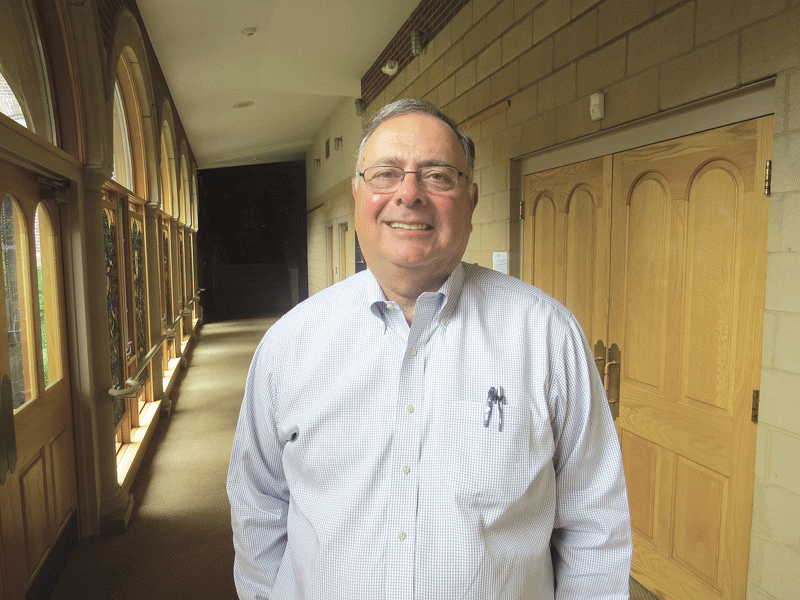
Paul Gagliarducci

Paul Gagliarducci says the unofficial goal for Pope Francis High School is to make it one of the few Catholic facilities that has a waiting list for students wishing to enroll.

Indeed, total Catholic enrollment was 2.42 million for the 2004-’05 school year, less than half what it was 40 years earlier; 2.12 million for ’09-’10; and 1.94 million for ’14-’15, a roughly 20% falloff over a decade. The rate of decline was even more severe for pre-school and K-8. Enrollment for that constituency was 1.8 million for ’04-’05, 1.52 million for ’09-’10, and 1.38 million for ’14-’15, a nearly 25% drop.

There are many reasons for this decline, said Sr. Dale McDonald, PBVM, Ph.D., director of Public Policy and Education Research for the NCEA, who cited everything from the recession that came near the middle of this statistical period, to a sharp drop in the number of priests and nuns who once taught in Catholic schools, to the financial woes facing a number of dioceses across the country.

Overall, though, sharply falling enrollment comes down to a continuing decline in the number of people both willing and able to pay the tuition ($9,000 on average nationwide at the high school level, and $3,800 at the elementary school level) for a Catholic education.

Over the past decade, decline in enrollment has averaged between 1.8% and 2.5% per year, and 21% of the schools have closed, McDonald went on, and there is little, if anything, to indicate that this trend will slow, let alone stop.

“Unless we have some serious interventions, enrollment will continue to decline and schools will continue to close,” she said, adding that by interventions, she meant actions that would enable more families to afford those tuition figures mentioned earlier.

Cathedral and Holyoke Catholic have certainly not been immune to these trends. At Cathedral, for example, enrollment was at or near 3,000 in the early ’70s, and stood at merely 400 when the tornado tore across Springfield on June 1, 2011.

The current trends and uncertainly concerning the future certainly played a factor in the lengthy discussion about whether to rebuild Cathedral, where, and how — and also in the preliminary design of the school and projected capacity — roughly 500 students.

That’s about 115 more than the combined enrollment of the two high schools at present, said Gagliarducci, adding that this number reflects both realism and confidence moving forward.

“Looking at the group of freshmen coming in, the class of 2019, has just over 100 students, and that’s a pretty good number,” he said, adding that this is the combined enrollment for both schools, “If we can maintain that 100 to 125 students, and I think we can, we’ll have our 400-500 students and something we can build on.” Such confidence, he went on, stems from everything from the impact of a new facility on those weighing their education options, to efforts to emphasize the value and benefits of a Catholic education.

But making the school accessible to families of all income levels will be crucial, and for this issue and its focus on education, BusinessWest looks at that challenge and how it might be met.

Setting a Course

As he talked about his assignment, the Pope Francis High School project, moving forward, Gagliarducci said that while it doesn’t say as much on any formal or informal job description, his mission is to make the new facility one of those Catholic high schools that actually has a waiting list for enrollment.

Doing so will accomplish many things, he went on, listing everything from fiscal flexibility to greater prestige to long-term sustainability.
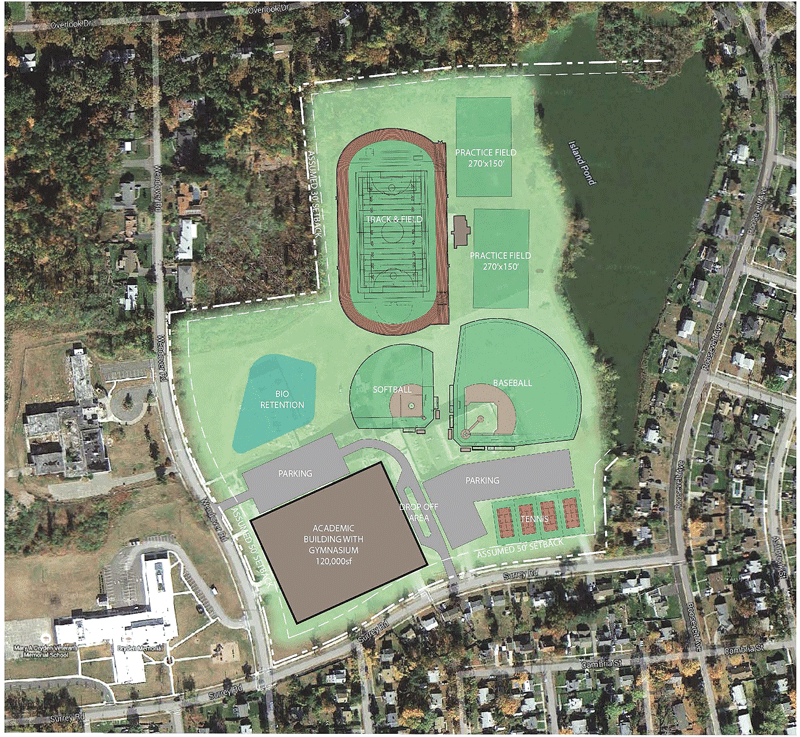
plan for the property on Surrey Road

While designs for the new school are still being finalized, the plan for the property on Surrey Road is coming into focus.

“Right now, people know we want them,” he said, referring to the current, and aggressive, recruiting efforts. “But if we can get to a point where we get 175 to apply and we only take the top 100 to 125, that’s going to bring some competition, and that’s going to be good for us; that’s what our hope is.”

Such an eventuality would have seemed impossible a few years ago, especially after Cathedral was relocated into a shuttered elementary school in Wilbraham months after the tornado — and this scenario still seems like a real stretch of the imagination to many.

But Gagliarducci and others involved with this endeavor believe such a fate is possible, if the school can focus on those two parts of the enrollment equation mentioned earlier, and put more people in those categories of individuals willing and able to pursue a Catholic education for their children.

Essentially, it will come down to the laws of supply and demand, and reversing the picture that has defined the scene both regionally and nationally for years — where demand doesn’t come close to approaching supply.

And that assignment will come down to a host of factors, said Tom Brodnicki, senior partner with Partners in Mission, a consulting firm specializing in Catholic education that has been hired by the diocese to help coordinate the merger of the high schools and raise money for the endowment fund.

He listed listing everything from building a market for Catholic education to growing the endowment so more students can attend; from broadening enrollment among certain demographic groups, such as the Hispanic population (more on that later), to convincing area parents that the sticker price for Pope Francis is a relative bargain; from building what he and others called a “culture of philanthropy” in the region, to convincing parents of the need to start saving early for a Catholic education for their children.

All of those action items would fall into that category of ‘interventions,’ as described by McDonald. The question is whether they will be enough to stem the current tide.

Indeed, creating a waiting list for Pope Francis will certainly be a challenge, said those we spoke with, noting that while there are, in fact, schools where demand exceeds supply (often where the supply has been reduced through a merger), there are many more that are closing their doors or merging with others, as has happened with the Springfield diocese.

Statistics from the NCEA show that while 27 new Catholic schools opened over this past school year, 88 consolidated or closed. And those numbers have become the trend over the past few decades, said McDonald, adding that the rate of closure and consolidation has actually slowed considerably because there are simply fewer schools left to take such steps.

And while the economy and even demographic trends have had something to do with these developments — the decline of many cities in the Rust Belt/Bible Belt has resulted in falling Catholic school enrollments in that traditional stronghold — tuition, the inability to meet it, and the fiscal difficulties that ensue, are the primary reasons.

“As tuition moves higher, fewer people are able to afford it,” McDonald noted. “But schools facing lower enrollment still have expenditures, or operating costs, and many of these costs are fixed or increasing dramatically, such as health insurance for teachers and staff.”

Per-pupil costs generally far exceed tuition and are met through fund-raising efforts by the diocese in question, she went on, adding that there is help available to families facing those tuitions costs ranging from scholarships to tax credits made available in many states.

But the burden is proving too steep for many, especially those families with several children in school at the same time, McDonald noted, adding that, overall, there is little prospect for improvement.

“Without programs that will provide help for families, it’s not a happy forecast in many respects,” she said, “when it comes to the ability of parents to continue to pay the tuition that’s required to have a quality education.”

One of the serious, and ongoing, challenges for those in Catholic education is attracting members of the Hispanic population, said Patricia Weitzel-O’Neill, president of the Barbara and Patrick Roche Center for Catholic Education at Boston College.

Hispanic populations are growing in most urban centers, including Springfield and Holyoke, and, overall, Hispanics comprise roughly 60% of the nation’s Catholic-school-age children (those ages 3 to 18), but only 2.3% of those children are enrolled in Catholic schools.

“This is the crux of the problem in Catholic education today,” she told BusinessWest, adding that there are several reasons behind that statistic, including the fact that many Hispanic parents did not attend Catholic schools, and doing so is not a “part of their culture.” But the inability to meet tuition costs is also a huge factor.

“One of the issues facing Catholic education today is the inability to recognize the need to diversify what we’re doing, to be much more welcoming, and to be more open to introducing and welcoming the second culture and the second language,” she said, adding that there is movement nationally to address the problem.

Crosses to Bear

It was in this environment that the Springfield diocese was forced to make critical decisions after Cathedral was essentially destroyed by the tornado.

And it took all of four years to make most of those decisions, including whether to rebuild, under what circumstances (eventually via a merger with Holyoke Catholic), where to build, and how big to build.

After surveying the landscape and analyzing the data, officials decided to build a 120,000-square-foot school that can handle a population of 500 students. That is a small fraction of the total number of Catholic high school students in this region from a typical year decades ago — and a figure smaller than many alums of those schools think is possible — but it is quite realistic, said Gagliarducci.

“Some people think we should be doing much better — some of the critics said earlier that this area should be able to support four high schools,” he said. “Dream on … that’s just not going to happen.”

But Gagliarducci stressed that the facility can, and hopefully will, be expanded to accommodate more students in the future.

Facilities such as the auditorium, gymnasium, and cafeteria are being designed for closer to 700 students, he went on, adding that they cannot be expanded later, and thus must be built accordingly. But additional classrooms and facilities can be added later.
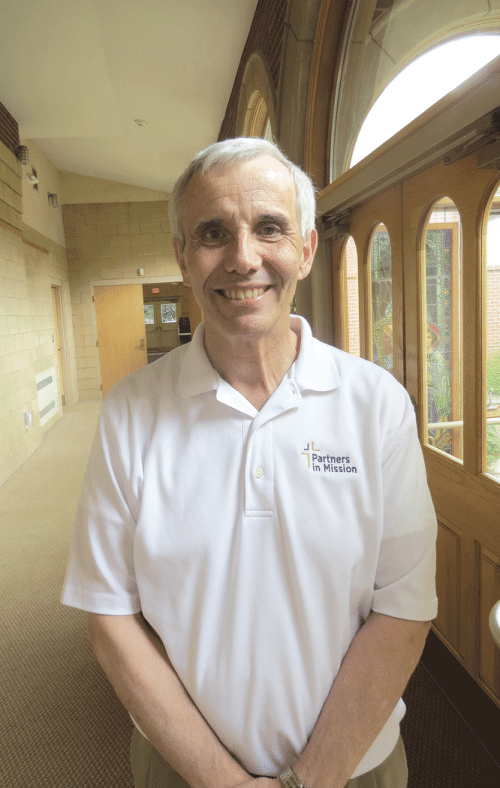
Tom Brodnicki

Tom Brodnicki says that one challenge for the diocese is to convince parents that their tuitions costs are a sound investment.

When asked how the diocese intends to arrive at the point where Pope Francis will need to be expanded, Gagliarducci and Brodnicki went back to the laws of supply and demand.

By building a first-class facility — not only a new building, but one outfitted with the latest technology and offering attractive programs of study — they hope to build demand. And it will take more than a new structure, because several area communities, including Longmeadow, West Springfield, Wilbraham (Minnechaug), and Chicopee (two facilities) have opened new state-of-the-art high schools in the past decade.

“The key is to develop a program that parents can get excited about,” Gagliarducci explained. “But ultimately, if I’m deciding as a parent to send my child to Pope Francis High School, I’m doing so because I believe in a strong religious education for my kids, so that has to be the paramount thing that’s going to attract people.

“But then you have to follow that up with a rich academic program,” he went on, “one where, at the end of four years, students are getting into the college of their choice; that’s very important.”

By growing an endowment, meanwhile, they intend to increase accessibility. Also, with economies of scale gained through the merger, they expect Pope Francis to be an efficient operation, one better suited to manage through the time it will take to build the endowment and grow enrollment.

“We believe that with the new facility and some of the excitement that it builds — along with this endowment fund, which will help with the affordability factor for some families — that a school with a projected enrollment of 500 is within reason,” said Brodnicki. “The real key is the level of academic excellence that’s provided, and convincing people that they are making a valuable investment in their children’s future.”

Elaborating, Brodnicki and Gagliarducci said Catholic education has not gone out of favor — it has simply become a less-appealing option for many families due to its cost.

The initial goal for the endowment, set by Bishop Timothy McDonnell, who retired last year, was $10 million. But Gagliarducci and Brodnicki want to set the bar higher to broaden accessibility and therefore meet demand.

Approximately one third of the 200 students now attending Cathedral receive a substantial amount of financial assistance to attend, said Brodnicki, adding that a large endowment and other forms of philanthropy will enable more low-income families to attend the school.

But to achieve sustainability, the new school must be able to attract students across all income levels, said Gagliarducci, adding that the goal is to continue the current breakdown — where roughly one third of the students pay full tuition, another third get some support, and the rest get substantial assistance — only with a larger student population.

Building Momentum

Surveying the national Catholic education scene, Brodnicki, who has had a front row seat to the changing landscape and has worked in a number of major metropolitan areas, said most cities are experiencing declines consistent with the statistics quoted by McDonald.

The Boston area is a notable exception, he added quickly, noting that most Catholic schools there are thriving, in part because the economy is more robust, but more so because of strong philanthropic support from wealthy individuals, many of whom are graduates of those schools and now serve on their boards of trustees.

“A few things happened in Boston,” said Brodnicki. “First, the economy took off; second, there is incredible wealth and a strong tradition of philanthropy. There are a number of Catholic individuals who have come together and made a firm commitment to Catholic education, especially the inner-city schools.”

The Western Mass. Catholic community can’t expect to approach that level of support, he went on, but it can — and, in essence, must — build a stronger base of philanthropic generosity if it hopes to create a sustainable Catholic education system.

And he said Cathedral, and to a lesser extent Holyoke Catholic, has a large alumni base, with many individuals in a position to provide support. The diocese must be more aggressive in reaching out to alums and making its case for support, he went on.

“Cathedral has a reputation for having many well-known graduates who have achieved wealth,” Brodnicki explained. “We’re going to go and visit those folks and lay out the case for support.”

While building a stronger base of support through its endowment and other forms of philanthropy, the Springfield diocese must also more aggressively promote Catholic education and convince current young parents, as well as those that will follow them, that it is a viable option and worthwhile investment.

Part of this equation involves making Catholic education more of a K-12 phenomenon, said those we spoke with, who again cited the more-rapid rate of enrollment decline at the elementary school level.

Springfield is a good example of that trend; not long ago there were five Catholic elementary schools in the city, but by the time the tornado touched down, they had been merged into one — St. Michael’s Academy.

Meanwhile, the diocese, as it goes about selling the new high school, must also sell a Catholic education, and this one in particular, as an investment, rather than as an expense that must somehow be met.

“People often view that $9,000 as tuition, not necessarily as an investment, Brodnicki explained. “We have to show someone who’s looking at spending $40,000 on their child’s education that, on average, graduates of Cathedral and Holyoke Catholic are receiving scholarship opportunities that average in the $80,000 to $90,000 range; people have essentially doubled their money in four years. Give me a stock that will do that, and I’m all over it.”

Grade Expectations

How well Gagliarducci, Brodnicki, and the diocese fare with the many aspects of the Pope Francis High School project remains to be seen. With some elements of the equation, such as the endowment, real progress may not be realized for years.

One thing that all agree on, though, is that given the many changes and challenges confronting those in Catholic education today, this will certainly be a stern test.

Ultimately, though, they believe this is a test they can, and will, pass.

George O’Brien can be reached at [email protected]
Construction Sections

Staying Plugged in to Opportunity

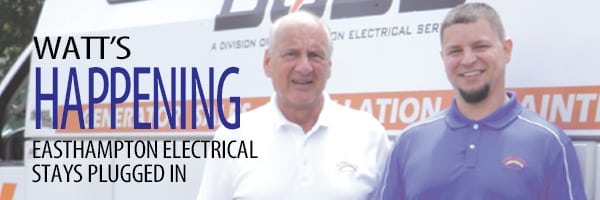
David Mitowski and Tim Hodnicki

David Mitowski and Tim Hodnicki stand near a van for Generator Boss, a new division created by Easthampton Electrical Services.

Easthampton Electrical Services, launched 60 years ago by Henry Mitowski, has always been entrepreneurial in nature, expanding from its roots in residential work to commercial customers, especially large apartment complexes. Today, this entrepreneurial bent continues with two new divisions, one focused on sales and service of home generators, and the other on a unique model for residential service. Overall, the company is keeping up with current trends — literally and figuratively.

Easthampton Electrical Services has been successful in a challenging niche market, and this track record is something President David Mitowski is quite proud of.

The company specializes in major apartment renovations, which is difficult work, because the units are usually occupied, and, unlike working in a new-construction setting, where electricians do their work and leave, they not only have to interact with residents, they also work alongside plumbers, carpenters, and other professionals who are doing renovations in the same unit at the same time.

“It takes a lot of teamwork and complex coordination, and can be slow and tedious,” said Mitowski. “We have to schedule things with the contractor and take part in daily and weekly meetings.”

The personality of their electricians factors heavily into the work because they need to be friendly and personable as the job may require moving tenants’ furniture, interacting with them, and explaining what they are doing.

“They need to put the tenant at ease, diffuse any animosity before it happens and do a really good job cleaning up. We leave a place in better shape than when we get there,” Mitowksi said.

But while the company has thrived on this demanding playing field, it has by no means been limited to it.

Indeed, as the firm started 60 years ago by Mitkowski’s father, Henry, soon after he finished his tour of duty with the Marine Corps, marks that milestone, it can also celebrate business diversity and an entrepreneurial spirit.

One could say that Easthampton Electrical has remained plugged in — figuratively speaking in this case — to changes within the industry and new and potentially lucrative opportunities.

The company has created two new divisions over the past few years, both of which are in the process of being trademarked.

The first, called Generator Boss, was born in response to recognized need after several recent weather calamities that created sizable and prolonged power outages, including the 2011 tornado and October nor’easter the same year.

As the names suggests, this venture involves the sale, installation, and service of home generators, and to date it has proven a sound addition to the company’s portfolio of services.

As has the other new division, called Electrical Experts, which is limited strictly to residential work, which runs the gamut from replacing an electrical outlet to resetting a circuit breaker or changing all of the wiring in a house.

What makes this service different from the way other contractors work is that everything has a pre-set price listed on a menu, and their trucks carry thousands of parts, making it highly unusual for an electrician to have to leave a job and return, which saves the homeowner and the company time and money.

Together, these various business divisions have made Easthampton Electrical a powerful player in the highly competitive local market, one with strong growth potential.

For this issue and its focus on construction, BusinessWest looks at the company’s first 60 years of keeping the lights on, and how the future looks even brighter.

Watt’s Happening

David Mitkowski said he started working with and beside his father when he was roughly 10 years old.

He told BusinessWest that all through high school and college, the plan was not to get involved with the family business. However, after graduating from college in 1973 with a degree in psychology, he realized he didn’t want to continue his schooling, which was necessary to pursue a job in that field.

“I was at a crossroads,” he said, while explaining why he decided to go join his father and eventually succeed him as president.

“My father had four employees at the time and did mostly small commercial and residential jobs, but I went to an estimating school and started bidding on big projects, such as schools and fire stations,” he went on, adding that his father handled the smaller jobs as he transitioned the company into the commercial, industrial, and bid market.

Since that time, Easthampton Electric has renovated more than 2,000 apartments and approximately 2 million square feet of commercial and industrial space. It has also completed more than 100 new residential projects and an equal number of new commercial and industrial jobs.

“At one point in the 80s, we had 35 employees. But then the economy took a downturn and we had to scale back,” Mitowski said, as he outlined the firm’s history and its tradition of doing quality work.

David Mitowski

David Mitowski says electricians at Easthampton Electrical Services are carefully chosen not only for their technical skills, but their ability to relate well to people.

Today, 75% of the company’s work involves renovating apartments, and Mitowski said it has become known for its ability to excel in this area. And due to its long history, in some cases it is returning to places it has worked at in the past; for example, it handled the original electric work when Heritage Green in Sturbridge was built 25 years ago, and went back for a second time as it helped rehab the apartment complex and bring it up to current standards.

Personality and the willingness to help others also comes into play in this niche, because the tradespeople working in an apartment must be willing to help each other.

“We might need to help a plumber lift a sink into place, but they will turn around and help us later,” Mitowski explained. “You can teach someone to do electrical work, but you can’t teach them respect for others and give them a likeable attitude, and we put as much emphasis on that when we hire someone as we do on their skills.”

The company recently finished rehabbing Colonial Estates in Springfield, and, overall, the work included installing new kitchens, bathrooms, lighting, smoke detectors, and safety upgrades in the 500-unit complex. “Right now, we’re working on an apartment complex in Pittsfield and also just finished 100 units in Pittsfield,” Mitowski said.

Although the atmosphere is not for everyone, Tim Hodnicki, who has been with the firm for 14 years and was recently named vice president, enjoys working in a team environment.

“We all come together to get a job done and try to complete it as quickly as possible. For example, everyone needed to revamp a kitchen goes in the same time and we may be able to install a brand new one in a day or two because we help each other,” he said. “The tradespeople work as a unit, which helps to forge strong relationships and leads to repeat business. It’s very different than working in new construction because everyone has to get along.”

Amping Up

In many ways, though, the second generation of the company has been as entrepreneurial as the first, especially in recent years and with the addition of new business ventures.

These expansion efforts have involved seizing opportunites as they have presented themselves, said Mitowski, and this was especially true with Generator Boss.

He said the idea was formulated after he received a call from General Electric and Briggs and Stratton asking if he wanted to sell generators.

“We had installed commercial models, but realized no one in the area was installing whole home automatic generators,” he noted, adding that although people were buying them from local stores, they had to hire a plumber and electrician to install them, and if something went wrong, they had no way to know which professional to contact.

Hodnicki agreed, and said people appreciate not having to call different professionals.

“We do the entire installation and all the maintenance, which includes yearly oil changes,” he explained. “The generators have been really popular; they kick on as soon as the power goes off and keep the heat on in the winter and the air conditioning going in the summer.

“They’re especially important if people have a well or have medical issues,” he went on, adding that price varies depending on the size of the home and how much the homeowner wants to operate, but the cost typically ranges from $5,000 to $10,000.

“They give people independence and security during a storm,” Mitowski said. “We installed one in Chester and the homeowner called us later and told us he lost power the next day.”

Meanwhile, the decision to launch Electrical Experts was made last September after Mitowski once again received a call.

It came from Success Group International in Florida, which asked if he was interested in joining a network of providers that use the same small business plan, which includes a pre-set price system, and is based on a model that was created after defining best practices for plumbers, roofers, heating and air conditioning specialists, and electricians.

Mitowski said the concept appealed to him, because the company hadn’t done much residential work after he transitioned it into the commercial/industrial sector.

The new venture involved a tremendous amount of training, and prices had to be adjusted to fit the Western Mass. geographic area, but the new branch of the company opened in March and has done very well.

“We’re very responsive, and schedule specific service times so customers don’t have to wait for someone to show up,” Hodnicki said.

He spent an enormous amount of time and energy training the electricians assigned to the new division and new method of pricing, but says it eliminates inefficiencies and is more cost effective than the usual way of doing business.

Mitowski concurs. “In the past, people would call us with a problem and we would send an electrician to their home who might have to go to the store and get a part. After they returned to the office, we would price the visit and send the person a bill,” he said, adding that one of customers’ biggest complaints has always been that a job takes too long. “We realize some people work faster than others, but this doesn’t affect the customer now because we charge a uniform price and they know what the work will cost right down to the penny before we start.

“Payments are made immediately after we finish, and we can get people approved for financing if they need it,” he went on. “No one else in the area has a system like this.”

Customers can also elect to sign up for a yearly plan, which costs $9.95 a month and gives them a discounted price on all services, a free annual inspection of their home’s electrical service, and waives any dispatch fees. “It includes checking every smoke detector and installing new batteries,” Mitowski said. “The yearly plan is especially good for people in older homes with aging electrical systems because we can keep an eye on things.”

Every electrician assigned to the division has been carefully screened and must undergo regular drug testing. “We believe it will help eliminate any doubts a homeowner might have about letting someone into their home,” Hodnicki said, adding that yearly background checks are also planned.

In addition, the company began installing EZ Breathe Ventilation Systems in people’s basements a year ago, a type of exhaust fan that can cover up to 7,000 square feet and maintain healthy humidity levels for $2 to $4 per month, eliminating the need for a dehumidifier.

“Before we decided to install the units we put one in the basement here. This building is about 100 years old and it got rid of the musty odor and all of the moisture,” Mitowski said, adding that the units cost $1,500 to $1,700 and bring fresh dry air into a basement while expelling odors, mold spores and contaminated air.

Wired for Growth

Mitowski is enthusiastic about the company’s new ventures, and says Easthampton Electrical’s future is bright.

“We have a lot of good things going on,” he said. “Our new divisions have exceeded our expectations and we’re very excited about their potential for success. We’re looking to grow, and this gives us a better chance to serve the local community. Rehabilitation work is great, but we want to serve more homeowners and make sure they get the value for their dollar that they expect.”

He added that Hodnicki wants to continue to expand the business, which is another bright spot for the company as it seeks out new ways to serve the residents of Western Mass. and Connecticut.

Commercial Real Estate Cover Story Sections

an architect’s rendering of the Mill District

Above, an architect’s rendering of the Mill District, the latest business venture for the Cowls/Jones family, which has operated everything from a farm to logging ventures, such as the one seen below, circa 1900.

Cowls Loggers 1900

Planting New Seeds at Cowls Mill District

It’s said to be a place “where history and opportunity meet.” That’s one of the marketing slogans being used for the Mill District in North Amherst. Over more than 250 years and nine generations of the Cowls/Jones family, the site has been home to everything from a trolley station to a cow barn; from one of the nation’s first electric saw mills to a massive building supply store. Now in its latest incarnation, it is being fashioned into a unique mixed-use facility, described, alternately, as a ‘destination’ and a ‘community.’

Cinda Jones says that each generation of her family, going back more than 250 years, has left its mark on the family business, which started as a dairy farm in what is now North Amherst — and also on the community.

Usually, several marks.

In 1741, for example, Jonathan Cowls, who would eventually serve the town as a selectman, acquired what was known as the Home Farm, which stretched across a long strip of land from what is now Route 63 west to the Hadley line. He would eventually expand the small farm into lumber manufacturing. And in 1768, Jonathan’s son, David Cowls, and Sarah (Eastman) Cowls built the farmhouse at 134 Montague Road. Nine generations of the same Cowls/Jones family have lived in that house, which has also served as the operations center for the family business.

Fast-forwarding more than 125 years, Walter Dickinson Cowls, or WD, as he was known, would expand that house. He would also help build the North Amherst Library and eventually give the family enterprise the name it still uses today — W.D. Cowls Inc. As a partner in Cowls & Childs, a contracting business, he built roads and undertook several large construction projects, such as the Amherst and Sunderland Street Railway System. He was also a selectman and later a state representative.

WD’s grandson, Walter Cowls Jones, meanwhile, would expand the business into real estate, and he’s credited with building one of the first, if not the first, electric saw mills in the country. He was Amherst’s water commissioner and chairman of the Planning Board. His son, Denison, founded DH Jones Real Estate in 1958 and built several apartment complexes. Denison’s brother, Paul, ran the family sawmill and timberland operations and built Cowls Building Supply on the Home Farm site in 1980.

“There’s a long legacy of business innovation and community involvement,” said Cinda Jones, Paul’s daughter and current president of W.D. Cowls Inc., and one that she and her bother, Evan, many cousins, and even a niece (the 10th generation involved with the family business) are continuing.

Cinda Jones, left, and Mollye Wolahan

Cinda Jones, left, and Mollye Wolahan stand in Sarah Cowls’ cow barn, currently being transformed into an Atkins Farms Country Market.

And while Jones and her bother have many accomplishments on their resumes — in 2011, for example, they orchestrated a deal that would preserve a 5.4-square-mile forest in Franklin County now named after their father — perhaps their most significant contribution to that family legacy is a development known as the Mill District.

An intriguing work in progress, it embodies the past, present, and future, and is an ambitious redevelopment effort that involves several of the buildings and business operations started or expanded by previous generations of the Cowls/Jones family.

For example, on the site of what used to be a trolley barn on the north side of Cowls Road sits a new development called, appropriately enough, the Trolley Barn. It now houses The Lift salon, the Bread & Butter restaurant, and several apartments on the upper floors. Across the street and a few hundred yards to the east, in what’s still known as Sarah Cowls Cow Barn (named after WD’s only child), an Atkins Farms Country Market is taking shape, with an August soft opening planned.

There are other buildings and sites still to be developed, including a 14,400-square-foot saw mill, a replacement for the one Walter Cowls Jones built and that burned to the ground in 2001; the so-called Onion Barn; several mill houses along Cowls Road, and former farmland stretching to Route 116 called Goat Meadow. Potential uses range from additional retail to facilities for the arts to senior housing.

But Jones told BusinessWest that this development is not simply about finding new uses for properties named by and for her ancestors. It’s also about creating what she described, alternately, as a community and a destination, something she believes is sorely needed in an area less than a mile north of the UMass Amherst campus and three miles from Amherst Center.

“The vision for the Mill District is for an eats, arts, and entertainment destination, built with respect for our industrial and agricultural past and reflecting that history,” she explained. “This is where history and opportunity meet; it would be a place where you would have unique experiences not found on the Internet, a destination for not just college students, but people of all ages.”

For this issue and its focus on commercial real estate, BusinessWest talked with Jones and Mollye Wolahan, vice president of Real Estate and Commercial Development for W.D. Cowls Inc. about the Mill District and how it has the potential to change the landscape in North Amherst in myriad ways.

Board Feat

As she talked with BusinessWest in that farmhouse on Montague Road built by David and Sarah Cowls, Cinda Jones was supremely confident that the new Atkins Farms market, and the Mill District as a whole, would thrive.

And when asked why, she quickly dove into a discourse on geography — and business — concerning that decidedly rural area north and west of Amherst, starting with the town of Gill, population 1,500, where she lives.

The new Atkins taking shape in the Mill District

The new Atkins taking shape in the Mill District, set for a soft opening next month, is expected to be an anchor for the North Amherst development.

“They call it a food desert around here, and with good reason,” she said, referring to the area that also includes Leverett, Shutesbury, Ashfield, Conway, Deerfield, and other communities from which people commute to Amherst and Northampton. “I live on Route 2, and there’s nothing between Amherst and Route 2 of any substance; there’s no grocery stores of any size.

“Most people who work at UMass, in Amherst, and in points beyond, commute from more-affordable towns,” she went on. “These commuters are demanding better shopping and stopping options on their way home.”

This food desert, coupled with the need to redevelop several of the family’s shuttered or underperforming facilities, such as the saw mill, eventually led to the years-long process of conceptualizing the Mill District and then making it reality.

“We always knew that we would have the chance to do what every generation before us did, which was to figure out what our generation needed and then build it on the Home Farm site,” Jones explained. “The saw mill was sucking wind — it was losing money on 20 acres of land a half-mile north of UMass Amherst, and we decided to build what we know this area needs.”

And also build what is permitted on the commercially zoned property, she added quickly, noting that attempts to amend the zoning to allow more residential density have thus far failed. If that situation should change, then the future course of the district may be reshaped. But for now, the company is dealing with the present reality — meaning both the zoning laws and needs within the community.

This goal for the property is captured in an architect’s rendering of the district that is used as a marketing piece. It shows a mixed-use facility teeming with activity of both sides of Cowls Road. The image represents that mix of commercial and residential development that is sought, as well as a sense of community that both Jones and Wolahan described.

“We want to create a sense of place here in North Amherst,” said Wolahan, who brings a diverse resume to her assignmemt, including work as community development director for the Town of Mountain Village, the resort town adjacent to Telluride in Colorado. “And we found with the opening of the Trolley Barn and also with people coming into our office to explore opportunities with us is that there is such a demand for services and activities in this area.

“There is a large community here that doesn’t have the same services available in downtown,” she went on, adding that there is considerable vehicular traffic in the area on Routes 116 and 63. “There are a lot of families and many students living here, and what we’re trying to do is build on what’s already here and create not just the bricks and mortar, but the sense of community as well.”

While talks with Atkins about creating a presence in North Amherst and, more specifically, on the Cowls/Jones property had been going on for years (more on them later) the first piece of the Mill District development was the Trolley Barn.

The Trolley Barn

The Trolley Barn, now home to The Loft salon, Bread & Butter restaurant, and several apartments, opened its doors last year.

The apartments on the second and third floors leased out quickly — no surprise in an area always starved for market-rate housing — but the businesses also got off to fast starts, said Wolahan.

“Bread & Butter was packed when it first opened,” she recalled. “And it has pretty much stayed that way ever since.”

What’s in Store

When asked how she eventually corralled Atkins as a tenant, Jones didn’t mince words, and only needed a few of them.

“We begged them, begged, them, begged them, and begged them some more,” she said, adding that to cinch a deal, the developers essentially took as much of the risk out of the equation as possible, building out the property to suit and pledging to expand it if (or, more likely, when, Jones predicted) need arises.

That property, a.k.a. the Cow Palace, was, as the name suggests, a functioning dairy barn until only a few decades ago and more recently served as a lumber-storage area. The property bears Sarah Cowls’ name, because it was her operation, said Jones, adding that she was a cattle farmer who also bred sheep, pigs, chickens, dogs, and peacocks, while also growing onions, corn, tobacco, and potatoes.

The barn was actually the third property on the site presented to Atkins as a potential new home, said Jones, adding that she first proposed the saw mill and later the Trolley Barn site, before the company became sold on the dairy barn.

As she offered BusinessWest a tour of the Atkins facility, Jones said the store represents mostly historic preservation, with most all of the old barn kept intact.

The new Atkins will not have a kitchen, so foods will not be prepared there, she said, adding quickly that prepared items will be transported to the new site from the South Amherst flagship facility several times a day. And overall, the new location will offer essentially everything the company sells — from apples and cider donuts to floral arrangements; from cheese to meats.

Atkins is expected to serve as the Mill District’s anchor, said Wolahan, adding that it will likely bring the volume of traffic that can attract other kinds of businesses and create the momentum needed to make that conceptual rendering of the area in question a reality.

Once Atkins is up and running and traffic within the facility increases, both Jones and Wolahan expect other pieces of the Mill District picture to fall into place.

Indeed, while walking past the old saw mill, closed in 2010, Jones said its future use is limited only by one’s imagination.

“We could tear that structure down and build a 3 ½-story building on top, and that would probably be the smartest thing to do,” Jones explained. “But with so many acres of open space, I’m hoping to lease that space.”

As an example of what might work there, she cited Kings Bowl, which has several locations in the Northeast and as far south as Orlando. Billing itself as “the classy bowling joint,” it features a host of games in addition to bowling — shuffleboard, skee ball, and air hockey, for example — as well as a restaurant and bar. Such a concept, said Jones, would certainly be appealing in the five-college area.

Meanwhile, another small barn on the property, known as the antique barn, is drawing some interest from a bank as the possible site of a branch and community center, said Jones, adding that those talks are preliminary in nature, as are discussions with UMass Amherst about utilizing one of the facilities as a possible home for startups.

saw mill on the family’s property

Cinda Jones says the saw mill on the family’s property, a replacement for the one Walter Cowls Jones built, presents a number of development opportunities.

As for Goat Meadow, the large open tract off Sunderland Road, Jones said there have been some discussions with the builders of senior-housing developments about that parcel. Amherst is rated as one of the most attractive communities nationwide for retirees, mostly because of the activities and life-long learning opportunities related to the five colleges, she went on, and there is a shortage of housing for such individuals.

Overall, discussions are being conducted with potential tenants in many categories, said Wolahan, adding that a number of multi-family housing developers have expressed interest because the zoning permits commercial businesses on the ground floors of properties and residential above, as seen in the Trolley Barn.

One of Wolahan’s current assignments is to finalize a master plan for the site, which will essentially act as a road map for developing the various properties and parcels.

Plane Speaking

As she talked about the need for a destination, one that would create experiences for people of all ages, Jones referenced her nieces and nephews, some of whom who are already working at W.D. Cowls, and thus represent the 10th generation of the family to do so.

“There’s no place for them to go around here, no place to go and have fun,” she noted, adding that creating such a place constitutes one of the many ways she intends for her generation to leave its mark on the Cowls business — and the community.

Indeed, the family that has been writing history for three centuries is poised to script some exciting new chapters.

George O’Brien can be reached at [email protected]

Features
BBBS Thrives Through the Power of Partnerships

Big Brothers Big Sisters of Hampden County, like the agency’s 370-odd other affiliates, specializes in creating matches that ultimately provide learning experiences for mentors and mentees alike. To do that, the organization relies on partnerships with a host of constituencies, but especially the business community.

Sergio Dias, seen here with Angel

Sergio Dias, seen here with Angel, says the ‘littles’ he’s mentored through BBBS have inspired him and motivated him to think differently about the problems he’s confronted.

Sergio Dias was asked about what he does with and for the young people he mentors through his participation with Big Brothers Big Sisters of Hampden County (BBBSHC).

He said much depends on the individual in question — he’s served as a ‘big’ to many of them over the years — and the issues they’re dealing with at the time. But many times, he noted, he’s advising the young men on college, everything from why it’s important to the nuances of an application form.

“Some of them just need support based on the issues they’re facing at home, while for others, it’s more about getting them ready for college, including all the paperwork that’s related to getting accepted to a school,” said Dias, an analyst in the Marketing Department at MassMutual. “For others, it’s helping them figure out what they want to do, what their skills are; I’m helping them find themselves.”

He started to elaborate, but quickly changed the tenor of the conversation, focusing on what his interaction with these ‘littles,’ as they’re called, has meant to him. And he stressed that this is an equally important part of the equation.

“Initially, I thought I was giving back — sharing my knowledge and experiences,” said Dias, who is currently mentoring Angel, who will start his freshman year at Springfield College in a few weeks. “But I was really surprised by how much I was learning from them, even though I have three kids of my own. Many times, I’ve been inspired by what these kids have going on in their lives and their outlook and perspective on things. I think I have issues and problems, and I see the issues they’re dealing with and how they’re confronting them, and it really motivates me to think differently.”

Heather Bushey, assistant director of Continuing Education at Bay Path University, can certainly relate.

She’s been a ‘big’ to Springfield resident Destiny for eight years now, and has watched her grow from a young girl in the second grade to a young woman soon to enter her junior year of high school.

Destiny has grown in a number of ways, obviously, but so, too, has Bushey.

“I’ve learned a lot about myself, that’s for sure — about my limits and abilities and what drives me as far as motivating factors and seeing her grow and benefit from the program,” Bushey told BusinessWest. “It’s a very rewarding experience, and it has certainly helped me grow as a person.”

Heather Bushey

Heather Bushey, right, has been a mentor for Destiny for eight years now.

In many ways, these stories are typical of those who become involved with Big Brothers Big Sisters of America, or BBBS, the working acronym for the nearly 100-year-old organization. And more of them are being written each year for the Hampden County affiliate, which could also be described with that adjective typical.

Indeed, it is like other BBBS chapters in that it:

• Serves an area that includes urban centers populated by large numbers of young people who are living in single-parent households or with grandparents or other relatives, and are very much in need of a positive role model and mentor;

• Struggles mightily to meet the demand for individuals — professionals and retirees alike — who are willing and able to serve in those roles. David Beturne, executive director of BBBSHC, said the chapter now serves roughly 225 young people at any given time, but could, if it had the needed resources and demand, serve twice that number; and

• Is very much dependent on partnerships with the community, especially the business community, to carry out its vital work. Indeed, BBBSHC has forged relationships with corporations and institutions ranging from MassMutual to Bay Path; from St. Germain Investment Management to Veritas Preparatory Charter School in Springfield, to effectively serve area young people.

The obvious goal moving forward, said Beturne, is to close that large gap between the number of young people who need mentoring and those who currently can be served. And to do that, the organization must generate more resources — each match between a ‘big’ and ‘little’ costs about $1,000 — and therefore create more of those critical partnerships.

For this issue, BusinessWest takes an in-depth look at the Hampden County chapter of BBBS to gain an appreciation not only for this organization’s broad mission, but how the business community plays a huge role in carrying it out.

Striking a Match

On the day that BusinessWest caught up with Bushey and Destiny for a few photos, they were on their way to dinner, although the specific destination was still to be determined.

They dine out together regularly, said Bushey, adding that they also frequent area malls — “Destiny loves to shop” — venture out for frozen yogurt, and take in various cultural events. They’ve been to downtown Boston, the beach, and a host of other destinations.

That list includes the Bay Path campus in Longmeadow. Bushey said she’s taken Destiny there several times with the goal of familiarizing her with that lifestyle and cementing a college education as a goal worth committing to.

“Right now, school is a tough experience for her,” said Bushey. “I try to get her to focus on setting goals for herself; we talk a lot about future goals and plans, with the hope that college will be part of that. I want to expose her to it now so she can start thinking about it.”

Relationships like the one between Bushey and Destiny are somewhat rare, at least in terms of this one’s duration, but, as stated earlier, typical in the way in which both the mentor and mentee learn from one another and grow personally.

Writing such scripts is the singular purpose behind BBBS, said Beturne, adding that it’s a reality, and a sad one at that, that there will always be a need for this organization, and that there are more young people who need help than there are individuals receiving it.

Addressing this reality is the core mission of the 370-odd BBBS affiliates, said Beturne, noting that the Hampden County chapter was launched nearly 50 years ago (1967) and has evolved greatly over the ensuing decades.

BBBSHC is one of several affiliates in Western Mass., but easily the most urban of those organizations, he explained, adding that Hampden County includes the area’s three largest cities — Springfield, Chicopee, and Holyoke — and some of the state’s poorest communities.

But the need for the agency’s services extends to each city and town in the county, Beturne went on, adding that this need is met through several initiatives, but primarily both community-based matching programs and site-based initiatives, which, as the name suggests, involves mentors visiting mentees at a specific site, such as a school, YMCA, or college campus.
In Hampden County, the specific programs are:

• The community-based model, used nationwide, whereby matches (such as Bushey and Destiny) spend at least eight hours a month together for at least a year and participate in all types of activities in the community;
• ‘Lunch Buddies’: During the school year, matches meet for lunch weekly at the child’s school for about 30 minutes;
• ‘Mentor Springfield’: During the school year, matches meet weekly for one hour at three Springfield middle schools. Activities ranges from writing in journals to working on homework; and
• The ‘Pathways Program’: Also during the school year, eligible students from Springfield’s Putnam and Sci Tech high schools meet with mentors from MassMutual (such as Dias) once a week for 50 minutes (more on this initiative later).

David Beturne, left, seen here with BBBSHC Director of Development Jesse Vanek

David Beturne, left, seen here with BBBSHC Director of Development Jesse Vanek, says the need for ‘bigs’ far exceeds the supply.

“We’re taking students from Sci Tech and Putnam and going to MassMutual’s main campus,” said Bertune, referring to that last program, obviously unique to this affiliate. “They’re seeing their big brother or big sister there. It’s a career-pathways program with a curriculum to it; we’re looking to immerse these students into the culture of MassMutual, where they learn what the company is and what it does, and how they might be able to make a career out of insurance.”

Results obviously vary with each individual, but a recent study conducted by the national research firm Public/Private Ventures in Philadelphia revealed that participants in BBBS programs are 46% less likely to begin use of illegal drugs, 27% less likely to begin using alcohol, 52% less likely to skip school, 37% less likely to skip a class, 37% less likely to hit someone, and, overall, more confident of their performance in school and better able to get along with their families.

Unfortunately, demand for mentors far exceeds supply, said Beturne, adding that, while BBBSHC serves about 400 young people a year, there are maybe 225 to 250 matches at a given time; some matches close out because the child reaches a certain age or moves out of the area.

“Demand is huge — I would like to serve at least 500 children in Hampden County, doubling our capacity,” he said. “If we could do that, I would be happy with that — I wouldn’t be satisfied totally, but I’d be happy.”

Escalating demand — there is currently a waiting list for mentors with upwards of 80 names on it (and that’s typical) — and a desire to meet it were the primary motivations behind creation of the site-based initiatives, said Beturne, adding that they allow more young people to receive mentoring services and more busy professionals to get involved in some capacity.

“As we were out doing recruitment, trying to get people to volunteer for the [community-based] program, the one thing we always heard was, ‘I’d love to, but I’m busy — I work, I have a family, I’m doing this or that,’” he explained. “So we started doing the school-based program, where a volunteer can see a child in school during the day. People are able to go out on their lunch break and spend 40 to 45 minutes with a child, maybe more.”

The Power of Relationships

Returning to his comments about how his participation with BBBS has helped him grow as an individual, Dias said he’s worked with six young people over the years, and each one has taught him something about life and how to deal with all that it can throw at you.

Dan Morrill

Dan Morrill says Wolf & Co. has supported BBBS in many ways, including the large team that took part in the annual bowl-a-thon.

He singled out ‘John,’ a 17-year-old he mentored a few years ago, who displayed an attitude, maturity, and sense of determination that belied his years.
“It felt like I was having a conversation with a 40-year-old,” Dias recalled, noting that the Springfield resident told him at their first meeting that he was determined to overcome a host of problems at home and not only graduate from Sci Tech High School and go to college, but graduate as a junior — and be valedictorian.

“At first I was like, ‘OK, yeah, sounds great … I’ll support you in any way I can,’” Dias said. “By the second month, I remember thinking, ‘he’s going to do it.’ He faced all kinds of challenges — the school didn’t want to let him do it at first, there were a lot of issues at home — but he did it. He got all kinds of scholarships I helped him with, and now he’s thriving at UMass. He was such an inspiration to me.”

Certainly not all stories involving BBBS participants involve such happy or unlikely endings — or beginnings, depending on one’s outlook. But everyone who takes part in this program benefits in some way, said Beturne, adding that the simple goal, again, is to enable more people — big and little — to take part.

And this brings him back to partnerships, all of which in some way enable BBBSHC to meet its mission and broaden its impact.

One such partnership has been forged with Bay Path, and it’s taken on many forms in recent years — from escalating participation in the annual BBBS bowl-a-thon, its largest annual fund-raiser, to the agency being named the school’s designated charity for the 2014 holiday party — but especially with Bay Path students going into Veritas Charter School as ‘bigs,’ creating 20 more of those all-important matches.

“Veritas is very much a college-preparatory school — their mission is to get students to move on, to graduate from high school and attend college,” said Beturne. “Being able to have Bay Path students go into the school and share their experiences — many of the school’s students are first-generation college attendees — is a win for Big Brothers Big Sisters, Veritas, and Bay Path. Their students are able to gain exposure and give back, and students at Veritas are able to see this real world, too.”

Rachel Romano, founder and executive director of Veritas, agreed, noting that students at the school participate with BBBS through the Bay Path initiative and others.

She said only 17 of the school’s roughly 240 students take part (again, demand is greater than supply), but those who do participate benefit from the relationship and the reinforced message concerning the importance of a college education and how it can become a reality.

“Our mission is to prepare our students for college,” she explained. “And what we love is the idea that these ‘bigs’ would stay with these guys and be a support person in their lives who would help them stay on the path to college once they leave Veritas.”

Carol Leary, long-time president of Bay Path, said the school is active with a number of area nonprofits, like BBBS, that reflect the its core values, enable its students to become active in the community, and support young people and education.

Several employers, including Bushey, have served as ‘bigs,’ while students have been doing site-based work at schools such as Veritas for three years, said Leary, adding that BBBSHC was this year’s designated nonprofit at Bay Path, and thus the focus of a well-orchestrated campaign of support.

“We go out to the community and ask if there is a nonprofit that they would like us to highlight and spotlight for Bay Path’s generosity at the holiday party,” she explained. “This year, Big Brothers Big Sisters had the most support of any nonprofit, so we chose them. They gave us a list of things of they need — everything from games for the children to books to gift cards so that the big brothers and big sisters can take a child to Friendly’s — and we send that list to the people at Bay Path, who make donations.”

Case in Point

Another key relationship has been forged with MassMutual, which had a desire to add a case-management component to an existing but evolving mentorship program, and found a willing partner in BBBSHC.

“We wanted to look at mentoring somewhat differently, and look at how we could use mentoring as a method to help focus students on college- and career-readiness issues,” said Pam Mathison, a community-responsibility consultant for the company who specifically focuses on education programs within the city of Springfield, as she talked about the corporation’s larger Career Pathways initiative.

“Initially, we started working with Mass Mentoring Partnership, and they helped build the model along with Springfield School Volunteers and the Springfield School Department,” she went on. “As we got into the experience, we determined that we needed a mentoring partner whose job is the management of a mentoring program, and for that, we approached Big Brothers Big Sisters.”

The motivation for the partnership was to improve the overall experience for both the students and the mentors, she went on, adding that this has certainly happened since the relationship began more than three years ago.

Roughly 40 employees across virtually all departments and all levels within the corporation have made a three-year commitment to serve as ‘bigs,’ said Mathison, adding that students, like Angel, are recruited during their freshman year and essentially begin work with their mentor during their sophomore year.

As with Bay Path’s initiative, there are multiple winners in this scenario, including the company, which is always mindful of creating a pipeline of future employees, the students themselves, and BBBSHC, said Beturne.

He noted that the organization benefits from partnerships with companies large and small, whose employees make donations ranging from stints as ‘bigs’ to service on the board of directors, to raising money through the annual bowl-a-thon.

St. Germain is one of those companies, and its president, Michael Matty, said the support stems from need, but also from the results generated by the agency.

“I have a high level of involvement with a lot of organizations, but rarely do I see people more passionate than those at BBBS,” Matty said. “I love passion; their passion is one of the reasons we are involved. But as a businessperson, I also recognize that passion is perhaps pointless if there are no results.

Mike Matty

Mike Matty says BBBS might fly under the radar, but its impact on the lives of underprivileged youth will reap long-term benefits across the region.

“BBBS is an organization that produces results,” he went on. “They perhaps don’t get the recognition that I feel they deserve because their results are impacting youth, and underprivileged youth at that. Their mission is to help the kids who will be an integral part of our local community, where we all work and run businesses. We can’t lament the local situation without working at doing something to change it, which is what they do every day.”

Another prominent local partner is Wolf & Co., the Boston-based accounting firm with a large Springfield presence.

Dan Morrill, CPA, a principal responsible for the company’s Professional Practice Group — and a one-time ‘big’ — said the company’s support comes in many forms, from his service on the board of directors to a large, company-wide turnout for the bowl-a-thon.

“The first year we had a bowling team, I think we had three people — this year, we had about 70,” he explained. “That speaks to how the company values the important work Big Brothers Big Sisters does within the community. Giving back is a big part of the culture at Wolf, and this organization has always been one of those we choose to support because it is really making a difference within the community.”

Work in Progress

Bushey told BusinessWest that young people “age out” of BBBS when they reach 19. By that, she meant that the formal relationship between the ‘big’ and ‘little’ ends.

Often, however, a new one begins, she said, adding that the young people sometimes remain active with the organization in several ways as alums, while staying in touch with their mentor.

“I definitely anticipate remaining involved with Destiny,” she said, adding that she doesn’t know what the future holds for her, but intends to keep providing whatever support she can.

In a nutshell, that’s what this organization is all about — people stepping up, getting involved, and positively influencing young lives.

It takes individuals with time, energy, and commitment to make such a difference, but overall, it takes a community to enable this agency to meet its all-important mission.

George O’Brien can be reached at [email protected]

Cover Story Luxury Living Sections
GreatHorse Moves Strongly Out of the Gate

More than three years — and $45 million — after what started off as a basic renovation of the Hampden Country Club golf course, GreatHorse has made its debut. This new name is not followed by ‘golf club’ or ‘country club,’ said President Guy Antonacci, because it is much more than the former, and is not the latter, in the traditional sense of the word. Instead, management is calling this a ‘lifestyle club,’ and say it more than meets that description.

Guy Antonacci

Guy Antonacci says GreatHorse is a “lifestyle club,” a statement backed up by the size and amenities of the clubhouse, seen here from the course.

As Guy Antonacci remembers things, it was supposed to be just a “facelift.”

That was the term he used to describe what his family, owners of USA Hauling and a number of other business ventures, intended to do with Hampden Country Club when they acquired it at auction in early 2012.

The initial plan, he told BusinessWest, was to take a club, opened in 1973 and that was, by most accounts, tired — an adjective that could be applied to the course, clubhouse, and practically every other aspect of the operation — and make it far less so.

They started with the sand traps, eventually investing more than $2 million in work to refurbish them. But as that undertaking progressed, it became clear that the work couldn’t stop there.

“This project has evolved 10 times,” he explained. “It started with bunkers and drainage, but then you realize the bunkers don’t match the grass on the greens, and they don’t match the fairways. You re-grass the greens, and then you say, ‘the greens are 40 years old; we’re putting all this money into everything else … we might as well redo the greens.

“That facelift … well, it turned into full-blown plastic surgery on the entire body,” Antonacci, the club’s president, added with a hearty laugh, noting that what happened on the course also transpired with the clubhouse, added amenities (everything from a pool to bocce courts), and a new, separate banquet facility a few hundred yards from the first tee.

Roughly $45 million later (no, that is not a misprint), GreatHorse — a name chosen in a nod to one of the family’s many entrepreneurial pursuits, a horse-breeding operation — is ready for prime time.

Well, sort of. The course is open, but work continues, specifically on a redesigned, lengthened, and toughened finishing hole. The rambling, 25,000-square-foot clubhouse, described by Antonocci, the club’s president, as “mountain rustic,” is getting some finishing touches, especially in the pool/cabana area and those aforementioned bocce courts, but is otherwise ready for members. The banquet facility is still under construction, but there have already been a number of bookings, and the first wedding is expected early next year and perhaps by the holidays.

As for those members, there are already close to 600 of them, said Antonacci, who stressed that he was counting individuals, not memberships (there are roughly 170 of those). And he’s quite proud of that distinction.

Indeed, the name Great-Horse is not followed by ‘Country Club,’ ‘Golf Club,’ or anything else, he said, and for a reason. It is not designed to be either of those, in the strictest sense of the words.

Instead it is what he called a ‘lifestyle club,’ one that is already appealing in a huge way to families.

ExteriorClubhouse“I think a big part of our early success is owed to the fact that we’re very kid-friendly,” Antonacci noted, listing facilities and activities ranging from a playground and pool to a planned kids’ movie night. “The golf-only model, or the old country-club mentality, clearly hasn’t worked in this region over the past 10 to 15 years; we’re calling ourselves a lifestyle club, and we want activities for not just the husband and wife, but everyone, right down to very young kids.”

GreatHorse, the facelift that became a full-body makeover, was designed to be different, and it has already succeeded in that mission, said Antonacci, adding that members and potential members alike recognize and appreciate the difference between this facility and more traditional clubs.

The facility is opulent, to be sure — from leather seats on the golf carts to individual wine lockers in the 160-seat dining room (there are 24 of them, and only a handful remain to be sold) — but also casual, or “comfortable,” as Antonacci put it.

That means jeans are allowed in the dining room and the men’s lounge, complete with its majestic views and mounted deer and elk heads (many of which are trophies Antonacci has bagged himself), and there is no prohibition on cell-phone use, as there is in many clubs.

“We want members to feel comfortable; we want members to feel relaxed,” he explained. “We don’t want guys to feel like they’re walking on eggshells; we want it to be an extension of your home.”

For this issue and its focus on luxury living, BusinessWest paid a visit to GreatHorse, a tour that certainly revealed why this facility with the great view is worthy of that designation ‘lifestyle club.’

Going to Great Lengths

Antonacci has some simple advice — some might call it a warning — for those looking to kick the tires on GreatHorse and see what all the fuss is about.

“If you don’t intend to join, you probably shouldn’t visit this place,” he said with a voice that blended sarcasm with a strong dose of seriousness.

The implication was clear, and those sentiments have been backed up by the club’s strong performance out of the gate. Indeed, those who do visit — and have the wherewithal to join the high-end club — are finding it difficult not to eventually sign on the dotted line, Antonacci said. “We have a very high close’ rate.”

That’s because there is much more to tempt potential members than the course, although that’s a good place to start. Other selling points include everything from massage rooms in both the men’s and women’s locker rooms to the 30-odd TVs scattered around the facility; from the view out the back of the clubhouse to the many aspects of the operation that make it family-friendly.

And it all started with that bunker-restoration project in the late spring of 2012.

Turning the clock back more than three years, Antonacci said his family, always looking for solid business opportunities, set about finding one in what most would consider an unlikely place, literally and figuratively, at that time.

The dining room in the GreatHorse clubhouse overlooks the course.

The dining room in the GreatHorse clubhouse overlooks the course.

Indeed, the golf industry, which had been thriving in the years after Tiger Woods appeared on the stage in the mid-’90s and gave the game a huge dose of adrenaline, was still suffering mightily several years after the Great Recession took a severe toll on public courses and private clubs alike.

A number of area clubs were either officially or unofficially for sale, and Antonacci said his family looked, to one extent or another, at several of them, including Hickory Ridge in Amherst and Crestview in Agawam.

The search eventually ended at Hampden, a course and a club that had certainly seen better days but had a spectacular view and what Antonacci described as “good bones.”

What was on those bones obviously needed some work, though, and it eventually came in waves, and in many respects mirrored the experiences of the homeowner who does over one aspect of a room and then realizes this necessitates other steps. And when that room is finished, the others must be made over as well.

So it was with GreatHorse.

While creating a championship golf course, the new owners decided they needed not simply a makeover of the clubhouse, but something new, big, and bold.

“Originally, we were going to fix up the banquet hall and generally leave the old building as is,” Antonacci said. “But we knew that, to do it right, we would have to get rid of the old facility, and that’s when we decided to go full steam ahead with building a new clubhouse.”

And while Guy and one of his brothers, both avid golfers, essentially presided over the course makeover, the new clubhouse was a family affair.

“Everyone got involved,” he recalled, adding that the firm given the assignment to design the clubhouse, Portsmouth, N.H.-based TMS Architects, was given some simple instructions — design something elegant and distinctive, yet also “casual.”

And by all accounts, it delivered, with a facility that includes a full fitness center, a salon, the massage rooms, and a Dale Chihuly chandelier near the front entrance.

“It’s upscale enough to charge what’s being charged,” Antonacci explained, adding that the structure looks more like it belongs in the Rockies than in Western Mass. “But it’s laid-back enough to where you can come, kick your shoes off, relax, and not have to worry about rules.”

Mane Attraction

Billy Downes remembers carrying two of those old-style (and quite heavy) leather golf bags at one time when he caddied at Hampden just after it opened.

That’s why, when it was suggested that the course, with several steep climbs, is difficult to walk, he just smiled.

Downes has a long history at Hampden. He caddied there, played out of the course, and was its pro, after an earlier stint at nearby Elmcrest, when the club went on the auction block in 2012. He told BusinessWest that the creation of GreatHorse has stimulated a great deal of interest and speculation across the region, and in some ways it has re-energized the local golf market.

“I’ve been in the golf business my whole life, and on this end (being a club pro) for the past nine or 10 years, and I’ve never seen in that time what I’m seeing here,” he said. “People come in, whether they’re from another club in this area or not, and their attitude is totally changed. They’re excited — they’re excited to play golf again, they’re excited to be here … it’s fun to see.”

And the course itself is a big reason for this enthusiasm. Redesigned by noted course designer Brian Silva, it is now easily among the best tracks in the region and is already being mentioned as a potential U.S. Open qualifying site and host of state and regional tournaments such as the Mass. Amateur.

Capable of being stretched to just over 7,300 yards, the course maintains, for the most part, its original routing, but is otherwise entirely new. That includes dramatic makeovers to the first and 10th holes, which featured blind tee shots down the mountain and were widely criticized by players.

“It’s a great test of golf for people of all ability levels,” said Downes as he offered a quick tour. “We’ve created what is sure to be a great golf experience.”

To ensure that goal is reached, the club is planning a large teaching facility, and has constructed a huge practice area and three putting greens.

The large pool area at GreatHorse

The large pool area at GreatHorse is one of many features that have made it attractive to families.

But Antonacci and GreatHorse General Manager Bryan Smithwick stressed that there is much more to this facility than the course. Indeed, the tour revealed everything from a huge outdoor patio area with five TVs to two semi-surround golf simulators, suitable for lessons and playing a host of courses virtually; from the massage areas to the so-called ‘club room,’ complete with several large TVs, which Smithwick described as an ideal setting for fantasy-league draft nights; from the huge pool area to a tennis and paddleball complex currently under construction.

Overall, the clubhouse and adjoining facilities were designed with the same philosophy as the golf course — to provide an enjoyable experience.

And everything in the package has to succeed with that goal, said Smithwick, adding that as much attention is paid to the food and wine being served as there is to the grass on the greens.

“You can have all this,” Smithwick said, gesturing to the golf course seen outside the windows of the men’s lounge, “but if the food doesn’t match, you’re not going to be successful.”

The goal is to make the club a nearly year-round operation (it will close just after the Super Bowl next February and re-open a month later for March Madness) and to become a family’s restaurant of choice.

Officially open just a few months now, the club has caught the attention of the buying public, said Antonacci, adding that the more than 170 memberships sold thus far far exceed the goals and expectations for this date.

“In the beginning, maybe six or eight months ago, we were saying that we’d be happy to get 75 or 80 memberships to start, and they’d bring their friends, and everything would catch on the second year,” he recalled. “We thought the first year was going to be extremely light, but that hasn’t been the case at all.”

And when one does the math and divides the number of members by the number of memberships, it’s clear that GreatHorse is appealing to its intended audience — families.

They hail from several surrounding communities in Massachusetts and Connecticut, and even one from Boston. Thus far, the club has relied solely on word-of-mouth referrals, said Antonacci, adding that more formal, targeted marketing is planned.

When asked about the overall goal for memberships, Antonacci said common sense will ultimately dictate a number.

“A lot will depend on activity — some people play once a month, others six days a week,” he noted. “We’ll probably cap the golf memberships at 275 to 350; once we sense that the place feels crowded, we’ll shut it down. One thing we want to avoid is a guy showing up on Saturday morning and not being able to get out for several hours.”

Antonacci didn’t get into any details on rates, offering instead to qualify the price structure. “We like to say that we offer Rolls-Royce value at Audi prices.”

Gait Attraction

Antonacci said that most of the golf publications and other types of periodicals that might review the course and the overall operation won’t do so for at least a few more months.

And those at GreatHorse want it that way.

They would prefer those writers and editors to see and experience a finished product, and, as mentioned earlier, this one isn’t quite finished.

But it’s not too early to declare this one of the more intriguing regional business stories of 2015 and a venture that, like the horses that inspired its name, will run hard and fast in a crowded field of competitors and likely emerge a big winner.

George O’Brien can be reached at [email protected]

Banking and Financial Services Sections
130 Years Later, PeoplesBank Still Reflects the Character of Its First President

Doug Bowen

Doug Bowen says PeoplesBank shares many of its values with its first president, William Skinner.

William Skinner, Holyoke’s most noted industrialist and philanthropist, was known as an innovator, someone who cared about his employees, and a business owner who was deeply involved in his community. Roughly 130 years after he became the first president of what was then Peoples Savings Bank, the institution still reflects Skinner’s values.

Sarah Skinner Kilborne says that, as a child, she heard little about her great-great-grandfather, William Skinner, founder of the Skinner & Sons Silk Manufacturing Co. and Holyoke’s most noted industrialist and philanthropist.

Actually, she heard far more about the company, which had been sold before she was born, than she did about the man, which created first her curiosity and later a fascination concerning his life and times.

Indeed, she never knew about Skinner’s youth in London, where he grew up in abject poverty and vowed to escape from that life. (Actually, no one knew about those years, because Skinner rarely, if ever, talked about them to anyone). And she also heard very little about perhaps the most important chapter in his life — how he rebounded remarkably from a catastrophic flood in 1874 that destroyed his mill in Skinnerville (near Williamsburg) and built anew in Holyoke.

Intrigued by what she came to know about that latter episode, Kilborne became determined to find out more. Years of intense research resulted in her book American Phoenix, published in 2012, which chronicles how Skinner turned that disaster into destiny.

Sarah Skinner Kilborne

Sarah Skinner Kilborne says she was at first curious about her great-great-grandfather, and then fascinated by his life and times.

“I never heard much about William Skinner the man,” she told BusinessWest. “I knew who he was, I knew he was the founder of the family company, I knew he was my great-great-grandfather. But I knew little about him.”

In the course of researching and writing her book, Kilborne said she learned a great deal, about not just what he did, but how and why. Among other things, she said, he was:

• An innovator. “He took advantage of the most modern machinery, kept an eye on the market, looked for opportunities, saw the big picture, and always looked ahead,” she said;
• A philanthropist who was involved with, among other things, the creation of Holyoke Hospital, the Holyoke Public Library, and the city’s YMCA;
• A business owner who cared deeply about his employees. “If he saw a hard-working employee really struggling and just not able to get ahead, he might step in and pay off all of that man’s debts to help him get a fresh start”; and
• As implied earlier, someone who didn’t glance back. “He was an immigrant who had suffered a terrible childhood, and he’d done everything he could to escape it,” Kilborne said. “He didn’t look back to the past; he cared about the future.”

And those are the very same qualities that still define PeoplesBank, which Skinner served as its first president when it was known as Peoples Savings Bank, said Doug Bowen, who now has that same title and has been with the institution for 40 of its 130 years.

As the bank celebrates its milestone anniversary this year, it is not marking that number or another figure ($2 billion in assets, which the institution just passed), as much as it is highlighting those traits it still has in common with Skinner, he explained.

“If William Skinner were to look at the bank today, he would see that, in some ways, nothing has changed, and in another way, everything has changed,” said Bowen, now in his 10th year at the helm of the Holyoke-based institution.

Certainly, the figures on the ledger sheet have changed. The bank, which opened on St. Patrick’s Day in 1885 and tallied two accounts totaling $65 that day, had $74,000 in deposits its first year of operation, and now has more than $1.5 billion. The number of branches has grown as well; there are now 17.

But the bank is still known for those qualities Skinner instilled in it, including philanthropy — it’s owned a spot on the Boston Business Journal’s list of the state’s largest corporate charitable donors for several years now; innovation, which comes in many forms, from the considerably ‘green’ quality of its recently opened branches to the so-called ‘customer innovation lab’ now taking shape on the fifth floor of the bank’s headquarters building; and as a thoughtful employer — the bank has earned status on the Boston Globe’s list of the best places to work in the Commonwealth the past two years.

“We’re still a mutual bank — our charter is basically the same as it was in 1885,” said Bowen. “And our pillars, our values of innovation, community support, the environment, and employee engagement … there are a lot of parallels and lot of crossovers between where we are today and where we were 130 years ago.”

For this issue and its focus on banking and financial services, BusinessWest details how PeoplesBank can draw some straight lines between the values of its industrious first president and the way the institution conducts business today.


Fabric of the Community

Kilborne said the flood of 1874, caused by the breach of a poorly designed and hastily constructed reservoir dam, was one of the worst industrial disasters of the 19th century and in the history of this region — 139 people were killed by the wall of water crashing down the Pioneer Valley, and the disaster ultimately led to the passage of landmark dam-safety laws.

Still, few in this region know much, if anything, about the catastrophe.

“That was a story that seemed to be lost,” she said, adding that some of her research for American Phoenix benefited greatly from In the Shadow of the Dam, a book about the disaster written by Elizabeth Sharpe and published in 2007.

Lost also were many of the details of how Skinner, whose mill was completed destroyed by the flood — “there was nothing of it left to photograph,” said Kilborne — would go on to build one of the largest silk-manufacturing companies in the world in a then-evolving Holyoke, a unique city specifically designed for industry.

“William Skinner’s story takes the flood’s story to another level,” she said. “This is a personal story in the midst of the flood, and it really addresses this issue of how you rebuild your life after you lose everything.

“I was so taken with his story, and I personally wanted to know how he did it,” she went on. “I was gripped by this sense of loss that he sustained and that everyone else in the Valley sustained at the time of the flood, and how it was that William Skinner’s saga turned into a legendary success story; what set him apart?”

To make a compelling story short, what set him apart were those aforementioned attributes, she said, listing perseverance, innovation, philanthropy, and a burning desire to forge a far better life for his family than the one he endured in the Spitalfields section of East London.

Kilborne mentions the creation of Peoples Savings Bank and Skinner’s appointment as its first president in her book, but doesn’t go into any great detail about the institution or his tour of duty with it.

But she speculated that the values that dominated other aspects of his life and career were undoubtedly evident there as well.

“As the president of the bank, he would have been very community-oriented and conscious of the burden of debt; when he helped found Holyoke Hospital, he was proud of the fact that the hospital was delivered free of debt to the community,” she explained. “When he moved to Holyoke, his reputation was that of being a great financier and manager; within two years, the city wanted him to run for mayor.

“As a banker and as a businessman, he was known to be a man of wise conservatism,” she went on. “But he was also willing to take risks, because he knew the value of investing, he knew the value of innovation, he knew the value of looking to the future. He knew you couldn’t stay stuck in the past and do the same thing over and over again, because if you do, you’re going to be left behind.”

Roughly 114 years after Skinner relinquished the helm at the bank, those same attitudes, if you will, permeate the bank’s operating philosophy, said Bowen, referring specifically to Skinner’s focus on innovation and looking toward to the future and the opportunities and challenges it will bring.

This is reflected in some of the accolades the bank — and Bowen himself — have received in recent years. That list includes everything from placement on the ‘largest corporate charitable donors’ and ‘top places to work’ compilations to recognition for Bowen as one of the Boston Globe’s Top 100 Innovators in 2011, and as one of BusinessWest’s first Difference Makers for essentially creating the environment in which all of the above could happen.

Material Evidence

Before elaborating on how PeoplesBank operates now as it did 130 years ago, Bowen noted that it does so in a banking environment that has changed dramatically since 1885 and is, in many ways, more challenging.

Now, as then, the playing field is crowded with competitors, although the composition of the field is different, with many national and regional players. Meanwhile, due to plummeting interest rates, margins are now razor-thin, making it difficult for banks of all sizes to be profitable.

The customer innovation center now under construction at PeoplesBank

The customer innovation center now under construction at PeoplesBank is one of the many ways in which the bank reflects William Skinner’s innovative character.

In this environment, institutions are looking for any edge they can get and are united in their quest to increase volume and attain greater market share to compensate for those slimmer margins. Locally, most have banks have done this through acquisition and territorial expansion, and PeoplesBank is no exception (at least with the latter), having executed an aggressive pattern of expansion, including the opening of three branches in Springfield and others in Westfield, West Springfield, and Northampton.

This widening of the footprint (along with inflation, of course) helps explain why it took the bank 120 years to reach $1 billion in assets and only a decade to double that total.

But there’s more to the growth equation than physical expansion, said Bowen, adding that today’s institutions, especially community banks like PeoplesBank, can gain an edge with more personalized service than that delivered by the regional and super-regional players. They can also do so by using technology to improve that service.

And this brings Bowen back, once again, to William Skinner, who embraced those ideals.

“When he built in Holyoke, he bought the latest and most innovative machinery that there was for silk making,” Bowen explained. “Skinner silk became the standard for the American silk and satin industry, and a lot of it was because of his investment in those innovative machines.”

In many ways, PeoplesBank is following that example, he went on, citing everything from design of the bank’s LEED-certified branches to the development of apps for smart phones.

“One of the things that was interesting about the buildings Skinner built was that they had monitor roofs, which had a row of ventilating windows above it that could be opened, which pulled all the hot air up and through the building, something that was unique at that time,” Bowen explained. “Also, the skylights let good light into the manufacturing area, and according to the book, his factories were considered the healthiest in the Northeast, and this mirrors some of the things we’re doing.”

As an example, he mentioned branches like the one recently constructed in Northampton, which focuses on providing natural light and fresh air to make the work environment more conducive to productivity and employee satisfaction.

As another example, Bowen cited the customer innovation lab taking shape at the bank’s headquarters building, a step taken to address the incredible pace of technological advances and the ways in which they can be harnessed to better serve customers.

The bank recorded more than 2 million online banking sessions in 2014, more than double the number only three years ago, said Bowen, adding that this pace of growth will only accelerate in the years to come as customers demand even greater convenience. The lab was formed, by and large, to create such convenience.

“The lab is all about tomorrow and addressing those customer demands for convenience in the future,” he said. “We’re using technology to accelerate innovation and enhance the customer experience.

“The lab won’t have any beakers or Bunsen burners, but it will have space where people can brainstorm about that customer experience and places where we can have focus groups and more broadly speak to the different delivery channels,” he went on. “We want to focus on all the different ways you can deliver products, services, and information to our customers.”

The bank already has what are known as ‘tech titans,’ he said, individuals who will analyze new technology, such as the Apple watch, for example, and evaluate what that technology could potentially mean for customers. The new innovation lab will take such efforts to a higher level, with the focus squarely on the customer.

“We’re constantly, constantly, constantly trying to look at things through the customers’ eyes,” he explained. “We’re trying to create as good an experience, and as seamless an experience, as we can.”

Meanwhile, the bank is also working to apply that phrase ‘good experience’ to employees as well. And placement on the ‘best places to work’ list three years in a row — the only firm in this region to make that compilation — is evidence that it is succeeding in that mission.

“This is based an anonymous survey of employees and gauges what they think of you — we’re not sending in all the nice things we do; it’s strictly the employees,” he said of the process of determining who makes the list. “And when you consider all the businesses in Boston that we’re up against, it’s quite an honor.

“We’re a bank — we don’t have beer on tap or a ping-pong table,” he continued, referring to some of the amenities offered by IT companies. “We can make it fun to work here, but there are constraints we are under.”

Back to the Future

Bowen told BusinessWest that the bank has little, if anything, planned to mark its 130th anniversary.

“We’re more focused on the future and on the things that will make a difference for the community and our employees right now,” he said, adding that, in this respect, the bank is once again emulating its first president and his values.

Skinner’s outlook and his manner of doing business are perhaps best captured by these comments from his great-great-granddaughter.

“He was very broad-minded; he was capable of seeing the large relations of things,” she said. “He had a very expansive way of looking at the world, probably because he grew up in England and moved to America. He saw things globally, and he saw things in a very large frame. He looked at the whole picture, while doing everything he could to build on the present.”

Bowen didn’t say as much, but he strongly implied that continuing to conduct business as Skinner would is certainly the best way the bank can celebrate its milestone.


George O’Brien can be reached at [email protected]

Sections Technology
IT Industry Confronts a Perplexing Shortage of Workers

Dave DelVecchio

Dave DelVecchio says technical skill is important in a prospective employee, but so is a willingness and desire to learn new things.


Around the turn of the millennium, when dot-com startups were riding high, computer science was an attractive career option for college students choosing majors. Ironically, however, although technology has become even more pervasive in daily life over the past 15 years, the number of people entering the IT field has plummeted, slowing growth at high-tech companies that would be expanding faster if they could only find the talent. The key, industry leaders say, is working together to reignite interest in what remains a well-paying, in-demand, often exciting field.

As a mechanical-engineering major in college, Joel Mollison didn’t expect to one day own a successful computer-services business. But then he taught himself computer repair, which — along with his growing distaste for his chosen major — led him to change direction, and eventually launch what’s now known as Northeast IT in West Springfield.

That means he’s always looking for people like him, who at some point discover a love for computers and information technology and are skilled at it. But finding those people has not been easy.

“Technology encompasses such a vast range of jobs,” he told BusinessWest. “Programmers and coders are a completely separate thing from people who do what we do, providing managed services, managing people’s networks … and that’s totally different from, say, web design.”

By all accounts, opportunities in those fields and many others in the IT realm are only growing. Yet, at the same time, the number of young people graduating from college with the necessary skills to succeed in IT is falling.

Indeed, according to Code.org, a national nonprofit dedicated to expanding participation in computer science, by 2020, the U.S. will have 1.4 million computing jobs available, but only 400,000 computer-science graduates available to fill them.

That’s a reflection of two colliding trends, the organization notes. As computers increasingly run virtually every facet of our lives, fewer college students are choosing to major in computer science. Specifically, 60% of all jobs in the broad realm of math and science have a computing element, but only 2.4% of all college students majoring in a math or science field are choosing computer science.

“We’ve absolutely been dealing with this for the last five years, and the problem will only get worse before it gets better. In general, we need a lot more folks than there are out there,” Mollison said. “There are a lot of different facets to IT, and each requires its own unique skill set, although there is some overlap. To be a professional in any of these sectors, you need to possess a vast range of knowledge.”

Dave DelVecchio, president of Innovative Business Systems in Easthampton, has experienced the same struggle.

“The pool of qualified talent is not deep enough to provide the exact mix of talent we need,” he said. “Typically, we somebody to come to the table and demonstrate they have the ability to learn — someone with good, broad-based knowledge to draw from, but also a desire and willingness to learn new things.”

Delcie Bean IV, president of Paragus Strategic IT in Hadley, understands the scope of the national problem, but also how it affects his firm, one of the country’s fastest-growing IT companies, on a daily basis.

“Being a top-paying career and the second-fastest-growing career, it’s absolutely the right career to be in, but fewer people are graduating today than 10 years ago; interest is actually shrinking,” he said. “And when we talk about where women and people of color fit in, it’s abysmal.”

He cited statistics from Code.org noting that women, who claim 57% of all bachelor’s degrees, earn just 12% of all computer-science degrees. Meanwhile, at the high-school level, 3.6 million students take the advanced-placement computer-science exam, but only 3,000 of those seats are occupied by African-American and Hispanic students.

Combined, all these numbers tell Bean there’s plenty of untapped potential to draw students of all demographics into an IT field that desperately needs them.

“Paragus, at any given time, has four to eight open positions,” he noted. “Every open position represents an opportunity lost, because every employee has ROI and generates profit. If a position isn’t filled, that’s profit we’re not capturing.”

The net effect is that a company that has been growing at 25% to 30% per year could be growing at 45% to 50% if the talent gap wasn’t an issue and Paragus could hire whenever it wanted to.

For this issue and its focus on technology, BusinessWest examines some of the reasons behind a drought of IT workers that could become critical in the next decade — and what both public- and private-sector entities are doing about it.

Digital World

It’s ironic, Mollison said, that the more people rely on high-tech devices to run their lives, fewer young people are interested in computer science as a career.

“Everything runs on computers now,” he noted. “Because of that, there’s a wide array of services, a wide array of products out there. Career opportunities are growing exponentially, and there are not enough people out there with the experience to fill those gaps.”

Thinking back to his college days 15 years ago, Mollison recalled there were a lot of people entering the IT field drawn by the promise of making a lot of money in an exciting, fast-growing field. It’s a different time, though, and Millennials are known for following their passions, not necessarily just a paycheck.

“If you don’t have a true passion for IT, if you’re not exposed to it at a young age, and if the desire isn’t there to begin with, I think a lot of people may be overwhelmed by the time they reach high school and college, and are figuring out what they want to do with the rest of their lives,” he said. “The tech field can be a bit overwhelming if you’re not absolutely sure that’s where you want to be.”

With the goal of increasing exposure to computer science at an early age, Bean serves on the advisory board of the Massachusetts Computing Attainment Network, or MassCAN, which has developed a set of standards, now being considered by the state Board of Elementary and Secondary Education, for making computer science part of the K-12 curriculum.

Joel Mollison

Joel Mollison says young people often don’t grasp the sheer breadth of career opportunities available in IT.

“We really thought about what kindergartners should learn, what eighth-graders should know, what high-school graduates in the Commonwealth should be able to do in computer science,” he explained. “It’s as much a way of thinking as anything else. We’re not just talking about specific technology skills; what’s needed is critical thinking, troubleshooting, problem resolution, abstraction — traits that are of value in whatever industry you go into. If someone is an amazing critical thinker, I can teach them IT.”

The standards would likely be recommendations to start, Bean said, “but if they were to make it mandatory, it would put Massachusetts ahead of the curve in graduating some of the best talent from the K-12 system. And we’re already known for our higher-education system.”

Training young people in computer science is something Bean takes seriously, which is why he launched Tech Foundry last year. The Springfield-based nonprofit, which trains promising students to enter well-paying IT jobs right out of high school, recently graduated its first class of 24 participants.

DelVecchio sees, in the promise of Tech Foundry, echoes of Javanet back in the mid-’90s. A locally based Internet service provider, that company was later acquired by RCN, a large, regional player, which created large numbers of entry-level positions in its call center and support services, providing opportunities to work in the IT field when interest in such careers was peaking.

Then, “when RCN decided to move its call center to Pennsylvania, all those folks scattered to the wind — but many of them ended up pursuing a career in IT,” DelVecchio said. “We’ve got four people who have RCN on their résumé.”

In fact, he went on, many local IT companies were seeded with those former RCN workers, who have moved up to management-level positions. A decade or so down the road, DelVecchio hopes a vibrant IT industry in the Valley will be similarly peppered with Tech Foundry graduates. “You might not see the impact this year, but it will benefit the region 15 years from now.”

Bean certainly hopes his brainchild has such an impact, because it’s not just small computer firms that crave IT talent, but some of the region’s largest employers.

“It’s a huge problem with a national impact. Look at MassMutual. Look at Baystate. If they don’t have good tech employees, that’s a problem for them — and a problem for everyone.” Many companies, he added, have experimented with outsourced or even offshore IT services, but find that in-house talent is more efficient and produces better return on investment.

But the talent lag has everyone struggling to meet those needs.

“All we’re doing is shifting people from one company to the next,” Bean said. “There’s a lot of poaching going on — giving someone a raise to be your employee. We all have to do a little bit of that to survive, because the talent pool isn’t wide enough. But it’s not good for the region.”

High-tech, High-touch

When Bean and others talk about IT skills, however, they’re not thinking only about the inner workings of computer hardware and software, but also about ‘soft skills’ — in particular, communication skills — so critical to today’s IT world.

“That’s one of the really big challenges facing a lot of companies like ours,” Mollison said. “We have a lot of people who have to face the public, and you can have great technical people, but if they’re unable to communicate, if they don’t have those soft skills, they’re not as great an employee as they could be; it’s difficult to send them out into the world.”

Some of this reflects one particular type of person who embraces technology early in life, he added.

“A lot of folks are introverted and love computers — it’s a way for people to escape into another world; that’s how they get into it,” he explained. “But as they grow in that facet, and become technically mature, they can lose those soft skills, not being a part of day-to-day life.

“Personally,” he added, “I’ve seen some people who have been sheltered, not been outgoing, who have been turned around. But they need to be exposed to a group of tech people who are more outgoing, who can help break them out of their shell and be more personable, so they can work in a job where they deal with people on a regular basis.”

It doesn’t help, DelVecchio said, that too many IT graduates of the region’s highly regarded colleges and universities take their skills to the Boston area or out of state completely. This talent drain is one of the top-priority issues of the Hampshire County Regional Chamber, of which he’s a founding member.

“This region has vast assets we bring to the table,” he told BusinessWest. “We hear stories of people who moved away for job opportunities, then moved back because this is a place they want to raise a family. We need to be louder about the fact that they don’t have to move away; they can start a career, they can thrive here, and raise a family in the Pioneer Valley. That’s true not just for IT careers, but for many industries.”

Bean hopes the network of entities actively working on the IT talent problem — from state departments to regional workforce-development agencies; from community colleges to initiatives like Tech Foundry — will start to make a dent by not only cultivating young people’s interest in IT, but helping them attain both computer expertise and the soft skills necessary to work with a public that, again, is becoming ever-more reliant on technology.

“I think it’s about exposure,” he concluded. “Typically, people choose their career path based on what they’re exposed to in school — and computer science has really dropped off the radar.”

He noted that CSI: Cyber, the latest iteration of CBS’ popular criminal-forensics TV franchise, is one media entity showing an attractive and exciting side to IT work.

“I’m interested to see its impact; I think that will do more for computer science than anything else. Four years ago, there was a huge increase in students wanting to be physicists, and they traced it back to The Big Bang Theory. I think we underestimate how much exposure pop culture has to do with career paths.”

Meanwhile, his work — and that of others — to promote the computer-science industry locally continues.

“If we can get people more exposure to IT jobs, how exciting this field is, how much it pays, how fast it’s growing,” Bean said, “we can really start to move the needle.”


Joseph Bednar can be reached at [email protected]
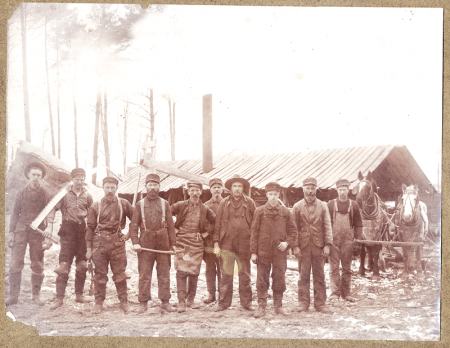
40 Under 40 The Class of 2015
The Class of 2015 Has Its Day in the Sun

40 Under Forty 2015DSC_0499The ninth annual 40 Under Forty class of 2015 celebrated their big night on June 18 with style, class, and Flair — as in wrestling legend Ric Flair, a guest of presenting sponsor Paragus Strategic IT, who delivered brief, heartfelt words to this year’s assembly of high achievers, and a standing-room-only crowd of supporters, at the Log Cabin in Holyoke. Paragus was in the spotlight in another way, as CEO Delcie Bean (40 Under Forty class of 2008) won BusinessWest’s inaugural Continued Excellence Award (see photo at right), sponsored by Northwestern Mutual and presented by Kate Kane, managing director of its Springfield office, and BusinessWest Editor George O’Brien. But the night belonged to members of the class of 2015, who proved, yet again, that this region has no shortage of young professionals who are making an impact in business and in the community. Below, we present some scenes from a memorable, exuberant evening.
Photos by Denise Smith Photography [email protected]


Presenting Sponsors:

NorthwesternMutual900pxParagus200x130px


Sponsors:

Fathers&Sonns200x130pxIsenberg200x130pxHNElogo200x130pxMoriartyPrimack200x130pxUnitedBank200x130px


Partner:

YPS200x130px


Elizabeth Barajas-Roman, CEO, Women’s Fund of Massachusetts; Terra Missildine; owner and operations manager, Beloved Earth Co.; and Erin Buzuvis

From left: class of 2015 honorees Elizabeth Barajas-Roman, CEO, Women’s Fund of Massachusetts; Terra Missildine; owner and operations manager, Beloved Earth Co.; and Erin Buzuvis, professor of Law and director of the Center for Gender & Sexuality Studies, Western New England University School of Law.


Jennifer Levesque, operations manager, R. Levesque Associates; with her husband, Robert Levesque

From left: Jennifer Levesque, operations manager, R. Levesque Associates; with her husband, Robert Levesque (class of 2015), president, R. Levesque Associates; and Christopher Novelli (class of 2015), architect, Studio One Inc.


From left: class of 2015 honorees Dr. Anthony Sarage, pediatric surgeon

From left: class of 2015 honorees Dr. Anthony Sarage, pediatric surgeon, Western Massachusetts Podiatric Associates; Jim Angelos, owner and executive director, InspireWorks Enrichment Inc.; Gregg Desmarais, vice president and store manager, TD Bank; Kate Lockhart, development director, Big Brothers Big Sisters of Hampden County; A.J. Crane, co-owner and partner, A. Crane Construction; Terra Missildine; owner and operations manager, Beloved Earth Co.; Jennifer Gallant, chief financial officer, Polish National Credit Union; and Patrick Davis, operations manager, CRD Metalworks, LLC.


Joel Mollison (class of 2015), president, Northeast IT Systems

Joel Mollison (class of 2015), president, Northeast IT Systems; with his fiancée, Christine Gryknkiewicz, respiratory therapist, Cooley Dickinson Hospital.


: Marcelia Muehlke (class of 2015), owner, Celia Grace Wedding Dresses

From left: Marcelia Muehlke (class of 2015), owner, Celia Grace Wedding Dresses; and Sarah Shube, owner, Creative Art Therapies.

Isenberg School of Management at UMass Amherst, a 40 Under Forty sponsor

From the Isenberg School of Management at UMass Amherst, a 40 Under Forty sponsor, from left: Jennifer Meunier, director of Business Development; Trista Hevey, director of Alumni Corporate Relations; and Kyle Bate, academic advisor.

Sarah Williams (class of 2015), vice president of Global Risk Management, MassMutual Financial Group; with her husband, Richard Williams

Sarah Williams (class of 2015), vice president of Global Risk Management, MassMutual Financial Group; with her husband, Richard Williams, investigator, Investigators LLC.


Tim Steffen, director of recruitment; Nico Sananiello, financial advisor; Kate Kane

From Northwestern Mutual, presenting sponsor of 40 Under Forty, from left: Tim Steffen, director of recruitment; Nico Sananiello, financial advisor; Kate Kane, managing director; Rob Walker, financial representative; and Taylor Hassa, financial representative.

From Paragus Strategic IT,

From Paragus Strategic IT, presenting sponsor of 40 Under Forty, from left: Lisa Lococo, office manager; Delcie Bean IV, CEO; Dave DeRicco, account representative; Anthony Schiappa, account representative; Tyler Lucas, COO; Sarah Powers, financial administration; and Margie LaMotte, executive assistant to the CEO.

From Fathers and Sons

From Fathers and Sons, a 40 Under Forty sponsor, from left: Bill Visneau, sales associate; Marissa Monti, business manager; Shera Rosarario, sales associate; Steven Langieri, sales manager; and Jon Schulz, sales associate.


From Moriarty & Primack, P.C.

From Moriarty & Primack, P.C., a 40 Under Forty sponsor, from left: Tax Director Bob Supernaut; Tax Associate Shelley Sheridan; Audit Associate Jessica Peet; Tax Associates Laurie Bonan and Chris Walker; Manager Rebecca Connelly, Tax Manager Tim Prozost; and Partner Doug Theobold.

Kate Campiti, associate publisher, BusinessWest, welcomes the more than 650 attendees of the ninth annual 40 Under Forty gala.

Kate Campiti, associate publisher, BusinessWest, welcomes the more than 650 attendees of the ninth annual 40 Under Forty gala.

Joseph Bednar, senior writer, BusinessWest; and Denise Hurst

Joseph Bednar, senior writer, BusinessWest; and Denise Hurst (class of 2014), quality improvement manager and human rights coordinator, Department of Mental Health, and vice chair, Springfield School Committee, get ready to welcome this year’s 40 Under Forty honorees to the stage.

Health New England, a 40 Under Forty sponsor, from left: Steven Webster, director of marketing and digital strategy; Jessica Dupont

From Health New England, a 40 Under Forty sponsor, from left: Steven Webster, director of marketing and digital strategy; Jessica Dupont, risk adjustment manager; Robert Ravenscroft, clinical healthcare analyst; Nicole Santaniello, content management specialist; Sandi Bascove, marketing operations manager; Elaine Mann, marketing content strategy manager; Yvonne Diaz, account executive, existing business; and Patrick McColley, UX/CX architect manager.


George O’Brien, editor, BusinessWest, shares a laugh with wrestling legend

George O’Brien, editor, BusinessWest, shares a laugh with wrestling legend ‘Nature Boy’ Ric Flair, a special guest of 40 Under Forty presenting sponsor Paragus Strategic IT.


George O’Brien and Ric Flair shared the privilege of presenting awards to the class of 2015, including, clockwise from top right, Eric DevineDSC_0545
Danielle Williams, attorney, Fierst, Kane & Bloomberg LLP.

George O’Brien and Ric Flair shared the privilege of presenting awards to the class of 2015, including, from top to bottom, Eric Devine, Information Technology Services officer, Country Bank for Savings; Jessica Fraga, continuous improvement consultant, MassMutual Financial Group; and Danielle Williams, attorney, Fierst, Kane & Bloomberg LLP.


Photo gallery from the June 18, 2015 BusinessWest 40 Under Forty Class of 2015 Gala


For reprints contact: Denise Smith Photography / www.denisesmithphotography.com / [email protected]

Cover Story
UMass Grad Marty Meehan Now Leads the System

COVER0615cMarty Meehan acknowledged that, when someone decides to run for Congress, and then succeeds in that mission, they’ve done more than win an election. They’ve also more or less committed to a career in politics.

But when Meehan set out to capture the Bay State’s 5th Congressional District seat, anchored by his hometown of Lowell, in 1993, at age 37, he said he did so with a much different mindset.

“I knew I didn’t want to serve in Congress for the rest of my life,” he told BusinessWest, adding quickly that he didn’t know exactly what path his career should ultimately take.

So in 2001, he engaged the services of New Directions, an executive career-development firm that, in essence, helps clients determine a path and, in Meehan’s words, “tells you what you’re good at.”

After an extensive three-week process that included several tests and interviews with people who knew him well, those at New Directions told Meehan he’d be good at running a professional sports league or taking an executive position in higher education.

Marty Meehan, seen here with the mascot for UMass Lowell

Marty Meehan, seen here with the mascot for UMass Lowell, says graduating from the university gives him a unique perspective that will serve him well as president.

To make a long story short, that analysis was on the money.

Meehan, who said he essentially put himself on a track for either of those pursuits, eventually became chancellor of UMass Lowell, where, by all accounts, he led a stunning resurgence at the school.

And last month, he was chosen to succeed Robert Caret as president of the entire university system, thus becoming the first UMass undergrad (he earned a degree in education and political science at the Lowell campus) and first chancellor within the five campuses to ascend to the president’s office.

He said those two qualities, if you will, provide him with a unique perspective, one he believes will serve him well in his new position.

“I have a passion for the University of Massachusetts, and I view that as an asset,” he explained. “When I interact with students, I literally say, ‘I was where you are.’ I have a passion for the institution because I was a student here. I fundamentally understand at my core what it means to have a great university system.”

In a wide-ranging interview, Meehan, who takes the helm July 1, touched on a number of issues involving the university and his role as its president. They include:

• The overall accessibility of the university’s campuses: “The fact is that public higher education in this state has been privatized over the past three decades; the cost of a UMass education has stayed the same, adjusted for inflation, but the burden of paying that cost has shifted from the Commonwealth to students and their families”;
• His perceived role: “A big part of my job is to make the case for this system and demonstrate why it’s important to make the investment in a world-class public research university”;
• His quick take on his job description: “My job is to provide leadership, inspiration, and passion to help the university get what it needs in terms of funding and what it needs in terms of stature, prestige, and reputation. Universities are all about students, faculty, and the interaction that takes place between students and faculty; the rest of us are there to support and embrace that interaction”;
• His leadership style: “I’m very strategic in everything I do; I’m also collaborative and accessible”;
• The importance of the Amherst campus: “UMass Amherst sets the standard for what the UMass brand is all about. So it’s in the interest of all the UMass campuses for UMass Amherst to improve its ranking; that’s where the brand comes from.”
• The role of the system as a whole: “I think the economy of Massachusetts runs through this university”;
• His expectations for the Baker administration: “The governor fundamentally understands how the economy of this state works, and he understands the role UMass plays in the economy. I think he’s thoughtful, he’s smart, and the University of Massachusetts could do quite well under Governor Baker”; and
• His commitment to stay for the “long haul,” as he put it: “I didn’t take this job to get another job — I’m not thinking about what else I’m going to be doing. When I got the job at Lowell, everyone thought I was going to run for the Senate a couple of different times or run for governor. What I said was that I didn’t think you could take a job like that and not make at least an eight-year commitment, and I feel the same about this job.”

For this issue, BusinessWest delves into much greater detail on these and other matters as we talk at length with the next leader of the state university.

School of Thought

As Meehan wrapped up his comments with BusinessWest in the office of the UMass Amherst athletic director — he was at the Mullins Center to attend the June board of trustees meeting — he used that setting and its view of the arena to segue into one of the dilemmas he’ll be facing as president, if one could call it that.

“Someone in the press asked me who I was going to root for when UMass Amherst plays UMass Lowell,” he said, referring specifically to two hockey squads that face off against each other and the 10 other teams in the highly competitive Hockey East conference. “I said, ‘that’s an easy one; when the game’s in Amherst, I’ll be rooting for the Minutemen, and when the game’s in Lowell, I’ll be rooting for the Riverhawks; that’s how I’ll solve that.’”

Marty Meehan says one his first priorities

Marty Meehan says one his first priorities is to initiate a new strategic plan for the UMass system, one that will be conducted from the ground up.

Surely, the myriad other issues he’ll be confronting as president will resist such quick, easy, and diplomatic solutions, but overall, Meehan believes he’s ready for pretty much whatever this job can and will throw at him.

Such confidence stems from a career in leadership positions, which have yielded a wide range of learning experiences.

They came in Congress, where he served seven terms, served on the Armed Services and Judiciary Committees, and established a national reputation for his work with everything from campaign finance reform to tobacco control; before that, in stints as the first assistant district attorney of Middlesex County and Massachusetts deputy secretary of state for securities and corporations; and especially at UMass Lowell — which brings him back to that determination readied by New Directions.

Meehan said he worked to position himself for possible management roles with sports leagues — on the House Judiciary Committee, he became more involved in anti-trust issues that affect professional sports leagues, for example — but soon became more focused on the second career path recommended to him.

Indeed, the post at UMass Lowell was actually the second opportunity within the broad realm of higher education that he considered. The first was his pursuit of the job as dean of the law school at Suffolk University, where he earned both his master’s and juris doctor degrees and was also on the board of trustees. But it wasn’t a hard pursuit.

“I told the search firm that I didn’t think I was what the law school needed at that point,” he recalled. “I felt it needed a nationally known academic or perhaps a former federal judge.

“But during the course of an hour-and-a-half conversation, I got an opportunity to talk about higher education,” he went on. “And when the Lowell position came up, the same search firm was hired to handle that search, and after that long conversation we had, I knew they’d be calling me for that position.”

They did, and after overcoming some reluctance to being named a finalist — he was concerned about both publicly acknowledging his pursuit of the job and competing against seasoned academics — Meehan was awarded the job.

He believes that aforementioned passion resulting from his student experiences there — and his ability to communicate it — was a big factor.

“I wanted the job because I felt that I could make a difference at an institution that meant so much to me personally,” he explained. “Number one, it’s in my hometown, and number two, I graduated from the school. And I felt UMass Lowell could be a much greater institution than what it was.”

At Lowell, he took over a school that was, by most all accounts, underperforming, and certainly changed that dynamic.

Indeed, during Meehan’s tenure, the school, founded in the 1890s as the Lowell Normal and Lowell Textile schools, achieved record growth in enrollment, student retention, research, and scholarship funding. The school has also undergone a dramatic physical transformation, with new academic buildings and residence halls; upgraded academic, research, and athletic facilities; and enhanced student-activity spaces.

Meehan’s comprehensive portfolio of improvements includes:

• Rating as a top-tier university by U.S. News & World Report for the first time in 2011. The school has subsequently seen a four-year gain of 27 spots, from number 183 to 156, the second-largest leap in the nation;
• A 50% increase in enrollment over the past seven years, to more than 17,000 students;
• An accompanying rise in academic qualifications, as the average SAT score of incoming freshmen, math and verbal combined, has increased 80 points since 2008;
• A 10% increase in freshman retention, from 75% to 85%;
• A dramatic rise in research expenditures, specifically 80% since FY ’07 to $65 million;
• The construction of 10 new buildings on campus. That boom includes two new academic buildings (the first in 35 years) — the Mark and Elisia Saab Emerging Technologies and Innovation Center and the Health and Social Sciences Building. It also includes two new residential facilities that are now home to a quarter of the 4,000 students living on campus, a 33% increase in three years;
• Purchase of an underutilized hotel in the city’s downtown and converting it into the UMass Lowell Inn & Conference Center, which provides housing for 500 students as well as conference space, lodging, and a restaurant for the public;
• Acquisition of the 6,500-seat Tsongas Arena in 2010 (it’s now known as the Tsongas Center at UMass Lowell); and
• The opening in 2014 of University Crossing, a $95 million student-engagement center created in a former hospital site purchased by the university in 2011.

Degrees of Progress

When asked how all that and more was accomplished, Meehan said it resulted from assembling a great team, putting in place an ambitious strategic plan titled “UMass Lowell 2020,” and achieving critical buy-in on its many initiatives.

This is the same formula he intends to use as president of the system, which, he believes, has already achieved considerable progress in a number of areas, ranging from enrollment to academic qualifications to new building on each of the campuses.

But there is still considerable room for improvement, said Meehan, who was asked to interview during the system’s last presidential search, in 2010, but eventually withdrew, believing the timing wasn’t right and because then-Gov. Deval Patrick had his own preference for a candidate — someone else.

Looking back, he said that decision was a good one, because it gave him additional opportunities to build on his track record of success at UMass Lowell and ultimately learn from the man he would eventually succeed.

Marty Meehan says his primary role as UMass president is to advocate for the system

Moving forward, Marty Meehan says his primary role as UMass president is to advocate for the system and secure funding to ensure that the schools are accessible.

“I got a great opportunity to do two things,” he said. “One was to finish what I set out to accomplish at Lowell, and secondly, I got to work with a second UMass president, Bob Caret. And because of those experiences, I feel that I’m better-prepared to lead the entire system.”

Looking ahead, Meehan, as he mentioned earlier, said one of his primary responsibilities will be as an advocate for the UMass system — in Boston, Washington, and wherever else that broad assignment takes him.

And as advocate, one of his duties is to articulate how the university’s role has changed and broadened — within the Bay State but also nationally and even globally — and what that means in terms of how the system should be viewed and, more importantly, funded.

“Historically — and when I say historically, I mean over the past 30 years — the political leadership in this state has often viewed the University of Massachusetts as a safety net for students who either can’t get into the elite private colleges or can’t afford to go to those schools,” he explained. “The paradigm has changed dramatically; the elite private universities in this state are not training residents of this state, by and large.”

Thus, with this change in role, the university has taken on an even bigger role when it comes to fueling the state’s economy — an assignment that involves everything from sparking startup businesses to educating and training the workers that ventures across all business sectors will need to succeed.

“I think the argument is powerful: if you want a strong economy, you must have a strong university of Massachusetts,” he told BusinessWest.

“The truth is that social mobility and economic development in this state really drives through the university on every level. We’re an innovation economy; we literally educate the workforce in Massachusetts in terms of the engineers we produce, the nurses, the teachers. So Massachusetts is very reliant on a world-class public research university, and we have to keep the quality up,” he continued, adding that 88% of the graduates of the schools in the UMass system stay in the state for at least five years after earning their diplomas, and 66% stay longer.

“In an innovation economy, you need a workforce that’s well-trained and highly educated, and I think this state gets the fact that our graduates are the key to economic development and economic growth. I sure get it.”

Course of Action

Making sure everyone gets it will help the university achieve a better commitment from the state and therefore the more sustainable financial model it needs in the decades to come, said Meehan, adding quickly that the economy, and specifically state revenues, need to improve for this to happen.

The Baker administration inherited a severe budget crisis, he went on, one that has forced painful mid-year cuts, hard decisions, a slowing of the momentum achieved over the past few years when it comes to state funding of public higher education, and, ultimately, the rate increases approved by the trustees at their June meeting.

The scope of those increases isn’t known yet, said Meehan, adding that any increase impacts accessibility and grows already-worrisome student debt.

To attain more attractive funding levels, the economy must improve, but the university as a whole must continue to become more efficient and thus worthy of a larger investment from the state.

“The governor is going to want to hold UMass accountable in terms of performance, graduation rates, student-success rates, fund-raising, and more,” he said. “And I think the university is ready to be held accountable in exchange for a deeper investment by the state government.”

One of the other priorities moving forward, said Meehan, is to draft a new strategic plan for the university, something similar in many ways to “UMass Lowell 2020” but much larger in scope.

It’s been 25 years since a new comprehensive strategic plan has been created for the university, he said, which means the system is overdue for such a document. And like the one at UMass Lowell, this plan will come from the bottom up.

“We had more than 200 faculty, deans, administrators, and students who all came up with a strategic plan,” he explained. “It took us 13 months to create it, and because we included all those constituencies, we had buy-in. And that’s how it’s accomplished in any large, complex organization, and a university is certainly a large, complex organization.

“We need to evaluate what the system has done well over the past 25 years and what it needs to improve,” he continued, referring to the broad scope of such a strategic plan. “And we need to bring in some of the best high-level academics from public research institutions around the country to help us determine whether this can become the best public university in the country.”

As for the immediate future, Meehan said he plans to spend considerable time visiting the various campuses and gaining feedback from a host of constituencies.

These include the chancellors of those institutions, staff, faculty, students, and alumni. But he also intends to gain perspective from a business community that has placed workforce issues at the very top of its list of priorities — and concerns.

“I look at corporations like EMC and Raytheon, and the majority of the people they hire come from UMass,” Meehan explained. “I want to talk with those major CEOs in the state, not only get some advice on UMass, but also to get them to join with us to fight for more state funding and more federal funding. The business community should be UMass’s biggest cheerleader because of the huge contribution we make to making sure these companies get the best, most highly qualified employees they can get; it makes Massachusetts more competitive.”

Checking Some Boxes

Returning to the subject of those hockey teams and the intense rivalry that has developed between them, Meehan related a conversation with UMass Amherst Athletic Director John McCutcheon, who was lamenting how his school has come up on the short end of many recent contests between the schools.

Meehan said he responded first with some sarcasm, then a challenge, wrapped in the form of a leadership philosophy.

“He [McCutcheon] said, ‘you guys at UMass Lowell have been beating us up the past few years,’” Meehan recalled. “I said, ‘the problem is, everyone has been, and you have to work at this — I want attendance up.’

“Sometimes, I get into a lot of various details, but there’s a reason,” he went on, explaining why he was dwelling on hockey. “I think good leaders need to say, ‘we want excellence in everything we do.’”

That has been Meehan’s approach throughout a career that’s taken him to the House of Representatives and then the career in education recommended years ago. And it’s one he believes will ultimately help drive continuous improvement at the state university. n

George O’Brien can be reached at [email protected]

Employment Sections
Carpet-cleaning Venture Advances HRU’s Mission

Zerorez’s Luis Cerrano (center) demonstrates the company’s equipment

Zerorez’s Luis Cerrano (center) demonstrates the company’s equipment for Sue Mastroianni, board member of the Gray House in Springfield, and HRU president Don Kozera.

When Human Resources Unlimited (HRU) decided that its core mission — training and placing people with disabilities in meaningful jobs — would benefit from partnering with a national franchise, carpet cleaning didn’t seem like the most exciting option.

“We looked around the country and found there were few not-for-profits owning franchises, and then we set up specific criteria around what we hope to achieve, how much revenue we need, how much risk we’re willing to accept, and what the tradeoff is between profits and mission,” said Don Kozera, HRU’s long-time president.

The agency wound up looking at 600 chains, then took a harder look at 60 of them, before narrowing its search to three that fit the organization’s criteria. One of those was Zerorez, a carpet-surface cleaning company based in Salt Lake City with a national presence — except in New England.

“What attracted us was its patented ‘green’ approach to cleaning,” he said of Zerorez’s innovative use of what it calls “empowered water” (more on that later). “And if you can innovate in carpet cleaning, you can probably innovate the world. It’s also a technology-based company. With this phone in my hand, I know where all the vehicles are, if their machines are on, how much we booked today, where those leads came from … I know exactly what’s going on.”

But there was some hesitancy based on the perceived lack of a ‘wow’ factor. “People said, ‘really? Carpet cleaning? Don’t we want to do something more exciting?’ But the more we investigated it, the more we talked to franchises across the country and sat down with the owners and looked at their technology, looked at the environmentally friendly detergents being used, that there was a social cause, it made sense.”

So HRU opened its first Zerorez franchise in Holyoke in March, with more likely to follow. “We have a bigger strategy,” Kozera said. “We have the rights to the Hartford and Boston markets. We didn’t do this to own one franchise; we did it as a strategy of revenue generation and job development. It’s solely owned by HRU, but it might not be solely owned in the future; it depends on how much capital we need for expansion plans.”

None of this, of course, answers the question of why Human Resources Unlimited, which trains and places clients in some 120 area businesses and has started and closed myriad businesses of its own to achieve the same goals, embraced the franchise model. Simply put, Kozera said, it’s because HRU eventually wants to do some franchising of its own.

Active Intent

It starts with a program HRU created called Move to Work.

“It’s a platform designed to help people who have been out of the workforce — chronically unemployed people, not just people with disabilities. It’s a unique approach that uses physical health, emotional health, and financial health to create a healthy, productive worker.”

The concept is explained by the program’s original title, the admittedly clunkier Changing Habits and Transforming Lives. It takes principles not typically applied to job training, including exercise and physical fitness, and meshes them with conventional job training and the ‘soft skills’ — communication skills, personal work habits, etc. — so in demand by companies.

“With most people who are chronically unemployed, the data will show they’re physically not healthy, emotionally not healthy,” Kozera said. “Of course, being unemployed for a long time can lead to bad habits and losing self-esteem.”

Move to Work, he went on, “was originally to better our services. If people exercise for 20 to 40 minutes at 60% to 80% of their maximum heart rate, their ability to learn and retain information is greatly increased for up to four hours. That’s a scientific fact. So every one of our sessions starts with that.

“But, really, the foundation is our soft-skills training program,” Kozera explained. “Employers in this area are saying, ‘we cannot find qualified workers — at any level.’ The Federal Reserve did a report on Springfield five years ago that really outlined those issues. Companies said, ‘what do we need? People who come to work on time, with a good social skill set. We’ll train them on what we do technically. But we need those types of people.’”

So Move to Work was developed as an eight- or 16-week course to build those skills while incorporating the benefits of exercise for greater mental focus. Recently, HRU applied the program at Tech Foundry, a nonprofit that trains high-school students for information-technology jobs.

Having demonstrated its value, Human Resources Unlimited would like to turn Move to Work into a national model. And that’s something the agency has never before attempted.

“Our goal is to bring this new model into the marketplace as both an innovative program and something that can earn money,” Kozera told BusinessWest. “But it’s not easy to do. How can we raise enough revenue to support the expansion of that model?”

The answer was another question. “It’s taking a self-replicating model to the marketplace, and who does that? Franchises. They take a brand and replicate the brand. Through this confluence of activities, we said, ‘well, if we’re going to learn more about the replication and expansion of a brand into a national model, where else to learn from than franchises?’ So we started looking around, saying, ‘maybe we can start a franchise and look at owning franchises as a way to support ourselves and learn how to be a franchisor of Move to Work.’”

Workplace Legacy

A company like Zerorez is certainly new terrain for HRU. But doing things a little differently has long been the agency’s bread and butter.

Realizing that many employers didn’t believe people with developmental disabilities could work in complicated job environments, Human Resources Unlimited — then knwn as the Carval Workshop — was created in 1970 to be the vocational training center for Belchertown State School residents and provide employment opportunities for residents of the facility.

Zerorez

Zerorez recently donated its services to clean high-traffic areas of the Gray House to demonstrate its work and help another mission-driven organization.

It has expanded and evolved over the years, now offering a broad range of services, from assistance for individuals moving from public assistance to the workplace to a ‘day habilitation’ program called Pyramid for people with developmental disabilities; from commercial endeavors, of which Zerorez is the latest, to a series of so-called ‘clubhouses’ that provide members with a supportive environment where they can get specialized assistance with vocational skills and transition into good jobs at area companies, as well as increasing their participation in the community.

Kozera, who joined the organization in 1980 as fiscal director before moving into the president’s chair, said Zerorez is a good match for HRU because of it’s mission-driven approach to cleaning.

“Zerorez uses technology that was borrowed from the oil-cleanup industry,” he explained. What the national company calls ‘empowered water’ is actually electrolyzed and oxidized to create an environmentally friendly cleaning solution.

Traditional steam cleaning, the company notes, uses heated water mixed with soaps, detergents, and toxic chemicals that are injected into the carpet under pressure, which soak the carpets, pads and backing. Even though some of the soap, dirt, and water are removed, a considerable portion of this mixture remains embedded in the carpet. As the carpet dries, the detergent attaches to the carpet fibers and acts as a magnet for dirt and other substances. Empowered water, on the other hand, is applied to carpet fibers by a patented high-pressure spray system that loosens embedded dirt and removes it.

Zerorez cleans rugs, tiles, wood floors, furniture, counters … basically anything that people walk on, sit on, or work on, Kozera said. The primary market is residential, although it has commercial clients as well.

“We haven’t burst on the market,” he added, noting that the Holyoke franchise, which boasts three trucks and four employees to start, had 37 clients in May and is on track for 50 in June. But in the long run, Zerorez’s established structure and recognized name will help the local office succeed and, importantly, grow its roster of employees and fleet of trucks.

“What has a higher rate of success in business, Joe’s Burger Shop or McDonald’s? With a franchise, there’s a system, a proven model, there’s support. Other franchisees are amazing about sharing everything they know. They help each other. I don’t know how many networks are like that. They tell us what’s successful, what’s not successful. It’s a nice family created by the franchisors.”

Kozera said franchisors wanted HRU to commit to more than one market, adding that, overall, franchised businesses are more often sold to corporations than individuals these days. “You can’t buy just one; you have to buy three, so you have to have $2 million just to enter the market.”

At the same time, national networks have become more willing to sell franchises to nonprofits, while nonprofit boards, which tend to be conservative in their risk taking, like the security of partnering with a known commodity.

Furthermore, “Zerorez has a 90% retention rate in an industry that probably has a 10% retention rate,” Kozera said. “The other appealing part of this is that every customer has to rate us … and if they don’t rate us at least 9 out of 10, we fail.” The idea, he added, is to leverage great customer service into customers for life, one floor at a time.

Destination Unknown

Kozera knows that nothing is a given in any industry. “Any time you open a business,” he said, “the reality is, you don’t know what’s going to happen.”

But if it succeeds, the Holyoke Zerorez office — the first of what might be several across the region — will benefit HRU in three ways, by generating revenue, providing an education in franchising the agency can apply to Move to Work, and, of course, providing jobs for clients.

“It has a call center, and we place a lot of people in call centers at multiple locations; that’s a skill base many of our members have, and they’ve been very successful at that job,” he said, adding quickly, “we’re not creating jobs that don’t exist. We have one technician for one van; we’re not going to put two people there just to create a job.”

As for Human Resources Unlimited in general — which recently moved to a larger headquarters in Springfield — a (slowly) strengthening economy is ramping up demand for qualified workers at all kinds of companies, which can only benefit clients.

“We want to use these franchise concepts throughout the whole business, not just Zerorez,” Kozera said, referring mainly to the key factors of consistency and trust that drive consumers to known brands.

“We want to apply that to everything we do. We don’t have a whole lot of experience in business to business. But the sales process and the marketing process are things that will help us organizationally because human services — in particular placement organizations — don’t invest a lot in marketing and sales. We invest a lot in human capital; we just don’t measure it well.”

HRU’s first franchise business could help change that, while creating cross-learning opportunities across the organization that, hopefully, help more individuals find work.

And that, more than anything, is what makes carpet cleaning exciting.

Joseph Bednar can be reached at [email protected]

Sections Sports & Leisure
Wilderness Experiences Unlimited Is in the Confidence Business

Wilderness Experiences  Unlimited

Wilderness Experiences
Unlimited

Imagine your child donning a full-body harness and helmet, climbing to the top of a 35-foot wall and rappelling down it; trekking into the woods and learning to track animals; or sitting around a campfire and listening to Native American stories.

These and other adventures, such as kayaking, which take place during the summer camp run by Wilderness Experiences Unlimited in Southwick, are structured to help young people build confidence, self-esteem, and pride in achievement, all while enabling them to gain an appreciation for the outdoors.

“Our youth group adventures are designed to be safe, exciting, educational, and most of all, fun. It is never too early or too late to instill a sense of respect and wonder for the natural environment in children,” said T. Scott Cook, who founded the business 34 years ago. “We use adventure sports as a carrot to get kids outdoors.”

However, the offerings at Wilderness Experiences also extend to adults who want to embark on adventurous vacations.

They can learn to scuba dive in Southwick, then use their newfound skill on a trip to the Cayman Islands or Florida. Or they can choose an exotic destination such as Africa, where they can interact with orphaned animals in the wild that are being rehabilitated, and enjoy other excursions as they make memories that will last a lifetime.

Cook, who says outdoor play requires skills and knowledge, has written a book titled Outdoor Leadership: the Noble Gift.

“Play is a value-added necessity in life; it’s fun to have fun, but you have to know how,” he said, quoting Dr. Seuss and adding that he believes people often forget that play is critical to living a balanced life.

It’s something he keeps front and center in his own life. The morning of his interview with BusinessWest, he climbed off his bicycle after a relatively short — at least for him — 30-mile ride.

“I would have gone farther if I didn’t have this meeting,” he said, parking his bike in front a poster that shows his daughter Aubrey carrying a kayak. She shares his love of the outdoors and is a professional tri-athlete who will serve as assistant director of the camp this summer.

An impressive ropes course stands behind the poster — there are huge nets, sky-high poles with a network of lines, an enormous spiderweb configuration of ropes, and features such as the ‘rickety bridge’ and ‘multi-vine’ that were created to help summer campers challenge themselves individually and in groups as they master the course with the help and support of team members.

Meanwhile, an almost-Olympic-size swimming pool in the building on 526 College Highway provides a perfect setting for children and adults to learn to swim. Scuba-diving lessons are also conducted there, and seniors enjoy staying fit in special water-aerobics classes.

T. Scott Cook

T. Scott Cook believes people forget that play is critical to living a balanced life — and he’s trying to change that.

Over the years, Wilderness Experiences Unlimited has been a tremendous success; the summer camps are so popular, they are filled by January, and the majority of the counselors are former campers who return year after year to share their love of the outdoors.

However, Cook keeps the camp small and accepts only about 50 young people in each session, which runs from Monday to Friday, with overnight programs and field trips for older campers. Although he could easily have grown due to demand, he chooses to remain small so he has the time to get to know each child and be sure everyone has a meaningful experience.

“When I started this, I had been running large camps with 300 kids and 70 staff members, so I really never got to know the campers, or even all of the staff. I prefer to keep it manageable,” he told BusinessWest.

Still, the scope of offerings at Wilderness Experiences has expanded since Cook opened his first camp. At that time, his primary goal was to teach children about the outdoors, help them build confidence by mastering physical challenges, and give them opportunities to learn sports they could continue for a lifetime.

That’s still the goal, but there are now many more ways to embrace and meet it.

Early Exposure

Cook’s parents ran outdoor camps when he was young, and he was involved in scouting for many years.

“Playing in the outdoors has always been a big piece of my life,” he said, adding that, in his early college years, he majored in photojournalism but found the career didn’t offer much potential, so he sought out an outdoor-recreation leadership program and eventually earned a doctorate in the field. “I had always worked in summer camps, and when I finished my schooling, I founded Wilderness Experiences Unlimited.”

During the school year, he served as a consultant and worked with children in local school systems who had emotional and behavioral challenges.

“I provided their physical education via an incentive-based program; if their behavior faltered, they were not allowed to participate,” he said, noting that he took them on field trips that included rock climbing and kayaking as well as other outdoor activities they enjoyed. “It was a positive experience.”

After 15 years in that role, he was offered a job running the Wilderness Leadership Program at Westfield State University. He retired from the position last spring, but hosts a special Outdoor Wilderness Leaders program in Southwick for campers ages 12 to 18 who have been recommended by three counselors. It runs year-round, and participants advance through the ranks, volunteer at different organizations, and host their own trips and social events.

Cook has led people on excursions as far away as Africa

In addition to his offerings in Southwick, Cook has led people on excursions as far away as Africa.

“The goal is for them to learn more about their personal values and core beliefs as well as the way they communicate,” he said. “As they gain confidence, they take younger children under their wing, so it ends up being a very positive place.”

Although not everyone qualifies, every camper gains self-knowledge. “When campers navigate the ropes course, they build their confidence and self-esteem. They have to dig deep inside and share their feelings and emotions because it can seem daunting,” Cook said.

He cited the example of climbing to the top of a telephone pole, then jumping off. It’s a group exercise, and although each camper is carefully outfitted with a full body harness, helmet, and other protective gear, it’s a virtual leap of faith that requires trust in other team members.

“The perceived risk is big, but the actual risk is small due to all of the safety measures in place,” he explained.

Every camp session contains an aquatics segment. “The campers do some type of swimming, whether it’s in our pool or in a mountain stream where they get to know the natural world better. We also take them to state parks to explore the outdoors and go on hikes and play outdoor games,” Cook noted.

His joy in introducing campers to the outdoors has never diminished.

“If a child goes for a walk in the woods and understands nature and learns how to track animal behavior, the woods don’t seem as overwhelming; we present it as a story, a habitat with living things,” he explaned. “When you understand something, it’s easy to respect it, and when you respect it, it’s easy to love and value it. And if you introduce kids to things they have fun doing when they are young, they are likely to continue to play as adults and enjoy their lives. People who recreate have goals and reasons to stay fit.”

Each camp session also contains a spiritual element, which is focused on the way young people view nature. “When they’re outdoors, they are part of a circle of life, and we have campfires where we tell Native American stories of days gone by and how these people perceived the world around them,” Cook said.

Change in Venue

Wilderness Experiences Unlimited teaches participants how to scuba dive

One program of Wilderness Experiences Unlimited teaches participants how to scuba dive, then arranges trips to Florida and the Cayman Islands to help them enjoy that new skill.

Wilderness Experiences began selling sporting goods years ago, and the Cooks eventually purchased Westfield Water Sports in Southwick and combined it with their own small retail operation.

The acquisition allowed them to bring scuba diving into the mix because the store sold scuba gear, and it was then that Cook built a pool where he could conduct diving and swim classes, and later added the ropes course.

Prior to the acquisition, Wilderness Experiences Unlimited had operated out of a number of sites, including Huntington and a variety of spots in Westfield. But location has never been a critical ingredient in the camp’s success.

“It doesn’t take an amazing property to make an amazing camp — it takes amazing people,” Cook told BusinessWest. “All I needed was a place where I could launch adventures from.”

He closed the retail end of his business in January, and New England Bike moved into the space and took over the scuba operation. “My wife Laura and I both had careers, and we were running two businesses,” he noted, adding that she was a nurse at Shriners Hospital. “So we left the retail side and can focus now on what we love best — the pool, our summer camps, and our travel business, which Laura launched about 20 years ago.

“We’ve always traveled, so we take people to our favorite locations around the world,” he went on. “We’ve hosted trips on every continent except Antarctica, and we’re going there in 2017.”

The focus is on visiting historical and cultural sites, but participants are also taken off the beaten track so they can see what life is like in small towns. “We may spend as much time in someone’s personal wine cellar having a six-hour meal as we do at a tourist attraction.”

There is an adventure component included in every trip, and excursions have included whitewater rafting on the Zabezzi River in Africa and diving to see great white sharks.

“On one side trip, we met orphaned juvenile lions under age 2 and went for a walk with them. Once they are grown, they stop having contact with people and their offspring are released into the wild,” Cook noted, adding that they have done the same thing with young elephants and giraffes at responsible rehabilitation facilities.

Cook firmly believes that play is a necessary component in a balanced life. “But many adults get distracted. They’re busy working, being a good parent, and watching their children play sports, so they don’t take the time to have fun themselves,” he said.

He and his daughter have been traveling around the world for years to compete in national and world-championship triathlons, and he made sure she became acclimated to the outdoors at an early age. “She spent three nights living in a tepee with me during her first year of life,” he said.

Although he realizes that’s far more than most people want to do, his mission at Wilderness Experiences Unlimited remains unchanged.

“It’s a place where people of all ages can face their fears and accomplish things they didn’t ever think they could do,” he explained. “We hope to continue to open up new worlds for young people and adults.” n

Features
AIM Action Plan Strives to Make the Commonwealth More Competitive

AIM coverChris Geehern says he didn’t contrive the phrase (or this particular application of it) — attribution belongs to a Baystate business owner requesting anonymity — but he certainly puts it to work liberally as he talks about the Commonwealth’s innumerable business regulations and the manner in which they are enforced.

“He called it the ‘bad-waiter syndrome,’” Geehern, executive vice president for the Associated Industries of Massachusetts (AIM), said of the individual in question. “He said doing business in Massachusetts is like going to a restaurant where you really like the food, the atmosphere is terrific, and the dessert and drinks are just what you wanted. But the whole experience gets ruined because the waiter is rude and doesn’t really care about whether you like the place or not.

“What we’ve heard repeatedly from employers is that it’s less about the regulations themselves,” he continued, “and much more about the way they are interpreted and enforced — which drives companies crazy.”

Bringing attention to this bad-waiter syndrome and actually doing something about it are two of the many stated goals in a document titled “Blueprint for the Next Century,” the drafting of which is one of several ways — and perhaps the most meaningful — AIM has chosen to mark its 100th anniversary this year.

Composed following extensive polling of the organization’s 4,500-odd members, the blueprint identifies four major public-policy issues, or areas of concern, that members say must be addressed if the state is to remain competitive in an increasingly global economy.

In addition to the need to establish what the report’s authors call a “world-class state regulatory system … that meets the highest standards of efficiency, predictability, transparency, and responsiveness,” these are:

• “Workforce,” meaning a system for educating and training workers and providing them with the skills necessary for companies to succeed;
• “A uniformly strong business climate.” Roughly translated, this involves taking the stunning success enjoyed by the Greater Boston region and expanding it to the rest of the Commonwealth, while also providing opportunity to all business sectors; and
• “Health insurance and energy costs” and the need to lower them to make the state more competitive.

AIM President and CEO Rick Lord, seen here with Gov. Charlie Baker

AIM President and CEO Rick Lord, seen here with Gov. Charlie Baker, says workforce issues are by far the number-one concern among the state’s employers.

None of these areas of concern would in any way be considered news, especially to anyone doing business in Western Mass., said AIM President Rick Lord, and collectively they will defy quick or easy resolution.

“None of these have easy solutions,” he noted. “But we hope to have a second release of this blueprint at the end of this year that will include recommendations that will hopefully move us forward.”

To illustrate these concerns, or challenges, and the threats they pose to the future of the state’s economy, AIM presents the example of a Western Mass. company, Northampton-based MachineMetrics.

Led by Eric Fogg, Bill Bither, and Jacob Lauzier, the venture has created a cloud software solution that improves the productivity of manufacturing facilities by collecting, analyzing, and visualizing data from machines, parts, and people. In many ways, its future is dependent on the health of the state’s manufacturing sector, its ability to attract and retain qualified help, and its proficiency with navigating the state’s costly and highly regulated business environment.

“MachineMetrics is the kind of company that may ultimately determine the ability of Masachusetts to build upon an economy that in many ways remains a paradox — an international center of technology, innovation, medical research, financial services, and higher learning near Greater Boston, but a more traditional, amorphous economy just outside of Route 128,” write the report’s authors. “Fogg, Bither, Lauzier, and innovators like them hold the unique promise of joining the ‘eds and meds’ economy of the 617 area code with existing industries struggling to create jobs for residents in the rest of the state.

“It is a promise that will be played out against a vibrant and unforgiving global economy in which investment, resources, jobs, people, and capital flow at blinding speed to the most competitive environments,” they go on. “States, regions, and nations no longer have the luxury of taking their job bases for granted — failure to nurture the business climate not only impedes the growth of existing companies, but also leads to a silent and corrosive flow of job expansions to other locations that provide employers with the best opportunities for success.”

For this issue, BusinessWest takes an indepth look at “Blueprint for the Next Century” and the challenges and opportunities it identifies for the Bay State moving forward.

History Lessons

Lord said AIM traces its roots to 1915, perhaps the apex of the state’s manufacturing sector, when 27 manufacturers came together in the belief that their interests would be better served by a statewide organization charged with advocating on their behalf.

“They felt they needed an organization that would be their voice in the State House,” said Lord, adding that several of those original 27 members were from the western part of the state, and four — Crane Paper in Dalton, Package Machinery in Holyoke, Hampden Papers in Holyoke, and GE, which had several locations, including a huge complex in Pittsfield — are still paying dues a century later.

AIM remained an association of manufacturers until 1989, when membership was opened to all business sectors and the entity became an employers’ association. Today, there are more than 4,500 members, with roughly 30% of them in the manufacturing sector.

AIM will mark its first 100 years of service in a number of ways. The celebration began, unofficially, with the organization’s annual meeting in May, and will climax with a huge gala slated for Nov. 16 (close to the actual anniversary date) at the Boston Convention Center.

Between now and then, there were will be ceremonies in different regions of the state, staged to mark the centennial but also to honor companies and individuals that have made major contributions to the state’s business community and the cities and towns in which they are based.

One such ceremony will take place in Springfield, in the Lyman & Merrie Wood Museum of Springfield History, on June 15. The honorees will be MassMutual, Yankee Candle founder and Kringle Candle co-founder Michael Kittredge, and the Hampden County Sheriff’s Department’s vocational training program.

Meanwhile, in Dalton, on June 11, AIM honored Onyx Specialty Papers, Berkshire Health Systems, and SABIC Innovative Plastics.

But the most significant aspect of the centennial celebration is “Blueprint for the Next Century,” which attempts to not only identify the challenges facing business owners of all sizes, but also take on the much more difficult task of pinpointing potential solutions.

And this brings Lord and Geehern back to MachineMetrics, which, as they said, embodies both the promise of the future and the considerable obstacles to achieving that promise.

To put things in perspective, the report’s authors presented MachineMetrics’ case and asked a number of poignant questions that apply to most ventures doing business in the Bay State or looking to do so:

• Will the advanced-manufacturing companies to which they want to sell their idea survive in the relentlessly high-cost, high-regulation environment in Massachusetts?
• Will MachineMetrics find the skilled, educated, and motivated people it needs to grow and to develop new iterations of the company’s software?
• Will young companies located in Western Mass. and other areas outside the Cambridge/Boston innovation beltway develop the critical mass needed to extend opportunity throughout the state?
• Will the MachineMetrics platform make manufacturers so efficient that they will be able to increase business without creating new jobs?
• Will government regulators encourage the growth of companies like MachineMetrics, or will they set up bureaucratic impediments like the one that recently convinced a neighboring software company in Amherst to move to Texas?
• Finally, will the government research money that built Massachusetts into a world-class center of higher education, medical science, biotechnology, and defense technology continue to flow or slow to a trickle?

How the state — meaning its business leaders and especially its elected leaders — answer these and other questions will go a long way to determining how the next century, or at least the next few decades, will unfold, Lord said.

Help Wanted

There is probably no issue where the answers are more important than the broad issue of workforce, he went on, adding that virtually every business sector, and every individual business, will be challenged in the years to come with the task of attracting and retaining individuals with the skills needed for that business to succeed.

“This was by far the number-one concern among Massachusetts employers,” said Lord. “We heard it in all geographic areas of the state, from Boston to Western Mass., and we heard it in all industries — particularly, and quite loudly, in manufacturing.

“That’s because the age of the workforce is high — 50% of the sector’s workforce will retire in the next 10 years,” he went on. “So they’re facing a crisis in filling jobs that will become available.”

But the reality is that the word ‘crisis’ is not restricted to that industry, he told BusinessWest, adding that solutions to it lie mostly in the ability of the business community and the state’s education system — meaning preschool to college — to work together to ensure that businesses will have qualified workers.

Specific recommendations include, among other things, taking better advantage of the opportunities provided by the Workforce Innovation and Opportunity Act of 2014; elevating the role of vocational education; renewed emphasis on the fundamentals, such as math, science, and communications skills; and expanding performance-based funding for the state’s community colleges and public four-year institutions.

Beyond workforce issues, though, there are other issues challenging business sectors and individual ventures, said Lord and Geehern, adding that one of the most critical is the matter of creating a uniformly competitive structure across all industries, geographic regions, and populations.

Elaborating, Lord said that what the state has done in recent years amounts to picking winners and losers. And this phrase applies to both geography and business sectors.

“We’ve heard from a lot of companies that they believe we need to promote economic opportunity uniformly across the state,” he explained. “The Greater Boston area survived the recent economic downturn pretty well, but other areas of the state suffered more significantly, so economic opportunity is unevenly spread throughout Massachusetts. In addition, over time, the state has adopted policies or incentives that favor certain industries over others. The sense is that economic opportunity ought to be more evenly distributed.”

Geehern agreed, noting that state government, in general, has a tendency to chase whatever the ‘sexy’ industry might be at the moment. In the ’80s, it was personal computers, and at the start of this century, it was Internet-based ventures, he went on, adding that, in recent years, it’s been biotech, a focus punctuated by former Gov. Deval Patrick’s commitment of $1 billion to that sector, an expenditure that primarily benefits the eastern part of the state.

“What we’re trying to say with this [blueprint] is that you can’t just chase after the cool industry, whatever that might be at the moment,” he continued. “You have to think about what industries match up with the skills that are available in Massachusetts and do your best to encourage business growth throughout — meaning throughout all industries and throughout all regions.”

As with the workforce initiative, however, stating the problem and finding solutions to it are two completely different things, they acknowledged.

The blueprint recommends a number of steps, but especially increased focus on the state’s so-called gateway cities, older manufacturing centers, including several in Western Mass., such as Springfield, Holyoke, Pittsfield, and Westfield.

“A lot of this inequity exists in our older, urban areas,” said Lord. “There has been some focus on the gateway cities, but I think there’s more that can be done there; I think the Baker administration will try to do some creative things.”

By Any Measure

Another major issue for the state moving forward is both the number of regulations on the books and the manner in which they are enforced, said Geehern, who drew upon the example of that aforementioned software company in Amherst — the one compelled to relocate to Texas — to get his point across.

“During their first few years in operation, companies usually lose money, and this one was no exception,” he explained. “And the Department of Revenue required them to file their return electronically. That’s fine, but the DOR would not let this company use any of the typical, commercially available online platforms to submit those returns.

“Instead, they had to go out and buy this specialized piece of software that I believe cost about $2,500,” he went on. “Things like this prompted this company — which was a medical software company run by an M.D., so it’s exactly the kind of company that’s in the wheelhouse of Western Mass. — to move to Texas. And when the founder sells in five or 10 years for lots and lots of money, all those capital gains are going to Texas, rather than Massachusetts, not to mention all those jobs.”

Such stories are hardly isolated incidents, said Geehern and Lord, adding that they are a key element in the prevalence of that bad-waiter syndrome described earlier.

“There’s a sense that Massachusetts is just a tough place to do business because of the multitude of government regulations that impact companies in all sorts of ways,” said Lord, adding that, by AIM’s count, there are roughly 2,200 of these regulations, and they are often not reviewed in anything approaching a systematic fashion.

Which is why business leaders were encouraged by the Baker administration’s imposition of a 90-day moratorium on new regulations (since extended) as well as a comprehensive review of all existing regulations announced in April.

“All agencies are in the process of looking at the regulations that their agency has promulgated, and they have to justify whether they should be kept, amended, or repealed,” said Lord. “And we’re soliciting input from our members to help in this process.”

The desired result, he said, are regulations and enforcement policies that protect society, but don’t punish businesses.

But while companies must cope with a highly regulated environment, they must also deal with high costs, especially when it comes to energy and health insurance, said Lord, adding that, as with the other public-policy initiatives, these do not constitute a recent phenomenon.

But they are becoming more of a factor, he said, adding that the Commonwealth now boasts (if that’s the right term) the second-highest per-capita healthcare costs in the nation (15% higher than the national average) and the third-highest electric rates.

“And these put us at a competitive disadvantage to lower-cost places, both in the United States and around the world,” said Lord, adding that relief from these costs will not come easily.

Steps toward progress outlined in the report include, for healthcare, everything from maintaining the current definition of ‘full-time employee’ — the state’s benchmark is 35 hours, while federal reforms put the number at 30 — to repealing the medical-device tax under federal health reform.

As for energy costs, the report recommends steps such as new pipelines to transport natural gas into the Commonwealth and reorganization of the Mass. Department of Public Utilities.

Getting a Tip

Ridding Massachusetts of the ‘bad-waiter syndrome’ is not an assignment for the faint of heart. Such perceptions about the Commonwealth and its general attitude toward business have existed for most all of the time AIM has been in existence.

Real progress is the goal, and AIM is striving to achieve some by not only stating the problems, but eventually providing a road map for finding improvement.

And if that destination can be reached, then this century-old organization will really have something to celebrate.

George O’Brien can be reached at [email protected]
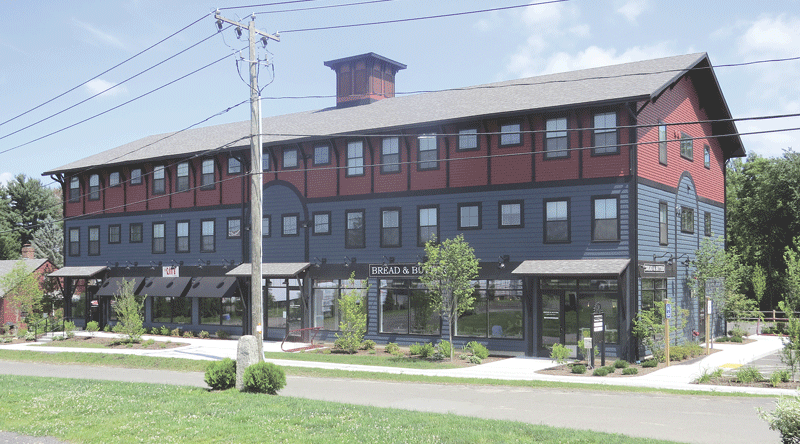
Cover Story

Cover June 15, 2015

Our Annual Guide to Summer Fun in Western Mass.

Vacations are highlights of anyone’s calendar, and summertime is, admittedly, a perfect time to get away. But it’s also a great time to stay at home and enjoy the embarrassment of riches Western Mass. has to offer when it comes to arts and entertainment, cultural experiences, community gatherings, and encounters with nature. From music festivals and agricultural fairs to zoos and water activities — and much more — here is BusinessWest’s annual rundown of some of the region’s outdoor highlights. For a more comprehensive list go HERE. Have fun!


Music, Theatre, and Dance

Jacob’s Pillow Dance Festival
358 George Carter Road, Becket
(413) 243-0745; www.jacobspillow.org
Admission: $19 and up
June 13 to Aug. 30: Now in its 83rd season, Jacob’s Pillow has become one of the country’s premier showcases for dance, featuring more than 50 dance companies from Cuba, the Netherlands, Germany, France, Canada, and across the U.S. Participants can take in 200 free performances, talks, and events; train at one of the nation’s most prestigious dance-training centers; and take part in community programs designed to educate and engage audiences of all ages. Never Stand Still, the acclaimed documentary about Jacob’s Pillow, will be screened on Aug. 30 at 4:30 p.m.
JacobsPillow

Tanglewood

297 West St., Lenox
(617) 266-1200; www.bso.org
Admission: $12 and up
June 19 to Sep. 5: Tanglewood has been the summer home of the Boston Symphony Orchestra since 1937, and like previous years, it has a broad, diverse slate of concerts in store for the 2015 season, including the Festival of Contemporary Music on July 20, the String Quartet Marathon on July 29, Chamber Music Concerts on Sundays throughout July and August, and a roster of popular-music shows featuring Sheryl Crow with the Boston Pops, Diana Krall, Huey Lewis and the News, Tony Bennett and Lady Gaga, and Idina Menzel. To celebrate its 75th anniversary, Tanglewood has also commissioned some 30 new works for performance during the 2015 season.

Wilco’s Solid Sound Festival / Bang on a Can Plays Art / Fresh Grass Festival
1040 MASS MoCA Way, North Adams
(413) 662-2111; www.massmoca.org
Solid Sound: Festival pass, $149; individual days, $65-$99
Bang on a Can Plays Art: Festival pass, $75; individual concerts, $5-$24
Fresh Grass: Festival pass, $93
The Massachusetts Museum of Contemporary Art is known for its roster of musical events during the summer. Wilco’s Solid Sound Festival (June 26-28) returns with three days of music — from the festival’s namesake band plus dozens of other artists — and an array of interactive and family activities. The Bang on a Can Summer Music Festival, a residency program for composers and performers, is highlighted by Bang on a Can Plays Art (July 25 to Aug. 1), a weeklong series of shows culminating in a blowout finale on Aug. 1. Finally, the Fresh Grass Festival (Sep. 18-20) showcases more than 20 bluegrass artists and bands over three days. Whatever your taste in music, MassMOCA delivers all summer long. And check out the galleries, too.MassMoCA

Williamstown Theatre Festival
1000 Main St., Williamstown
(413) 597-3400; www.wtfestival.org
Admission: $35 and up
June 30 to Aug. 23: Six decades ago, the leaders of Williams College’s drama department and news office conceived an idea: using the school’s theater for a summer performance program with a resident company. Since then, the festival has attracted a number of notable guest performers, including, this summer, Kyra Sedgwick, Blair Underwood, Cynthia Nixon, Eric Bogosian, and Audra McDonald. This season will spotlight a range of both original productions and plays by well-known writers such as William Inge and Eugene O’Neill, as well as a number of other programs, such as post-show Tuesday Talkbacks with company members.

CityBlock Concert Series
Worthington and Bridge streets, Springfield
(413) 781-1591; www.springfielddowntown.com/cityblock
Admission: Free
July 2 to Aug. 27: The Stearns Square Concert Series reverts to its original name this year, but the Thursday-night lineup remains studded with national touring acts and local lights, including Jane Monheit (July 2), Jon Butcher Axis (July 9), Willie Nile (July 16), Cinderella’s Tom Keifer (July 23), Dwayne Dopsie and the Zydeco Hellraisers (July 30), Denny Laine of Wings (Aug. 6), Dana Fuchs Band (Aug. 20), and FAT (Aug. 27). The 6:30 p.m. shows will be preceded at 4:30 p.m. by a new Local Music Showcase on a second stage, featuring up-and-coming acts. The series is sponsored by the Springfield Business Improvement District.

Green River Festival
Greenfield Community College, One College Dr., Greenfield
(413) 773-5463;
 www.greenriverfestival.com
Admission: Weekend, $99.99; Friday, $19.99; Saturday, $59.99; Sunday, $59.99
July 10-12: For one weekend every July, Greenfield Community College hosts a high-energy celebration of music; local food, beer, and wine; handmade crafts; and family games and activities — all topped off with four hot-air-balloon launches and a spectacular Saturday-night ‘balloon glow.’ The music is continuous on three stages, and this year features Steve Earle & the Dukes, Punch Brothers, Tune-Yards, Preservation Hall Jazz Band, J Mascis, and more than three dozen other artists. Children under 10 can get in for free, and they’ll want to, as the family-friendly festival features children’s music performers, a kids’ activity tent, games, circus acts, a Mardi Gras parade, and other surprises.

Springfield Jazz & Roots Festival
Court Square, Springfield
(413) 303-0101; springfieldjazzfest.com
Admission: Free
Aug 8: The second annual Springfield Jazz & Roots Festival celebrates the emergence of Springfield’s Cultural District and promotes an arts-driven, community-oriented, and sustainable revitalization of the city. The event will offer a festive atmosphere featuring locally and internationally acclaimed musical artists, dance and theater workshops, local arts and crafts, and plenty of food. More than 5,000 people are expected to attend and enjoy the sounds of jazz, Latin jazz, gospel, blues, funk, and more. The festival is produced by Blues to Green, which uses music and art to celebrate community and culture, build shared purpose, and catalyze social and environmental change.

Community Gatherings

WorthyCraftWorthy Craft Brew Fest / Valley Fest
Worthy Craft Brew Fest: 201 Worthington St., Springfield, MA
(413) 736-6000; www.theworthybrewfest.com
Valley Fest: Court Square, Springfield, MA
(413) 303-0101; www.valleybrewfest.com
Admission (both): Free
If you like craft beer, you’re in luck this summer, with two events coming to downtown Springfield. On June 20, Smith’s Billiards and Theodores’ Booze, Blues & BBQ, both in the city’s entertainment district, will host some 20 breweries, with music by General Gist and the Mexican Cadillac. The event will also feature a home-brew contest; Amherst Brewing will make the winner’s beer and serve it at next year’s Brew Fest. Then, on Aug. 29, White Lion Brewing Co. will host its inaugural beer festival, called Valley Fest, at Court Square. MGM Springfield will be the presenting sponsor. More than 50 breweries and many local food vendors will converge downtown, and attendees will have an opportunity to sample more than 100 varieties of beer and hard cider alongside pairing selections by local chefs.

Springfield Dragon Boat Festival
121 West St., Springfield, MA
(413) 736-1322; www.pvriverfront.org
Admission: Free
June 27: The third annual Springfield Dragon Boat Festival returns to Riverfront Park. Hosted by the Pioneer Valley Riverfront Club, this family-friendly festival features the exciting sport of dragon-boat racing and will include music, performances, food, vendors, kids’ activities, and more. Watch the dragon-boat races, starting at 9 a.m., and stay for a day of fun along the riverfront. The festival is an ideal event for businesses and organizations looking for a new team-building opportunity, and provides financial support for the Riverfront Club as it grows and strengthens its presence in Springfield and the Pioneer Valley.

BerkshiresArtsBerkshires Arts Festival
Ski Butternut, 380 State Road, Great Barrington
(845) 355-2400; www.berkshiresartsfestival.com
Admission: $6-$13; children under 10, free
July 3-5: Now in its 14th year, the Berkshires Arts Festival has become a regional tradition. Thousands of art lovers and collectors are expected to descend on the Ski Butternut grounds to check out and purchase the creations of more than 175 artists and designers, as well as experiencing theater and music from local and national acts. Founded by Richard and Joanna Rothbard, owners of An American Craftsman Galleries, the festival attracts top artists from across the U.S. and Canada. Visitors can also participate in interactive events like puppetry and storytelling, all the time enjoying a respite from the sun under tents and in the ski resort’s air-conditioned lodge.

Monson Summerfest
Main Street, Monson
(413) 267-3649; www.monsonsummerfestinc.com
Admission: Free
July 4: In 1979, a group of parishioners from the town’s Methodist church wanted to start an Independence Day celebration focused on family and community, The first Summerfest was held at the church, featuring food, games, and fun activities. With the overwhelming interest of nonprofit organizations in town, the event immediately grew, and relocated onto Main Street the following year. With the addition of a parade, along with booths, bands, rides, and activities, the event has evolved into an attraction drawing more than 10,000 people every year. The festivities will be preceded this year by a town fireworks display on June 27.

BrimfieldAntiqueBrimfield Antique Show
Route 20, Brimfield, MA
(413) 283-6149; www.quaboaghills.com
Admission: Free
July 14-19, Sep. 8-13: What began humbly — when a local auctioneer decided to hold open-air auctions on his property, and grew into a successful flea market — eventually began including neighboring properties as it grew. It expanded in the ’80s and ’90s to a one-mile stretch of Route 20 on both sides, and these days, the Brimfield Antique Show is a six-mile stretch of heaven for people to value antiques, collectibles, and flea-market finds. Some 6,000 dealers and close to 1 million total visitors show up at the three annual, week-long events (the first was in May). The Brimfield Antique Show labels itself the “Antiques and Collectibles Capital of the United States,” and — judging by its scope and number of visitors — it’s hard to disagree.

Iron Bridge Dinner
Iron Bridge over Deerfield River, Shelburne Falls and Buckland, MA
(413) 625-2526; www.mohawktrail.com
Admission: TBA
Aug. 16: Local restaurants and food providers will prepare an elegant, one-of-a-kind dinner on the Iron Bridge for ticket holders at sunset. Seating is at 5:30 p.m., and dinner begins at 6 p.m. Athletes from the Mohawk Athletic Assoc. will serve the meal, while local musicians serenade the diners. The Iron Bridge spans the towns of Buckland and Shelburne, and this event, modeled after a similar community dinner in France, celebrates all the connections there are between the two communities. Held rain or shine. Tickets go on sale July 17.

Agricultural Fairs
Various locations and admission costs; see websites:
www.thewestfieldfair.com; www.cummingtonfair.com; www.3countyfair.com; www.theblandfordfair.com; www.fcas.com; www.belchertownfair.com
Starting in late August and extending through September, the region’s community agricultural fairs are a treasured tradition, promoting agriculture education and science in the region and supporting the efforts of local growers and craftspeople. The annual fairs also promise plenty of family-oriented fun, from carnival rides to animal demonstrations to food, food, and more food. The Westfield fair kicks things off Aug. 21-23, followed by the Cummington Fair on Aug. 27-30, the Blandford Fair and the Three County Fair in Northampton on Sept. 4-7, the Franklin County Fair in Greenfield on Sept. 10-13, and the Belchertown Fair on Sept. 18-20, to name some of the more popular gatherings.

History and Culture

HancockShakerHancock Shaker Village
1843 West Housatonic St., Pittsfield, MA
(413) 443-0188; 
www.hancockshakervillage.org
Admission: $8-20; children 12 and under, free
In 1774, a small group of persecuted English men and women known as the Shakers — the name is derived from the way their bodies convulsed during prayer — landed in New York Harbor in the hopes of securing religious freedom in America. Nearly 250 years later, their utopian experiment remains available to the public in the restored 19th-century village of Hancock. Through 20 refurbished buildings and surrounding gardens, Shaker Village successfully illuminates the daily lives of its highly productive inhabitants. After spending a day in the recreated town, visitors will surely gain a greater appreciation of the Shakers’ oft-forgotten legacy in the region.

Yidstock
Hampshire College, 893 West St., Amherst
(413) 256-4900; www.yiddishbookcenter.org/yidstock
Admission: Concert pass, $160; tickets may be purchased for individual events
July 16-19: Boasting an array of films, concerts, lectures, and workshops, Yidstock 2015: The Festival of New Yiddish Music lands in Amherst in mid-July. The fourth annual Yidstock festival will bring the best in klezmer and new Yiddish music to the stage at the Yiddish Book Center. The festival includes concerts, lectures, and music and dance workshops.
The weekend will offer an intriguing glimpse into Jewish roots and jazzy soul music through popular Yiddish bands like the Klezmatics, Klezperanto, Sklamberg & the Shepherds, and more. The festival pass is sold out, but four-day concert passes and tickets to individual events are still available.

Glasgow Lands Scottish Festival
Look Park, 300 North Main St., Florence, MA
(413) 862-8095; www.glasgowlands.org
Admission: $16; children 6-12, $5; under 6, free
July 18: This 22nd annual festival celebrating all things Scottish features Highland dancers, pipe bands, a clan parade, sheep herding, spinners, weavers, harpists, Celtic music, athletic contests, activities for children, and the authentically dressed Historic Highlanders recreating everyday life in that society from the 14th through 18th centuries. Inside the huge ‘pub’ tent, musical acts Albannach, Soulsha, Prydein, Jennifer Licko, Charlie Zahm, and the Caseys will keep toes tapping in the shade. Event proceeds will benefit programs at Human Resources Unlimited and River Valley Counseling Center.

Pocumtuck Homelands Festival
Unity Park, 1st St., Turners Falls, MA
(413) 498-4318; www.nolumbekaproject.org
Admission: Free
Aug. 1: This celebration of the parks, people, history, and culture of Turners Falls is a coordinated effort of the Nolumbeka Project and RiverCulture. The event features outstanding Native American crafts, including baskets, pottery, jewelry, and demonstrations of primitive skills; Native American food; and live music by Native American flute maker Hawk Henry, Medicine Mammal Singers, Urban Thunder Singers, and the Visioning B.E.A.R. Singers. Attendees may also take part in craft activities, storytelling, and traditional dances. The Nolumbeka Project is dedicated to the preservation of regional Native American history through educational programs, art, history, music, heritage seed preservation, and cultural events.

OldSturbridgeOld Sturbridge Village Family Fun Days
1 Old Sturbridge Village Road, Sturbridge, MA
(800) 733-1830; www.osv.org
Admission: Adults, $24; children, free
Sep. 5-7: Bring the whole family to Old Sturbridge Village on Labor Day weekend, when the largest outdoor history museum in the Northeast opens its doors to children for free (normally, youth admission is $8). Guests are invited to play baseball the way early New Englanders did, make a craft, join a game of French & English (tug of war), meet the oxen in training, try their hand at marbling paper, see a puppet show, watch a toy fire-balloon flight, visit the Freeman Farm, stop and see craftsmen at work, and much more. In addition, the weekend will feature appearances by Bob Olson, performing 19th-century magic, as well as the Old Sturbridge Village Singers and the Old Sturbridge Village Dancers. Let your kids step back into the 1830s and enjoy the last summer weekend before school.

Glendi
St. George Cathedral, 22 St. George Road, Springfield, MA
(413) 737-1496; stgeorgecath.org
Admission: Free
Sep. 11-13: Every year, St. George Cathedral offers thousands of visitors the best in traditional Greek foods, pastries, music, dancing, and old-fashioned Greek hospitality. In addition, the festival offers activities for children, tours of the historic St. George Cathedral and Byzantine Chapel, various vendors from across the East Coast, icon workshops, movies in the Glendi Theatre, cooking demonstrations, and a joyful atmosphere that the whole family will enjoy.

Old Deerfield Craft Fair
10 Memorial St., Deerfield, MA
(413) 774-7476; www.deerfield-craft.org
Admission: $7; children under 12, $1
Sep. 19-20: With New England in its autumnal splendor, the village setting for the Old Deerfield Craft Fair couldn’t be more picturesque. This award-winning show has been recognized for its traditional crafts and fine-arts categories, and offers a great variety of items, from furniture to pottery. And while in town, check out all of Historic Deerfield, an authentic, 18th-century New England village, featuring restored museum houses with period architecture and furnishings, demonstrations of Colonial-era trades, and a world-famous collection of Early American crafts, ceramics, furniture, textiles, and metalwork.

More Fun Under the Sun

Berkshire Botanical Garden
5 West Stockbridge Road, Stockbridge, MA
(413) 298-3926; www.berkshirebotanical.org
Admission: $15; children under 12, free
If the flora indigenous to, or thriving in, the Berkshires of Western Mass. is your cup of tea, try 15 acres of stunning public gardens at the Berkshire Botanical Garden in Stockbridge. Originally established as the Berkshire Garden Center in 1934, today’s not-for-profit, educational organization is both functional and ornamental, with a mission to fulfill the community’s need for information, education, and inspiration concerning the art and science of gardening and the preservation of the environment. In addition to the garden’s collections, among the oldest in the U.S., visitors can enjoy workshops, special events, and guided tours.

BerkshireEastBerkshire East / Zoar Outdoor
Berkshire East: 66 Thunder Mountain Road, Charlemont, MA
(413) 339-6617; www.berkshireeast.com
Zoar Outdoor: 7 Main St., Charlemont, MA
(800) 532-7483;
 www.zoaroutdoor.com
Admission: Varies by activity
Neighbors and friendly rivals in Charlemont, Berkshire East and Zoar Outdoor don’t shut down when ski season ends in early spring; they morph into hubs for warm-weather fun. Berkshire East touts its 5,450-foot mountain coaster, as well as three different zipline canopy tours, whitewater rafting and ‘funyaking’ on the Deerfield River, and other activities. Meanwhile, Zoar Outdoor also offers plenty of options for the adventurous soul, from kayaking, whitewater rafting, and canoeing on the river to rock climbing and ziplining in the trees down a scenic mountain. The staff also lead overnight rafting and zipping tours into the wilderness.

Lady Bea Cruise Boat
1 Alvord St., South Hadley, MA
(413) 315-6342;
 www.brunelles.com
Admission: $10-$15; kids 3 and under, free
Interstate 91 is not the only direct thoroughfare from South Hadley to Northampton. The Lady Bea, a 53-foot, 49-passenger, climate-controlled boat operated by Brunelle’s Marina, will take boarders up and back on daily cruises along the Valley’s other major highway: the Connecticut River. If you don’t feel like sharing the 75-minute narrated voyage with others, rent the boat out for a private excursion. Amenties include a PA system, video monitors, a full bar, and seating indoors and on the sun deck — but the main attraction is the pristine water, sandy beaches, and unspoiled views along the river. Summer cruises generally run Thursday through Sunday.

Lupa Zoo
62 Nash Hill Road, Ludlow, MA
(413) 583-8370; www.lupazoo.org
Admission $8-12; children under 2, free
Lupa Zoo brings the African savannah to Western Mass. residents. The late Henry Lupa fulfilled his lifelong dream of creating a zoo right next to his Ludlow house, filling it with hundreds of animals and instilling a warm, familial atmosphere. Visitors can be entertained by monkeys, feed giraffes on a custom-built tower, and marvel at the bright colors of tropical birds. In addition to offering animal shows and animal-feeding programs, the staff at Lupa Zoo promotes conservation and sustainability.

Nash Dinosaur Track Site & Rock Shop
594 Amherst Road, South Hadley, MA
(413) 467-9566;
www.nashdinosaurtracks.com
Admission: Adults, $3; children, $2
Walk where the dinosaurs walked, literally. It’s hard to believe that the first documented dinosaur tracks found in North America were on the shores of the Connecticut River, near today’s site of Nash Dinosaur Track Site and Rock Shop in South Hadley. Originally uncovered in 1802 by a farmboy plowing his family farm, the findings weren’t officially called dinosaur tracks until the 1830s. Over the years, thousands of dinosaur tracks have been discovered; many were sold to museums and private individuals all over the world, but many more can be seen due to the extensive work of Carlton S. Nash. Visit the site and learn about some of this region’s earliest inhabitants, and also about the geology of the area.

Six Flags New England
1623 Main St., Agawam, MA
(413) 786-9300; www.sixflags.com/newengland
Admission: $59.99; season passes, $66.99
Continuing an impressive run of adding a new major attraction each spring, Six Flags New England recently unveiled the Wicked Cyclone, converting the 1983 wooden coaster into a wood-steel hybrid with overbanks, corkscrews, and plenty of air time. Other recent additions include the 409-foot-tall swings of New England Sky Screamer, the 250-foot Bonzai Pipeline enclosed waterslides, and the massive switchback coaster Goliath — in addition to a raft of other thrill rides, like the award-winning Bizarro coaster. But fear not: the park has attractions for everyone along the stomach-queasiness spectrum, from the classic carousel, bumper cars, and two kiddie-ride areas to the giant wave pools and lazy river in the Hurricane Harbor water park, free with admission.

Valley Blue Sox
MacKenzie Stadium, 500 Beech St., Holyoke
(413) 533-1100; www.valleybluesox/pointstreaksites.com
Admission: $4-$6; season tickets, $89
Through Aug. 1: Western Mass. residents don’t have to trek to Boston to catch quality baseball (and this year, that’s especially true). The Valley Blue Sox, members of the New England Collegiate Baseball League, play close to home at MacKenzie Stadium in Holyoke. These Sox feature a roster of elite collegiate baseball players from around the country, including some who have already been drafted into the major leagues. Myriad food options, frequent promotional events like postgame fireworks, and numerous giveaways throughout the season help make every game at MacKenzie a fun, affordable outing for the whole family. Play ball!

Joseph Bednar can be reached at [email protected]

Accounting and Tax Planning Sections
Stay on the Right Side of the IRS and Minimize Your Tax Liability

By JAMES BARRETT

TaxAccountingDPartTax planning for 2015 is a venture in uncertainty.

Last December, Congress passed legislation extending a number of expired tax provisions. Unfortunately, they were extended only until Dec. 31, 2014. At this point, we don’t know their status for 2015 and beyond.

There has been a great deal of talk about tax simplification, but currently, it appears to be all talk with no substance and little momentum for achieving true reform.

On April 16, the U.S. House of Representatives voted to repeal the estate tax, but this was seen as a largely symbolic gesture because the U.S. Senate does not appear to have enough votes to pass the legislation. Even if the bill were to survive the Senate, President Obama is likely to veto it. The House is apparently attempting to keep the issue in the forefront with an eye to repeal in 2017.

Rules regarding IRA rollovers have changed. As of 2015, taxpayers may make only one IRA-to-IRA rollover per year. This does not limit direct rollovers from trustee to trustee.

James Barrett

James Barrett

It should also be pointed out that the penalty for failure to maintain qualifying health insurance takes a big leap in 2015. The penalty is the greater of $325 for each adult and $162.50 for each child (but no more than $975) or 2% of household income minus the amount of the taxpayer’s tax-filing threshold.

Dealing with the IRS has become more difficult as a result of budget cuts that make it difficult to reach IRS personnel by phone or in person at most offices. On the flip side, the chances of being audited by the IRS are at the lowest they have been for years. However, the IRS remains quite proficient at sending out computer-generated notices, usually from document-matching processes.

Inflation Adjustments

As usual, there are some adjustments to a number of tax-related amounts for 2015.

The personal and dependency exemptions were increased by $50 per individual. The standard deduction for all filing statuses increased between $100 and $200, while the additional standard deduction for taxpayers who are age 65 and over or blind increased $50 for both married statuses but did not increase for head-of-household or single filers.

Tax brackets, along with phase-out ranges for itemized deductions, personal exemptions, the AMT exemption, IRAs, and several credits, were increased slightly for inflation.

The personal exemption and itemized deduction phase-out threshold for married filing jointly is now an adjusted gross income of $309,900. For single filers, it is $258,250.

The itemized-deduction phase-out reduces otherwise-allowable itemized deductions by 3% of the itemized deductions exceeding the threshold amount. The reduction cannot reduce itemized deductions below 80% of the otherwise deductible amount.

Certain itemized deductions are not subject to the phase-out — medical expenses, investment-interest expense, casualty and theft losses, and gambling losses.

Business mileage increased Jan. 14 to 57.5 cents a mile, while the deduction for medical or moving mileage dropped by a half-cent to 23 cents. The deduction for charitable mileage remains unchanged at 14 cents.

The new limits for some of the major items are outlined in the accompanying table.InflationAdjusted2015TaxProvisions

Timing of Deductions

As the standard deduction continues to increase each year, fewer and fewer taxpayers are finding that they can itemize deductions.

Statistically, only about one-third of all taxpayers use Schedule A, Itemized Deductions. In addition to the inflation factor, some other influences make itemizing a less attractive option.

First is the increase in the threshold for deducting medical expenses. This threshold had remained at 7.5% of adjusted gross income for a number of years. However, for most taxpayers, the threshold has increased to 10% under the Affordable Care Act.

Another factor affecting itemizing is the decrease in interest rates. As interest rates have declined, so has the amount of interest taxpayers are paying. As a result, the mortgage-interest deduction has declined. Many taxpayers are now finding they no longer have enough deductions to itemize.

When taxpayers find themselves in a situation where they are close to the itemization threshold, they can often decrease their tax liability through the timing of their deductions. This strategy simply involves speeding up or delaying certain deductions, bunching them as much as possible in a particular year.

For example, in a year in which the taxpayer has enough medical expenses to deduct, a good strategy is to pay as many of these bills as possible in that year to take advantage of greater medical deductions.

Another area open to the timing of the deduction is charitable contributions. By delaying or speeding up such contributions, taxpayers can bunch them into one year for maximum benefit. While regarding charitable giving, do not overlook the tax benefit to be derived from non-cash charitable contributions.

Depending on the local property tax laws, it may be possible to pay two years of property tax bills in one calendar year to get maximum benefit from the deduction. However, be aware of early-payment discounts and late-payment penalties that would wipe out the benefits from taking the itemized deduction.

Another related strategy is to consider if you are in the itemized-deduction phase-out area for the current year. If you have an unusually large amount of income in the current year, it may be beneficial to maximize itemized deductions in the following year, when you are not subject to the phase-out.

Keep in mind that the items in question can be deducted only in the year in which they are considered paid. You cannot choose which year to deduct the item if it has been paid.

Bills paid with a credit card can be deducted in the year in which the credit card is charged, not when the amount is paid to the credit-card company. If the provider of the goods or services has been paid, you may take the amount as an itemized deduction.

Non-cash Contributions Can Be Money in Your Pocket

We live in a throwaway society. We buy something, use it, and then discard it when it no longer suits our needs.

Frequently, these items are in good condition and can be useful to others. Making a contribution of these items to a qualified tax-exempt charitable organization is a win-win-win situation. The organization benefits from the revenues generated by the contribution, the donor gets a tax deduction, and someone gets a usable item at a good price.

The accompanying table illustrates the process of deducting the contribution on Form 1040. It is a fairly simple reporting model, with increasing requirements as the dollar value of the contribution increases.NonCashCharitableContributions

If the contribution exceeds $5,000 in value, an appraisal must be obtained. The cost of this appraisal is deductible as a miscellaneous itemized deduction subject to the 2% limitation. The appraisal requirement does not apply to registered securities.

If the donated item is a vehicle, boat, or airplane, the recipient organization is required to issue the donor a Form 1098-C, and the deduction amount will be the proceeds the organization received from the sale of the vehicle or the Blue Book value if it was retained for use in the organization.

Securities and certain other capital assets that have been held for more than 12 months can be donated, and the donor can take a deduction for the fair market value of the asset instead of the donor’s basis. This can yield a large deduction at little cost for assets that have significantly increased in value.

When donating household items, many people have a tendency to stuff their goods into a large garbage bag and tell the tax preparer that they donated “three bags of clothing and household goods, and here’s my receipt from the organization.” This haphazard approach will not stand up to an IRS audit. The taxpayer is required to have an itemized list of the items donated.

Valuing the items that are donated can be a problem and somewhat time-consuming. But a little time can pay significant rewards. Both the Salvation Army and Goodwill publish a valuation guide for donated items, which may be downloaded for free from their respective websites.

Another approach is to use computer programs. Intuit offers It’s Deductible, which is free online at www.itsdeductible.com.

There is also a mobile app for Apple. You simply input information about the charity, proceed to list your donated items, and let the program value them for you. The IRS generally accepts the values assigned by these guides or programs.

Using one of the above methods, a simple spreadsheet or some other system will help keep your donation records up to date and simplify your document gathering at tax time. An organized list may mean a larger deduction for you.

Capital-gain Rates and Net Investment Income Tax

If someone were to ask, “what is the capital-gain tax rate?” the best answer would have to be: “it depends.”

First, you should determine whether the sale is subject to taxation at the ordinary income rate or at the preferred capital-gain rate. A capital asset must be held for more than 12 months to qualify for capital-gain treatment. Otherwise, it is taxed at ordinary income rates, which vary from 10% to 39.6%.

Even if the sale of the asset meets the criteria for capital-gain treatment, the rate can be zero, 15%, 20%, 25%, or 28%. Then there may be an additional 3.8% net investment income tax levied on top of those rates.

It should be noted that the capital-gain rate is a rate that substitutes for the ordinary income rate. The sale is not subject to both regular income tax and the capital-gain tax.

Generally, a capital gain arises from the sale of investment property or real estate. In addition to gains from the sale of capital assets being subject to the capital-gain rate, qualified dividends are taxed at that rate but are not capital gains. The highest capital-gain rate is 28%, levied on gains from the sale of collectibles or qualified small-business stock. Next would be the tax on unrecaptured Section 1250 gains at 25%.

This brings us to the more common capital-gain rates, which are applied to most capital asset sales. This rate varies.

Taxpayers in the 39.6% (highest) bracket will be subject to a 20% capital-gain rate. Those not in the highest bracket but in the 25% or higher bracket must pay at the 15% rate. Taxpayers in the 10% or 15% brackets have a zero capital-gain rate applied.

These rates can be somewhat misleading since some taxpayers will be subject to the 3.8% net investment income tax. This is a surtax on taxpayers whose modified adjusted gross income exceeds $250,000 for married couples filing jointly ($125,000 for married filing single and $200,000 for everyone else).

Estates and trusts are subject to this tax, which can be significant. They will be subject to this tax on the lesser of:

• Undistributed net investment income; or
• Adjusted gross income over the amount at which the highest tax bracket for a trust or an estate begins (currently $12,300).

This tax makes the effective capital gain rate as high as 23.8%.

However, estates and trusts can avoid the tax by making income distributions to the beneficiaries. Since the threshold subject to the tax is significantly higher for individuals, this option could eliminate the tax altogether.

The net investment income tax is levied on income in addition to capital gains. Net investment income includes most dividends, interest, annuities, royalties, rents, and the taxable portion of gains from the sale of property. The regulations defining net investment income take 159 pages to define the term, so consult with your CPA regarding your liability for this tax.

A separate tax was enacted as a part of the Affordable Care Act that also applies to individuals with high incomes. The 0.9% additional Medicare tax is levied on earned income in excess of certain threshold amounts. The thresholds are the same as the ones for the net investment income tax.

However, collecting the tax is somewhat complex. If an individual has wages in excess of $200,000, the employer is required to withhold the tax on earnings in excess of that amount. If neither spouse exceeds the $200,000 threshold but they have a combined earned income in excess of $250,000, they must pay the tax when they file their Form 1040.

As with the additional Medicare tax, taxpayers are advised to consult with their CPA to take steps to mitigate this tax — or at least to be prepared for it.

Home-office Safe Harbor

If your business operates out of your home, the IRS will allow you to take a tax deduction for your home office.

To qualify for the deduction, you are required to:

• Have an area in your home that is exclusively and regularly used as a home office; and
• Use the home as your principal place of business.

If you are an employee, you are subject to these same two criteria. In addition, your home office must be for the convenience of the employer. An employee cannot rent a portion of the home to the employer, use the rented portion to perform services as an employee for that employer, and take a home-office deduction.

The home-office deduction is based on the portion of the home that is used for business. A percentage of many home expenditures can be allocated to the cost of the office. In addition, a depreciation deduction may be included in the cost.

The IRS now offers a simplified safe-harbor option for deducting home-office expenses. Rather than determining the actual expenses incurred in the home, taxpayers may simply deduct $5 per square foot used as an office for the deduction. Keep in mind that using the safe-harbor method means there will be no depreciation recapture when the home is sold.

A taxpayer may choose either deduction method each year. The election is made by filing the return using the method of choice for that year.

Home-office Deduction for a Corporation

The home-office deduction is designed for a sole proprietorship filing a Schedule C. Business owners who choose to incorporate their businesses will lose the advantage of deducting the expenses of a home office because the corporation and the taxpayer become two separate, distinct entities at the time of incorporation.

Three alternatives can be chosen that would allow a home-office deduction in these situations. First, assuming that corporation owners are also employees of their corporations, they could take the employee home-office deduction on their Schedule A as a miscellaneous itemized deduction.

However, this approach has two disadvantages. First, the deduction is subject to the 2% limitation on miscellaneous itemized deductions, potentially eliminating some or all of the deduction. Secondly, taxpayers who do not itemize cannot obtain a home-office deduction.

The second choice is for corporations to pay rent to their owners for use of a home office. This rent is deductible by the corporations, and the owners must report the rent on their Form 1040, Schedule E.

However, an owner can set the amount of rent equal to the expenses associated with the home office and show no gain or loss on the rental activity on the Form 1040. Using this method, the owner can create some personal cash flow since deducting depreciation on the office is an allowable expense.

The third alternative is to have the corporation pay the owner for any out-of-pocket costs of a home office under an accountable plan. Reimbursed expenses must be actual job-related expenses that the owner must substantiate by providing the corporation with receipts or other documentation.

These expenses can include a portion of mortgage interest, property taxes, utilities, insurance, security service, and repairs. They would be reimbursed based on the percentage of the home that is represented by the office area.

These last two methods require some rigorous record keeping. But the bottom line is that either of these approaches can yield benefits to the taxpayer and the corporation.

Tangible Property Regulations

New tangible property regulations went into effect on Jan. 1, 2014. These regulations are far-reaching and designed to guide taxpayers in determining whether an expenditure can be classified as an expense or must be capitalized and depreciated.

In many cases, the answer is clear. Routine ‘ordinary and necessary’ business expenses are normally expensed. These include supplies, payroll, purchased inventory (when sold), small tools, insurance, licenses and fees, and routine maintenance.

At the other extreme are items that are clearly long-lived assets and must be capitalized and depreciated — vehicles, machinery and equipment, buildings, etc. Companies may use a de minimis safe-harbor election to simplify accounting records. This amount is $5,000 if the company has an applicable financial statement (AFS), and $500 otherwise. Expenditures below these amounts may be expensed. An AFS is generally an audited statement filed with the SEC or with a government agency.

Where the major issues come into play is in considering whether a repair can be classified as an improvement to the asset. Under IRS regulations, property is improved if it undergoes a betterment, an adaptation, or a restoration. If it is an improvement, it should be depreciated.

Betterment:
• Fixes a ‘material condition or defect’ in the property that existed before acquisition of the asset;
• Results in a material addition to the property; or
• Results in a material increase in the property’s capacity.

Restoration:
• Returns a property to its normal, efficient operating condition after falling into disrepair;
• Rebuilds the property to like-new condition after the end of its economic life;
• Replaces a major component or substantial structural part of the property;
• Replaces a component of the property for which the owner has taken a loss; or
• Repairs damage to the property for which the owner has taken a basis adjustment for a casualty loss.

Adaptation:
• Fits a unit of property to a new or different use.

The definition of the unit of property (UOP) is critical. It helps determine whether an expenditure should be capitalized or expensed.

For example, a building may be defined as a UOP, or each of the enumerated building systems may be defined as a UOP. For non-buildings, the UOP is defined by the IRS as all components that are functionally interdependent, unless the taxpayer used a different depreciation method or recovery period for a component at the time it was placed into service.

There are two additional safe harbors — an election for small taxpayers and a routine-maintenance safe harbor.

Conclusion

Tax laws change at an amazing pace. It is estimated that more than 5,000 changes to federal tax laws have been made since 2001. That’s an average of more than one change per day. The Internal Revenue Code was 73,954 pages in 2013, which makes War and Peace look like a short story.

The information contained in this article was current at the time it was published. However, it is by no means certain that it will remain current for the rest of 2015.

Why bring this up? Simply to emphasize how incredibly complex our tax laws have become. Tax planning is necessary in today’s complex world so that you can stay on the right side of the IRS and minimize your tax liability.


James Barrett is managing partner of Meyers Brothers Kalicka in Holyoke; (413) 536-8510; [email protected]

Autos Sections
Truck Sales Accelerate Due to Several Driving Forces

Jeff Sarat

Jeff Sarat says businesses that held onto their trucks during the recession are now upgrading their fleets.

Jeff Sarat predicts Sarat Ford Lincoln in Agawam will sell more trucks in 2015 than in any year since it opened in 1929.

That’s a bold statement, but he’s more than prepared to make it.

“Normally our busiest time of the year is October to December because companies make year-end purchases. It drops off to nothing from January to March, but this year there was no lull; we slowed a little, but sales are so high, we have doubled our inventory of super-duty trucks,” said the general sales manager, noting that a high percentage of buyers are businesses that put money into maintenance during the recession rather than replacing their fleets. But the combination of reduced gas prices and an upswing in the economy has changed that trend, and business owners and managers are finally trading in vehicles and buying new ones.

But they’re not the only ones creating this historic run on trucks.

Bill Peffer says most people want to own the largest and most expensive vehicle they can afford, and in today’s world, that translates to a truck.

“I can’t think of a better time in the past 10 years to buy one,” said the president and COO of Balise Motor Sales, as he listed interest rates, incentives, and lease options. “The industry has certainly returned to the level of pre-recession sales, the market is robust because the economy is getting healthier, interest rates are low, there is easy access to credit, and the option of leasing at an affordable cost have combined to drive truck sales.

“Passenger cars have limitations,” he added. “And part of the fabric of America is to utilize a vehicle in a way that fits your lifestyle.”

National reports show truck sales began climbing about two years ago and quickly gained traction. Manufacturers have introduced new models that are fuel-efficient, quiet, comfortable, and have room for a family, yet offer the versatility and utility that a truck with a towing package can provide.

“Trucks have come a long way, and the new ones ride like a Rolls-Royce — some models will even parallel-park themselves with a push of a button,” Sarat said, adding that industry forecasts predict more than 16 million new vehicles will be sold this year, and a significant percentage will be trucks.

Brett Starbard, sales manager for Metro Chrysler Dodge Jeep Ram in Chicopee, said the new, redesigned Ram 1500 was named Motor Trend’s Truck of the Year in 2014, and better technology and design have fueled demand.

Bill Peffer

Bill Peffer says the rise in truck sales has led to a highly competitive market, which translates into good deals for buyers.

“Our truck sales have gone up by 50% since we started carrying Chrysler Rams a few years ago,” he noted. “We’re seeing an increase in people who want a truck, but don’t necessarily need one. Gas prices are down, and people live on a budget; if they are spending $50 less a month on fuel, they can afford $50 more on a new car payment.”

Ed O’Grady, sales manager for Central Chevrolet in West Springfield, said 60% of the dealership’s new truck business can be attributed to the fact that they are a bargain. Used trucks are retaining their value, and the manufacturer is offering $3,600 discounts that, in the past, were available only to employees who worked for suppliers, such as US Tsubaki in Holyoke, which sells timing chains. “Another $6,250 in incentives and rebates brings the savings on new trucks to $10,000,” he noted.

In addition, the cost of leasing has come down. “We have 2015 Silverado double cabs with four-wheel drive that are leasing for as low as $259 a month,” O’Grady said. “Leasing protects the consumer from depreciation; if the value goes down in three years, they can drop the vehicle off without taking a loss. But if a person does choose to purchase a truck, they can get a better price on a new one than on a two-year-old model due to all of the incentives.”

Starbard says Metro leases the majority of its new trucks. “Our average MSRP is $40,000 to $45,000, so the payments on a five-year loan would be $600 to $700 monthly. A lease is about half of that because the residual [remaining value] when the lease ends is as high as 60 to 70%, which means the person who leases only has to pay 30% over the term. Plus, there is no cost for maintenance,” he explained, noting that trucks have retained their value as sales were slow throughout the recession, so there are fewer used trucks on dealer’s lots, which leads to higher demand.

Body of Evidence

Although most businesses kept their trucks when gas prices reached $4 in the summer of 2008, Sarat said, many of his customers who didn’t need them took them off the road and purchased vehicles that get good gas mileage, such as a Ford Focus, which averages 40 miles per gallon.

However, other dealers report that many people took real losses by trading in their trucks for fuel-efficient cars. “People were very concerned with operating costs and some made irrational decisions as they traded in trucks for something that was far more fuel-efficient,” Peffer said.

Ed O’Grady

Ed O’Grady says it often costs less to lease a new truck than to purchase a used one.

Starbard recalls contractors who begged him to take their truck on a trade-in. “It wasn’t a smart thing to do, and they took huge losses, but if they had a job 100 miles away and were getting 10 miles a gallon, they were spending more on gas than they were making,” he told BusinessWest. “Gas prices are cyclical, like stocks, and I advised people not to sell when prices got high, but many of my customers didn’t feel they had an alternative when gas went over $4 a gallon.”

O’Grady said the government’s Cash for Clunkers program helped fuel trade-ins, and the prospect of getting an additional $4,500 for a vehicle that got poor gas mileage motivated many people to get rid of their trucks between 2008 and 2010.

“But now that fuel prices have dropped, they want their trucks back, and they are buying models that are more fuel-efficient than ever before,” he said, adding that the new Silverado with a V-8 engine gets 18 miles per gallon around town and 21 to 22 miles on the highway.

Sarat concurred. “There is definitely a pent-up demand, and as the economy continues to get better and businesses expand, we expect them to add more trucks,” he said, citing the example of a man who bought a van last year and added another this year as his business is flourishing.

Manufacturers such as Ford are also doing whatever they can to motivate prospective buyers, which includes offering 0% financing or rebates of up to $4,000 for certain vehicles. And although leasing is popular at some dealerships, Sarat said the majority of his customers purchase new trucks.

“They tend to retain their value so well that sometimes people find they can get a new truck for about the same price as a used one,” he noted. “People hold onto their trucks, so it becomes an issue of supply versus demand. Since vehicles get more expensive every year, it makes it easier to sell a new truck when you can offer really good money for a trade-in.”

Trucks have become all-around vehicles, and people today want trucks with four doors and ample interior cabin space to accommodate a family.

“Ten or 15 years ago, most trucks had regular cabs, but you don’t see many of those today; they make up less than 5% of my inventory,” Starbard said. “Today, a gentleman who owned an SUV can replace it with a pickup with full-size doors; plus, the RAM can be purchased now with a six-cylinder diesel engine that is much better in terms of fuel economy.”

Another factor that attracts people to trucks is the fact that they can customized with accessories that range from running boards to side steps, different types of wheels, exhaust systems, bed covers, and cover liners. “The average truck buyer spends $1,000 to $2,000 in accessories after the purchase,” Starbard said.

New Models

Although there are five main competitors in the truck market, which Peffer lists as Ford, Chevy, Ram, Toyota, and Nissan, new products are coming on the market because manufacturers seek to attract new buyers and retain customers looking to upgrade.

“They don’t want to lose market share, so they have become very competitive, which is good for the consumer,” Peffer said. “For some buyers, a truck is a tool of their trade, but for a growing segment, it’s a want more than a need, and luxury features such as leather seats and navigation systems appeal to a wider audience.”

Ford recently introduced a new Econoline cargo van with a choice of three engine options. “You could never stand up in them before, but now they come in two lengths and three heights, and you can stand in the medium and large models,” Sarat said. “They are a phenomenal addition and have been very popular. We have been selling several every week, and demand is starting to pick up, so we are taking in as much inventory as we can get.”

Ford also introduced an all-aluminum F-150 this year that is fuel-efficient, Chevy brought a new Silverado model to market last year, and Nissan will introduce a new Titan in the next few months.

Chevrolet stopped producing small trucks in 2012, but demand is skyrocketing for its new 2015 Colorado, which gets 27 miles per gallon on the highway and was named Motor Trend’s 2015 Truck of the Year.

“It comes with a four- or six-cylinder engine, but can tow 7,000 pounds, and every dealership across the country is taking orders,” said O’Grady. “They sell the day they arrive.”

He noted that the trend is moving from trucks with clamshell doors to four doors, and Chevrolet’s offerings convince buyers to purchase new trucks. They include a five-year, 100,000-mile power-train warranty with two years of free maintenance; wi-fi Internet connectivity that comes in every 2015 Silverado; and Remote Link, a smartphone app that allows people to lock and unlock doors remotely, view tire pressures, and send directions to their truck with their phone, which are announced via OnStar navigation.

“Sales have been on the rise for the last few years, and we believe the numbers are sustainable,” O’Grady went on, explaining that GM used to stockpile vehicles to keep people working, but have stopped that practice and now fill orders.

Still, many dealers say leasing is the best deal available, due to the fact that trucks hold their value. “More vehicles are leased in New England than in any other part of the country,” Peffer said. “There are a lot of advantages, and manufacturers recognize it as an opportunity to grow or maintain market share.”


Revving Up

Sarat Ford’s truck sales continue to grow, and several years ago it expanded its service department to help its commercial truck customers.

“We added six new bays, and as we continue to sell more big trucks, we continue to need more room,” Sarat said. “This year our sales are up by 10% over last year, and the truck business is pushing the increases.”

O’Grady has been in the auto industry for 23 years and says this is “an exciting time for truck sales.” He pointed to a study conducted by Chevy last year with focus groups representing all ages and income brackets. Participants were shown two photos taken in the same location; the only difference was one had a man in front of a truck, and the other had him standing in front of a car. The groups rated the guy in front of the truck as more handsome, rugged, dependable, resourceful, and someone they would want to date their daughter.

Whether that image plays into the increase in sales is unknown, but Peffer says stiff competition makes it a great time to buy a truck.

“We are seeing an acceleration of people trading in all types of vehicles,” he noted. “There is a propensity to shift to a truck, and there have never been more product offerings and choices in the market.”

Cover Story
Area Farmers Benefit from a Changing Landscape

Ryan Voiland, owner and manager of Red Fire Farm

Ryan Voiland, owner and manager of Red Fire Farm, awaits customers at the weekly farmers market at Springfield’s Forest Park.

Joe Shoenfeld calls it “an attitudinal shift.”

That’s how he chose to describe a movement, for lack of a better term, that has made terms like ‘fresh,’ ‘healthy,’ ‘organic,’ ‘sustainable,’ and especially ‘local’ not just adjectives that dominate the lexicon — and also the marketing materials — of those who grow, sell, and prepare food, but also part of this region’s culture.

“I think we’ve definitely moved beyond something that could be called a fad or a trend regarding local purchasing and local food,” Shoenfeld, associate director for the Center for Agriculture, Food and the Environment in the College of Natural Sciences at UMass Amherst, told BusinessWest. “Cynics may think it will fall away, and maybe interest will decline from where it is now. But what we’re seeing is a real shift, especially in Western Mass. There’s been a shift in attitudes about the local economy and about food, especially among the younger generations.”

And this shift is having a rather profound impact on the region’s agricultural sector, one that has manifested itself in countless ways. These include the rapidly growing number of farmers markets in area parks, downtowns, bank parking lots, and on the grounds of major employers like MassMutual and Baystate Medical Center; the buying habits of UMass Dining, the largest operation of its kind in the country, serving more than 45,000 meals a day; the ranks of restaurants loudly boasting a farm-to-table operating philosophy; the number of students in the Sustainable Food and Farming program at UMass (there were five in 2003 and 150 this past spring); and the number of acres Ryan Voiland is devoting to kale, that leafy green vegetable that has seen its popularity skyrocket in recent years.

“Kale has really taken off — as have many other things,” said Voiland, 37, owner and manager of Red Fire Farms, operating in Granby and Montague, and one of a sharply rising number of people who are considered new to the profession — and finding opportunity in that aforementioned attitudinal shift.

Joe Shoenfeld, right, and John Gerber

Joe Shoenfeld, right, and John Gerber both say that students at UMass Amherst reflect what they call an attitudinal shift toward buying local and eating healthier food.

Voiland, who said it would take less time to list what he doesn’t grow, now sells at many of those farmers markets, offers CSA (community-supported agriculture) shares, supplies several area restaurants and co-ops with fresh produce, and recently inked a roughly half-million-dollar contract with the Wegmans supermarket chain, which is expanding its reach in the Bay State.

“They approached us because they heard we had pretty good stuff, it’s certified organic, and in Massachusetts,” Voiland explained, adding that the first deliveries will begin in a few weeks. “They really wanted to link up with a farm that could provide enough volume to supply their Massachusetts stores, and they also want to promote that they’re making organic local produce available in their stores.”

Such motivations help explain why sales at nearly all of the farm’s various outlets have grown, and also why the Red Fire story is typical of what’s happening locally, both with relative newcomers like Voiland and individuals whose families have been working the land for generations.

This shift didn’t come about quickly or easily, and in many ways it is still evolving, said Phil Korman, executive director of Communities Involved in Sustainable Agriculture (CISA), which advocates for area farmers, engages the community to build the local food economy, and has launched, among other initiatives, the ‘Be a Local Hero’ program that now boasts more than 400 members, meaning those who grow products locally and those who buy them.

The new attitude came about through hard work on the part of CISA, other industry groups, and individual farmers themselves to generate far greater appreciation for the foods being grown and those tilling the soil, he explained.

“Part of what the problem has always been is that there’s been a lack of respect for the people who are growing our food and other farm products,” he said, adding that this is another attitude that is changing. “We’ve created an environment in this region where people love their farmers and they want to buy from their neighbors who are farmers.”

For this issue, BusinessWest takes an in-depth look at how the landscape is changing, figuratively and quite literally, for area farmers, and why many believe, as Shoenfeld does, that this is not a trend or a fad, but a change with staying power and vast potential for growth of a proud industry.

Root Causes

Gideon Porth says farmers in Western Mass. probably have a different working definition of ‘drought’ than their counterparts in many other regions — especially those toiling in California, for example, which is experiencing a dry spell of epic proportions.

“In New England, we go two weeks without a drop of rain, and we start screaming ‘drought,’” Porth, owner of Atlas Farms in Deerfield and another newcomer to this profession, explained in a voice that blended sarcasm with a large dose of seriousness. “But we’re at about the one-month mark now, which is totally unheard of in April and May; we never seen that long a dry stretch, and the farm’s about as dry now as I’ve ever seen it.”

Gideon Porth, owner of Atlas Farm in Deerfield

Gideon Porth, owner of Atlas Farm in Deerfield, is one of many individuals who would be considered new to the profession.

And on the day he talked with BusinessWest, there was no end to this dry patch in sight. Indeed, the showers that visited early that morning did little more than make the dust more settled, he said with a laugh.

But while area farmers are looking at the blue skies with some apprehension (things were still quite dry at press time), there are fewer storm clouds in a figurative sense as well, and that development bodes well for a sector that was in sharp decline and defined by serious questions only 20 years ago.

Indeed, CISA was created out of concern for the future of this sector and a desire to advocate for it, said Korman.

“CISA started amid conversations among farmers and farm advocates who, in the mid-’90s, were concerned about the challenges to agriculture in Western Massachusetts,” he explained. “And some of those challenges still exist today — the challenge of accessible farmland, the loss of farmland to development, competing in a global economy, and public policy favoring very large industrial farms.”

Out of those conversations, a grant was obtained from the Kellogg Foundation to basically use marketing for social issues, he went on, adding that CISA began to promote local farms to their neighbors. And two decades later, it’s clear that these efforts have been quite successful.

Indeed, the 2015 edition of CISA’s Locally Grown, a farm-products guide covering the Pioneer Valley, now boasts more than 400 busineses, including more than 250 farms that grow products and a host of restaurants, co-ops, supermarkets, colleges, hospitals, retirement homes, and other businesses that sell or buy them.

“Every single year, that number goes up,” said Korman, adding that there are now more than 60,000 copies of the guide published, putting information in the hands of those who want to buy local and buy healthier foods — a rapidly growing constituency.

How this attitudinal shift described by Shoenfeld, Korman, and others came about is largely a function of changing priorities and growing concerns about health and the environment. And while this movement is cross-generational, in many respects, it is younger people who are leading this charge and who also have the power — and the inclination — to ensure that this isn’t a fad.

“This change has been evolving for a long time,” said Shoenfeld. “And I think it goes all the way back to basic understandings about ecology that started with Silent Spring [the Rachel Carson book credited by many with igniting the environmental movement in the ’60s], and moved on from there to climate change and personal human health and the unexplainable new health problems that our culture seems to be coping with.

Phil Korman

Phil Korman says one of CISA’s goals is to expand economic opportunities for farmers, which it does through initiatives ranging from its ‘Local Heroes’ program to winter farmers markets.

“People are concerned and want to see what they can do themselves to control those aspects of their life that they can,” he went on. “And one of the aspects of your life that you can have a little more control over is what you eat and where it comes from. Perhaps not total control, at least at this point, but more. I think that’s where this is coming from.”

John Gerber, a professor of Sustainable Food & Farming at UMass Amherst, agreed, and referenced students at the university as examples of those espousing what might be considered new thinking.

“There’s both fear and opportunity,” he said with regard to current events and daily headlines. “Every time you open the newspaper, you see an egg recall or a cantaloupe recall, or a processed-food recall, and that leads to question marks. And then, these students see opportunity; they go to the dining commons and see that their potatoes are coming from a farm almost within eyesight of that dining commons.

“And there’s a connection there — a meaningful connection to something that’s real,” he went on. “The processed foods — things that come in a can or a box — don’t feel real, and a lot of people, especially young people, are searching for meaning in their lives. And food is something you can actually do something about.”

But there is much more to the buy-local and eat-healthier movements than college students looking for meaning, said those we spoke with, adding that society in general is trying to get healthier and paying more attention to the notion of supporting the local economy.

The trend, or shift, hasn’t caught on everywhere, said Gerber, but there are some hot spots, and the Bay State — especially Western Mass. — is certainly one of them. (Washington and Oregon would constitute another, while Southern California would be a third.)

“From a production perspective, we’re seeing a lot of young farmers getting involved in what they consider to be a meaningful life, producing something real — food for a population that seems to demand it,” he explained. “There are many places in this country where this is not on the radar, but we’re seeing it grow.”

Experts in Their Field

Since arriving at UMass Dining more than a decade ago, Ken Toong, who now leads Auxiliary Enterprises at the university, has implemented a number of initiatives that have made that operation one of the nation’s leaders, a program that schools across the country are trying to emulate.

Steps have ranged from spending tens of millions of dollars to modernize and upgrade the dining commons, to the introduction of sushi as a staple on the menu (the school now serves roughly 3,000 pieces a day); from the implementation of food trucks that roam the sprawling campus and bring a new layer of convenience to students, to use of so-called ‘trash fish’ to both broaden students’ palettes and provide new opportunities to the region’s beleaguered fishing industry.

But arguably his most impactful initiative has been a campaign to buy local, a program not only supported by students, but, in many ways, demanded by them.

“As we survey our students, more than 80% of them think buying local is important to them, and they want to see more of it,” said Garett DiStefano, director of Residential Dining at the Amherst campus. “And that number’s been going up steadily over the past five years as well.”

This is a far-reaching plan, one with several goals, including healthier eating, support of the local economy, and conversion of the Hampshire Dining Commons, the largest on the Amherst campus, into an eatery “dedicated to healthy, local, sustainable, and great-tasting foods and to providing a defensible and cost-effective example for all campuses to emulate.”

That’s wording from one of the slides in a PowerPoint presentation called “Diving into the Numbers: A Local Food Data Analysis,” which, as that title suggests, uses hard nunbers, and lots of them, to explain the UMass Amherst program.

Mike Cecchi

Mike Cecchi says the buy-local movement has created new opportunities for E. Cecchi Farms, started by his grandfather in 1946.

The buy-local initiative is measured in a number of ways, but especially the figure $3.25 million, which represents the number spent in FY 2015 (which ends in a few weeks) on what would be considered local or sustainable produce. That includes roughly 100 vendors, said Toong, and encompasses everything from pizza dough from Angie’s Tortellini in Westfield to honey supplied by the Hadley Sugar Shack, to milk purchased from Mapleline Farm in Hadley. And it includes several kinds of fruits and vegetables grown by Joe Czajkowski on land in Hadley that his family has tilled since 1916.

The university spent nearly $500,000 with Czajkowski, who farms a total of 400 acres, 162 of them certified organic, during FY ’15, on everything from tomatoes and carrots to french fries and blueberries. The contract is one of the the more visible examples of that attitude shift described by Shoenfeld, and one that has helped open many new doors for the operation.

“Ken Toong had a lot of interest in buying local, and we were already there,” said Czakjkowski, who said he was supplying a small amount of produce to the university’s Top of the Campus restaurant (part of University Enterprises) when the university decided to escalate its local buying in a significant way.

“It’s like having an anchor store in a mall — this helps us do a better job with other customers,” Czajkowski said of the UMass contract, adding that it has, in many ways, inspired and facilitated contracts with the Worcester and Chicopee school systems, other members of the Five College system, Baystate Health, Cooley Dickinson Hospital, and other institutions. “We’re out getting things for one school; now it’s possible to get things for the Chicopee schools and the Worcester schools and pull the orders together because we’re already doing it.”

In many ways, Czajkowki’s story is typical of many of the established farmers in the region, who have found new outlets for their crops in restaurants, schools, supermarket chains, and businesses that now buy local for many reasons, including the fact that their customers are expecting and even demanding it.

Mike Cecchi would fall in that latter category. His grandfather started working some land in Feeding Hills not long after emigrating from Italy in 1946, and the tradition has continued since.

The 90-acre operation is known for its corn, but grows everything from asparagus to zucchini, with most of the letters of the alphabet covered by Cecchi crops.

Like other farmers we spoke with, he has customers that come in many forms — from individuals visiting the huge farmstand on Springfield Street to the Geisler’s supermarket chain and Big Y Foods, to restaurants ranging from Lattitude to ABC Pizza — and he’s seeing more interest in all those products.

“The buy-local, buy-healthier trend is having an effect on both the retail and wholesale sides,” he explained. “There’s just a lot more demand for what we grow.”

Beet Reporters

But maybe the more compelling change to the region’s agricultural landscape is the number of newcomers to the industry — people choosing to enter the field not because their father, grandfather, and great-grandfather did, but because it’s a profession they believe has many different kinds of rewards.

Porth is one of these individuals. He started a dozen years ago, taking a passion for agriculture that he developed while working on a farm in college and turning it into a career.

Joe Czajkowski

Joe Czajkowski says his contract with UMass has facilitated other sourcing of his many crops.

“I wanted to start my own operation, but I didn’t have land or equipment or money,” he explained. “I had an opportunity to go back to school at UMass and got a master’s degree in plant and soil science. I had an opportunity to stay at UMass and teach, but had the bug to get going.”

And he did, starting with three acres — “it was like a big market garden” — and accumulating additional pieces of land over time. He now farms 85 acres in two locations in Deerfield, half of which he owns, and the rest he leases.

Lettuce and leafy greens are the specialty at Atlas — yes, kale is a big part of that mix — but there is a wide variety of crops. And they’re sold in many different ways, from company-operated farmstands to farmers markets; from a form of CSAs to wholesaling efforts involving outlets ranging from the Whole Foods chain to the River Valley Co-op in Northampton.

Porth entered the business as the buy-local movement was gaining steam, and he’s watched it create a number of new opportunities.

“The whole buy-local trend has really benefited the farm,” he explained. “The farm started in 2004, just as this was gaining traction, and it’s just grown from there. Each year that goes by, we’re seeing more and more from the restaurant world, but grocery stores are really getting on board as well; their customers want local, and at the farm store and farmers markets, business keeps increasing with people demanding foods that are healthy and local.”

Voiland, who would also be considered part of this new breed, agreed.

He started virtually from scratch, with a tiny roadside stand he opened when he was in middle school, selling items from the family garden and various wild berries he picked. By the time he was in college, he was renting 10 acres from an “old timer.” Soon after graduating, he acquired land in Granby and, well, put down roots.

The operation, which employs 80 to 100 people during peak seasons, now boasts roughly 30 acres in Granby and 70 in Montague, and recently expanded into Belchertown with a variety of fruit trees.

“If you can grow it in this climate, we probably grow it,” said Voiland, adding that Red Fire produces everything from arugula and baby kale to a host of root vegetables, including potatoes, carrots, and radishes. It is perhaps best known for its tomatoes, and stages a one-day festival at the Granby facility on the fourth Saturday in August focused on that versatile vegetable and featuring more than 150 varieties.

As he talked with BusinessWest at a weekly farmers market in Springfield’s Forest Park at which Red Fire is now a regular, Voiland, like Porth and others, made heavy use of the word ‘diversified,’ and used it to describe not only what he grows, but how he sells those crops.

Indeed, in addition to several farmers markets — in this region but also in Greater Boston — he also sells CSAs, through which households pay a set amount ($550 to $600 annually in this case, depending on which option the customer chooses) for weekly distributions of all those aforementioned vegetables and fruits, starting later this month. There are also pick-your-own fields, farm stands in both Granby and Montague that operate from May 1 to at least Halloween, and wholesale business to restaurants such as Alvah Stone in Montague and others in Boston; co-ops, including the Greenfields Market & Co-op in Greenfield; and supermarkets such as Fresh Acres, operated by the Big Y chain, and now Wegmans.

While the CSA movement has essentially peaked and business is flat in that realm due to oversaturation, Voiland said, the needle continues to move up with those other revenue streams.

“With restaurants, and consumers in general, there is more awareness of food and wanting to eat good food, both in terms of one’s health, but also the flavor,” he told BusinessWest. “The stuff we grow can help in both ways. We’re focused on freshness, and we grow varieties that taste good; we’re not so concerned about varieties that ship well and keep forever in the truck like some of the stuff that shows up in supermarkets.”

Yield Signs

While the outlook for the region’s agricultural sector certainly looks promising, this remains an ultra-challenging profession, said Shoenfeld, Gerber, Korman, and the farmers we spoke with.

The competition is truly global, margins are generally quite thin, and there are many factors simply beyond the farmer’s control — especially the weather.

“Farming is not for the faint of heart — whether you’re a new farmer or you’ve done it for multiple generations in your family,” said Shoenfeld. “It’s hard work, and there’s a lot of problem solving to be done. But it’s interesting to think about all the new energy being brought by those new farmers, most of them young, but not all them — we’ve seen a number of career changers moving into farming.

“And it’s interesting to wonder how this energy from the new farmers, and the smarts that they might be bringing from other sectors of the economy, might affect some of these seemingly very difficult issues facing farmers,” he went on.

Overall, to succeed in this environment, farmers have to be well-trained and highly skilled, said Korman, adding that many in this profession are now receiving the respect they deserve.

“This is a highly skilled position, and people are now realizing that,” he explained. “The person has to be able to understand quite well the strength of the soil and what needs to be added to it; they have to be a really good business person, understanding which parts of their business are profitable and not as profitable; they need to be able to communicate what they grow and what they’re selling to hundreds of thousands of people; they need to compete globally; and they need to deal with totally unpredictable work conditions, which most of us don’t have to do.”

CISA provides help to farmers coping with these challenges in the form of technical assistance that covers basically everything but growing practices, he said, such as education in how to write a press release or to how to construct a business plan.

And much of CISA’s work involves opening up new markets and avenues for sales, said Korman, citing, as just one example, winter farmers markets.

“Five years ago, there were none of them in Massachusetts,” he said. “The first one was a one-day market in Greenfield launched by the community, and we did one in Northampton in 2010 that had 2,000 people come in four hours.

“Now, there is an ongoing winter farmers market in seven different towns in Western Massachusetts,” he went on, adding that participating farmers sell everything from root vegetables to cheese; from maple syrup to preserved foods like jams and jellies.

Another example of new markets is a trend toward selling at various workplaces, he went on, adding that MassMutual now has what amounts to its own farmers market, and Baystate Health hosts CSA distributions at several of its facilities.

Manwhile, CISA stages what Korman called “meet-and-greets” between farmers and a range of potential customers that could use their goods, including restaurant owners, co-op managers, nursing-home operators, college food-service administrators, and hotel managers.

“We’re always trying to expand economic opportunities for farmers, and also make more connections in the community,” he explained. “And when one takes a look at national statistics, they’ll see that Massachusetts ranks third in the nation in terms of direct market sales for operations, and we’re first in the nation in the percentage of farms with CSAs.”

Those statistics and others result from farmers responding to their challenges and opportunities with diligence and creativity, said Shoenfeld, adding that they are finding new and intriguing ways to essentially bring the farm to consumers — including those who live 100 miles away in Boston — and make healthier foods available and affordable to those in all income classes.

“We’re seeing attention paid to how good, fresh, locally grown food can get into the hands of those who traditionally seemed like they couldn’t afford it,” he explained. “One refrain heard over the past 10 years is that this is just for people who have spare dollars to spend on food. Increasingly, we’re understanding that fresh, local food is one of the keys to improving some of our health issues, like obesity, and we’re finding that fresh, local food in elementary schools and junior high schools, with the farmer coming in to talk about it once or twice a year, is something that prompts kids to take home information about healthy eating and exercise. And that’s a pretty powerful idea.”

Looking ahead, Gerber said there is promise of continued growth for this sector. Indeed, while Western Mass. is among the nation’s leaders in the percentage of food bought locally — the number is at or just over 15% at present — that still leaves 85% that is not purchased from area producers.

That number can’t reach 100% in this climate for obvious reasons, he told BusinessWest, but it can go considerably higher, and he expects that it will.

“Food Solutions has a target of 50% local food by 2060 — ‘50 by 60’ is their campaign, and that’s driven by climate change, energy costs, and especially health concerns,” he said.

“If I was going to predict the future, I would project continued growth. Not without difficulty, not without pain, and not without disruption, but certainly continued growth.”

Till Tomorrow

Returning once again to the dining commons at UMass Amherst to get his points across, Shoenfeld said students there will not be abandoning their philosophies about eating healthier and buying local when they get their diplomas.

“As they emerge from a place like UMass, where they’re eating this fabulous local food in their dining commons and start cooking for themselves … they’re already interested in and wanting local, healthy food that supports local farmers,” he told BusinessWest. “And I think that’s going to stick with them.”

If he’s right, then the attitudinal shift that he and others described will become even more pronounced, and that will generate even more opportunities for area farmers, who are already sowing seeds for a brighter future, in every sense of that phrase.


George O’Brien can be reached at [email protected]

Law Sections
Job Prospects Are Getting (Slightly) Better for Law-school Grads

Karen Adamski, a 2014 graduate of WNEU School of Law

Karen Adamski, a 2014 graduate of WNEU School of Law, in her office in downtown Easthampton.

Eric Gouvin was asked to qualify the state of the job market for recent law-school graduates, and especially those at Western New England University School of Law, which he serves as dean.

He thought about it for a moment, and then, when asked to find a word or two or three to sum things up, he paused again before saying, “well … it’s not terrible.”

He would go on to elaborate, using more numbers than words, to convey the general opinion that what seems like a simple question doesn’t have a simple answer. That’s because these are intriguing and certainly challenging times for those looking to enter the legal profession, and the scene is changing, in some ways quickly and profoundly, and in others slowly and — at least for some of those looking to land work — frustratingly.

What’s changing, said Gouvin, is the landscape in terms of the number and types of services for which lawyers are required. In short, there are fewer of them, with more matters handled by paralegals and those without a law degree.

What’s not changing, meanwhile, are both the overall appetite for bringing on new lawyers (many firms are still hesitant to do so even through the economy is certainly better than it was a few years ago) and the rate of retirement for the Baby Boomers who came into the profession when it was, well, booming 40-plus years ago.

In short, those legions of attorneys who entered the profession in the early and mid-’70s aren’t retiring — or at least at anything approaching the rates one might expect. There are many reasons for this, said Gouvin, including the Great Recession and its impact on everything from real-estate values to retirement savings, and the fact that many lawyers are more inclined to stay active and scale back their workload rather than fully retire.

Add all this up, and it translates into “not terrible,” which is, by and large, a slight enhancement over a few years ago, a vast improvement over 2010 and 2011 (the two worst years for finding work in this profession in quite some time), and roughly the same as last year.

“I’m cautiously optimistic that things are getting better,” said Gouvin. “But it will be pretty much like last year; as the economy improves, the prospects for law hiring improve.”

Gouvin and other law-school administrators won’t really know how the class of 2015 fares for several months — 10 months out from commencement is actually the benchmark used by those tracking placement and related issues — because many job offers are predicated on one’s passing the bar exam, and that grueling exercise won’t happen until July, and the results won’t be known until fall.

But Jeffrey Stitt Jr. won’t have to wait that long. He’s one of the members of this year’s class at WNEU who already has a job — in this case, with the firm of O’Connell & Aronowitz, which is based in Albany, N.Y. and also has offices in Saratoga and Plattsburg, N.Y., his hometown.

“It was always a hope of mine to begin my legal career here,” he said from home just two days after commencement ceremonies on the WNEU campus. “So I was very fortunate to have something work out.”

Jeffrey Stitt

Jeffrey Stitt, seen just after WNEU Law’s commencement exercise on May 17, is one of the fortunate graduates who already have a job with a firm.

Meanwhile, Karen Adamski, a member of WNEU’s class of 2014, is settling in nicely at her solo practice in downtown Easthampton. The name over the door, also printed in smaller type on her business card, is O’Brien & Adamski Law Office, a name she kept (she believes it’s a sound business decision, not a sentimental one) to recognize her father, Karl Adamski, and Edward O’Brien, who practiced together for many years.

Karen told BusinessWest she entered law school with the intention of joining her father (O’Brien passed away several years ago), and that plan was jelling nicely until the elder Adamski became ill not long after she passed the bar and died a few months later.

She carries on by herself, handling everything from real-estate closings to estate-planning work, and said business is solid.

“Things have gone very well, surprisingly well,” she said, giving much of the credit for that to what she called a “support system” of other lawyers in that area who have provided help and mentoring.

As the examples of Stitt and Adamski clearly show, there are still ample opportunities to join this profession and have a law degree fulfill a long-held dream. Still, circumstances are making it more difficult to script such an outcome, and for some, the dream is being delayed or altered due to the challenging conditions.

Firm Resolve

After graduating from Westfield State University in 1989, Adamski eventually went to work for Hasbro, in R&D, where, among other things, she helped write content and rules for a number of games and supervised those who contrived the questions for Trivial Pursuit.

This was fun work and rewarding in several ways, but by 2010, she had made up her mind to plot a significant course change career-wise, join the legal profession, and essentially fulfill a childhood ambition that had been put on ice for more than two decades.

“Growing up and being around my father, I always had an interest in the law,” she explained. “But life got in the way, and it kept getting pushed off. At the time, Hasbro was changing its structure, and I was reassessing what I wanted to do with the next phase of my life. I decided that, if I was ever going to this, this was the time to do it.”

The timing of her decision is significant because 2010 was when the bottom started falling out in terms of both the legal job market and the numbers of individuals who were opting to pursue a law degree.

Gouvin noted that, for the fall semester in 2010, Adamski was one of 52,488 first-year law students enrolled in schools across the country. By the fall of 2014, that number had declined to 37,924, a startling 28% contraction, as schools reacted to a sharp decline in applications by shrinking the size of the classes.

Meanwhile, the worsening conditions also made it more challenging for graduates to find jobs — or at least the kind of jobs they were hoping for when they entered law school, usually taking on large amounts of debt to do so.

“Between 2008 and 2011, big law firms were just shedding jobs left and right — I think the number was something like 60,000 law jobs were eliminated during that period,” Gouvin noted. “There were a lot of layoffs, and the market took a huge hit; that big class that enrolled in the fall of 2010 graduated into a market that was pretty moribund in terms of hiring.”

Adamski was well aware of these developments as she filled out the paperwork to pursue her juris doctor at WNEU on a part-time basis. But she decided this was a risk worth taking.

“I knew it was a difficult time,” she recalled. “Firms were cutting back, certainly, but those times also put a strain on the solo practitioner, which is what my father was. It’s a lot of work to keep an office up and running in a market that had an excess of attorneys in it and not as many jobs available; everyone’s in competition.

“The tough conditions were something I was aware of,” she went on, “but the desire to do it was enough for me to decide that I would take a chance, hope that the market would square up a little bit, and make a go of it.”

She was fairly confident that she would find a suitable opportunity working beside her father and eventually succeeding him. The second part of that equation happened much sooner than she expected, and she regrets that, but overall, she’s happy with her career change.

However, the sharp downward spiral in the legal job market has deterred many over the past several years, said Gouvin, noting that enrollment at WNEU, as at most other law schools across the country, is down significantly from the years just prior to the economic collapse of 2008, and there is no indication that they will start to swing back up any time soon.


Offering Testimony

That’s because of all those market forces he described earlier, a combination of change and stagnancy that has many thinking at least twice about pursuing a law career.

Stitt, however, was not in that category.

Like Adamski, he said he was well aware of how the landscape had changed in the legal profession during and after the Great Recession when he was mulling whether to go to law school and where.

But he was also not deterred by what he had heard and seen.

“I’ve always wanted to be a lawyer, and I wasn’t going to let the job market deter me,” he told BusinessWest. “Everything is pretty cyclical, and I think the job market is going to come back around over the next few years.”

Perhaps, but some things will have to go right for conditions to improve substantially, said Gouvin. One of them is the economy, which certainly appears to be heading in the right direction.

Eric Gouvin

Eric Gouvin expects the job market for law grads to improve as the economy strengthens and Baby Boom-generation lawyers eventually retire.

Another is the eventual exodus of the Baby Boom lawyers and even some who came before them. While their departure from the stage will certainly generate a loss of valuable talent and expertise — as the expected mass retirements over the next decade will in all sectors of the economy — it will generate opportunities for a new generation of law graduates.

“One of the things we keep waiting for is the retirement of Baby Boom lawyers — but they keep holding on,” Gouvin noted with a telling laugh, adding that this is a rather large constituency.

Indeed, in 1969, the total number of JDs graduating was 15,000, he said, citing statistics he’s repeated many times. In 1975, that number was 32,000, swollen by a large number of law schools that had recently attained accreditation, including WNEU, then known as Western New England College.

Meanwhile, the basic laws of supply and demand will generate improvement as well, said Gouvin.

“The good news moving forward is that, for the group that just entered in the fall, their job prospects should be good, assuming the economy continues to recover,” he explained. “The delta between the number of available jobs and the number of new lawyers seeking those jobs will be smaller, simply because there will be a lot fewer lawyers graduated.”

Stitt acknowledged that he is more fortunate than many of his classmates — not only finding a job but one in his hometown — but noted that there are certainly opportunities to be found for those who are diligent and make full use of the resources that WNEU makes available to its law-school students.

“Like anything, there has to be a lot of initiative on your part,” he explained. “And they [WNEU administrators] give us the tools, and they also bring a lot of law firms from the Hartford-Springfield area onto the campus as well.

“Going back to when I was a 1L [the first year of law school] … they always preach to use the school’s externship programs and clinic programs to really shorten that learning curve when you get out of school and into practice,” he went on, adding that these programs can also help make a candidate more attractive to potential employers.

Summary Judgment

As for Adamski, she said keeping the name O’Brien & Adamski Law Office has been one of many factors that have contributed to what she considers a solid start to her career in the law.

“I kept that name because it has equity — it’s been around since 1972,” she explained, adding that many of her father’s clients have stayed with the firm, and she has brought in a number of new ones, including friends, colleagues from previous jobs, and people she knew through law school.

Hers was a plan that didn’t go entirely according to script, but in many ways has unfolded as she envisioned — just on a different timetable.

Many recent and current law-school graduates may well wind up using similar language but in different contexts as they strive to put their degrees to work.

Such is life in this changing environment, one where ‘not terrible’ actually constitutes improvement.

George O’Brien can be reached at [email protected]

Insurance Sections
Insurance Agencies Raise Their Profile Through Blogs, Social Media

In an industry as competitive as insurance, Maureen Ross O’Connell succinctly stated what must be the goal for every agency: “we want people to think of us when they think of insurance.”

Bill Grinnell

Bill Grinnell says social media is limited in how much business it can attract, but it’s still important to maintain an online presence.

But in an era when Americans, especially the younger crowd, aren’t reading as much print media as they used to — the striking decline of daily newspaper readership over the past two decades testifies to that trend — how do agencies reach out to potential new customers?

One answer is social media, from Facebook pages to LinkedIn listings to blog posts, said Ross O’Connell, president of Ross Insurance in Holyoke. But the messages and techniques used on these media are strikingly different than what might be considered traditional marketing.

“We don’t talk much about insurance on Facebook at all,” she said of the company’s lively Facebook page, which is updated virtually every day. In the weeks before this article went to press, Ross posted an article about a major airbag recall, but also one about how parents feel when their kids start driving and another about identify theft.

Meanwhile, the agency shared congratulations to the region’s high-school and college graduates, recognized National EMS Week, shared information on the Great New England Air Show, polled readers on favorite cookout foods, and solicited comments on Deflategate. In short, the page mixes helpful information — only occasionally touching on insurance-related topics — with a healthy dose of fun and human interest.

“People are not on social media to be sold to; they get annoyed when you try to sell to them on Facebook,” Ross O’Connell said. “We run contests, share relevant information, but we’re not trying to sell insurance on Facebook. They have an opportunity, if they’re so inclined, to request a quote off the Facebook page, but mostly, we just want to be part of the conversation.”

Meanwhile, Agawam-based Insurance Center of New England (ICNE) maintains its Facebook page with several posts per week. Recent topics range from auto safety and roadside emergencies to photos from the company’s recent Paint Craze Night to benefit the YWCA; from congratulations to clients that have won awards to an infographic about financial literacy in childhood. Meanwhile, several articles posted to the ICNE’s website delve into weightier insurance topics, from Affordable Care Act compliance to workers’ compensation.

“We definitely are embracing the tools — not to say we’ve mastered them,” said company President Bill Trudeau, noting that ICNE also engages with the region’s professional crowd through LinkedIn. “Our Facebook persona tends to be more community-oriented. We do put some things about insurance in there if it’s something of interest, like the windshield-wiper thing, using headlights when they’re in use. Or we might say something about fire-safety reminders. But it’s not filled with insurance stuff.”

The goal in posting any item on Facebook, he continued, is for people to read it and find it interesting — and hopefully keep coming back. Meanwhile, sharing news about local events and causes ICNE or its employees are involved in drives home their connection to the community. “We see it as a way to demonstrate what we’re all about, Trudeau said, “what we’re up to besides insurance.”

Bill Grinnell, president of Webber & Grinnell Insurance in Northampton, said his firm has focused increasingly on social media and online communications over the past two years, but the jury is out on what the agency gains from such activity.

“I am still unconvinced how we benefit,” he told BusinessWest. “We’re certainly doing it, but I don’t think it’s a silver bullet that will propel my business forward by any means.

“People just don’t go to insurance-company websites to hang out,” he added. “When we post something on Facebook, we want to make it interesting — but it’s not the most exciting business in the world. Obviously, we try to get people to follow us on social media, but that doesn’t replace old-fashioned ways of getting new business. Still, I do feel we are ahead of the pack in terms of our social media.”

Home and Oughta

Most effective, Grinnell said, is the company’s two online newsletters — the Guardian, geared to personal-line (home and auto) customers, and the Protector, which goes out to business clients, business prospects, underwriters, vendors, and other people the agency associates with. The contents of those newsletters then get posted to Facebook and LinkedIn.

“We do keep it somewhat relevant,” Grinnell said. “For example, in our personal-lines newsletter, we had an article over the winter with a lot of great information about ice dams — what causes them and how to prevent them. We also had a nice article on how your insurance company responds to water damage. We followed that up with what’s covered in flood coverage, seepage, and so on. That got good response from people.”

He’s currently drafting an article on how points affect auto-insurance premiums, and another on the pros and cons of different deductible levels and what kind of savings customers should expect. Meanwhile, the business-insurance newsletter recently featured a piece on workplace injuries and the impact they have on business income, business interruption, and insurance coverage.

“I went recently to an Employers Association meeting about employee engagement and got a couple of jewels from that on helping me run my business,” Grinnell went on. “Then I put an article in my newsletter; I took what I learned from it and shared it with my customers.”

Similarly, Ross O’Connell said the blog on her agency’s website — updated regularly by a full-time social-media architect, and featuring articles on everything from employee benefits to motorcycle safety to health-insurance plan options — is also geared to customers as well as prospects.

That architect, Krystal Carvalho, also writes for a second Ross blog, insurance-boss.com, which mixes hard information with lighter fare, like a piece on Easter desserts, and profiles of agency clients. But there is some crossover among the two blogs and the Facebook page.

“Everything changes in the social-media world,” Ross O’Connell said, “so much so that we’re shifting our philosophy and bringing our soft social stuff onto our website as well. So charity work, community events, that used to be all on insurance-boss.com, but the ultimate goal here is to drive people to our website. So our strategy is shifting a little bit now as we speak.”

To varying degrees, all the agencies that spoke with BusinessWest said social media can be a branding tool to keep a company’s name and community connections on people’s minds. Trudeau said this happens when ICNE posts a photo of a newly hired employee.

“We might stay more top of mind the next day,” he said. “And if someone asks them, ‘I don’t have a good agency; who do you use?’ hopefully they’ll think of us just a tiny bit more than if they had not seen anything.”

Social media has other practical uses, Grinnell added, noting that LinkedIn can be a solid recruiting tool. “We can communicate with all our LinkedIn friends about positions that are open and also look at individuals who might fit the job description. That has been useful to us.”

Brand Names

Trudeau said businesses that post regularly on social media have to strike a balance between being interesting and annoying; no one wants their feed clogged with material they have no use for.

Still, Ross O’Connell said, “it’s absolutely important to have a presence on social media — we have to be part of the conversation, branding ourselves.”

She added that the agency’s initial goal when starting to delve into social media was to reach out to the younger generation. “Of course, the average age on Facebook is now 55, but that was not the case when we started. We’re reaching a diverse audience.”

Trudeau also sees value in being part of the daily conversation on people’s news feeds.

“People have a lot of choices in the marketplace, where they can buy house and car insurance. If they see they can get competitive prices from someone who’s engaged in their community, we think people will choose to work with us as opposed to what we call a black box: ‘OK, time to get on the computer for a quote from State Farm, Geico, Progressive, or Allstate.’ You’re not going to run into those people at the local Red Cross board meeting; they don’t really have a specific presence in the Pioneer Valley.”

In short, the company’s pitch is that it represents many different carriers and can offer attractive products, he added. “But social media gets out the message that we’re engaged in the community, and here are some things we think are interesting and fun about us.”

Grinnell said there’s an element of client retention as well, and making sure customers are engaged with the agency and even expanding the relationship.

“It’s a very competitive world in the insurance business these days, and the insurance companies do most of the billing, most of the processing, so typically people don’t hear much from their agent unless they have reason to call them,” he told BusinessWest. “We felt it was important to get out in front of them and remind them who we are. We bring value to the table, and we try to bring value in that newsletters.”

As Ross O’Connell mentioned, however, the landscape is always shifting, so insurance agencies are constantly challenged to change with the times.

“We don’t always have all the time we need to do it,” Trudeau said. “It took a while to build those muscles, to have everyone remember, ‘hey, if you’re going to be at such-and-such event, get us some material.’

“We’re all students of social media,” he added, “and we’re doing what we can to do it better.”


Joseph Bednar can be reached at [email protected]

Business Management Sections
Local Consultants Stress the Need for Succession Planning

George Miller was explaining how he came to be the owner and operator of the Magic Wings Butterfly Conservatory & Gardens in South Deerfield.

He said he would try to make a long story short, but acknowledged that this was probably not possible, and then proved his point.

Kevin, left, and Michael Vann

Kevin, left, and Michael Vann say too many business owners make the mistake of putting off key decisions on succession.

Indeed, it took some time to explain how Miller went from being the construction-company owner originally hired by a team of nine principals to build the unique facility in Deerfield, to eventually becoming one of two partners to create and open the tourist attraction in 1999, and then become sole owner a few years later.

In short, there was obviously a good deal of attrition concerning that original ownership team, Miller told BusinessWest, adding that some of them developed cold feet when they learned the actual price tag for this facility — “I gave them some numbers and then had to perform CPR on a few of them.” Others dropped out during what became a protracted battle with the town for the permits needed to make the concept reality.

“They thought the butterflies were going to eat Deerfield,” said Miller with a chuckle, adding that he was asked to come on as a partner, and eventually, he and the lone remaining original investor prevailed and opened the doors to the facility. But this was to be a short-lived partnership.

“We had different philosophies — I liked making money, and he liked spending it,” Miller said. So he bought him out and continued to operate Magic Wings as a family operation, with daughter Kathy Fiore and son George Jr. eventually taking leadership positions.

Fast-forward to early this year, and Miller decided it was time to move on from the enterprise. Actually, his wife provided much of the motivation.

“She said, ‘when is it going to be my turn?’” he told BusinessWest, a reference to how the venture had come to consume most of his time and attention and how she would like some of both.

So Magic Wings is now for sale, thus becoming one of myriad businesses across this region and around the country now dealing with the complex, often thorny issue of succession.

In many ways, Magic Wings is atypical, said Michael Vann, who, with his father, Kevin, manages the Vann Group, a Springfield-based consulting company now handling the sale, and a company that specializes in such transactions and the larger issue of succession.

Magic Wings is certainly unique — a butterfly conservatory is an unsual business and one that commands a distinct brand of passion from its owner, said Mike Vann, adding that, in this case, there were few, if any, options concerning succession; the next generation has no interest in taking over the venture, and a sale to other employees is not a possibility, leaving Miller to sell.

But in many ways, Magic Wings is typical in that it presents lessons in how succession is something owners must be thinking about and planning for; otherwise, the process can become more tedious and difficult.

It also demonstrates how there are many moving parts to succession planning and the many other issues — from estate planning to retirement savings — that older business owners face as they come to grips with deciding the fate of what many describe simply as “my baby.”

Kevin Vann likened the process to putting together a jigsaw puzzle with many pieces.

“I tell new clients to picture it this way: you take a puzzle box that has 500 pieces in it, and you dump them out on the table,” he explained. “And you try to fit all those pieces to the puzzle — their personal life, their business life, and all those offshoots like the retirement plan — together. And when we get started, we don’t know what it’s going to look like.”

These days, the Vanns are helping many business owners with their figurative jigsaw puzzles — Mike estimates that maybe 40% of the company’s revenues are succession-plan-related — and the numbers will only move higher as the Baby Boomer generation ages and business owners confront something they probably don’t want to confront — succession.

They have forged an alliance with the consulting firm ROCG, a multi-national corporation that specializes in business consulting and especially succession issues, and are thus adjusting their own business plans to acknowledge succession planning as a major growth opportunity.

For this issue and its focus on business management, BusinessWest looks at that opportunity and the many issues involved with succession planning.

Getting the Bugs Out

Mike Vann says the numbers tell the story when it comes to the issue of succession planning, why it’s important for business owners to start thinking and doing something about it, and also why it represents a strong growth opportunity for his company.

“Statistics from a study that MassMutual conducted show that 26% of businesses have done some kind of succession planing, and 74% haven’t done anything,” he explained, adding quickly that many, if not most, of the companies in the former category would be considered larger, more sophisticated enterprises, with dozens or hundreds of employees.

Thus, the number of small and mid-size businesses — the kind of ventures that dominate the Western Mass. economy — with a plan of any kind is much smaller, perhaps as low as 10%.

There are a number of factors contributing to those statistics, said the Vanns, including a reluctance to face the issue of succession (there are several reasons why), preoccupation with other matters, especially the day-to-day operations of the business in question, and the general attitude that there will be time to do succession planning ‘later.’

Magic Wings Butterfly Conservatory

Magic Wings Butterfly Conservatory in Deerfield is a unique business, but shares many of the common issues involved with succession.

While that’s true, later can sometimes be too late, said the consultants, adding that, ideally, business owners should be thinking about succession from the day they start their venture, but more realistically, they should give it strong consideration starting no later than 10 years before their projected exit from the stage.

Put another way, said Kevin Vann, business owners should put as much energy into how they’re going to exit their business as they do with how they’re going to start it.

Helping clients with these issues has become a steadily larger potion of the business portfolio for the Vanns, who also assist clients with sales of businesses (work that is often related to succession planning), mergers and acquisitions, organic growth opportunities, and strategic planning.

“We carry an inventory of six to a dozen succession-planning cases in different stages at any given time,” said Kevin. “It’s a part of our business that’s growing rapidly.”

When asked about those stages, he said there are several, starting with creation of an actual plan itself. This is followed by diligent updating of this document as time moves on and circumstances change. And then, there’s execution of the plan.

In many cases, companies will have a plan, but it will sit on a shelf neglected, said Mike, adding that this is a common mistake business owners make.

He cited the example of a local manufacturing company operated by two brothers who put a buy-sell agreement together.

“One of them’s 68, the other’s 63, and they have a buy-sell agreement in place,” he explained. “At that age, [the younger partner] doesn’t want to have to deal with buying out his brother, and there are no family members to take over. So it’s great that you have a buy-sell agreement, but it’s bad news if you’re the one who doesn’t die.”

Kevin agreed. “Succession and the many issues involved with it are a big problem today,” he told BusinessWest. “Over the past 20 years, the population has been conditioned to think, ‘let’s get our retirement planning done; let’s get our elder-care planning and our estate planning done.’ If you’re in business, succession planning has often been pushed off, and it’s catching a lot of people off guard. And we’re all living longer, so it’s easier to put it off.”

Flight Plans

Returning to the example of Magic Wings, Mike Vann said George Miller was not exactly caught off guard — he’s known for some time that neither of his children had an interest in taking over the business when he decided it was time.

But that time came up sooner than he might have anticipated several years ago, and he is now tasked with selling — with assistance from the Vanns — a business that requires a certain kind of owner, one with the requisite passion for its unique purpose, the ability to thrive in what is definitely a ‘people business,’ and one that can see past the many challenges to what Miller believes are solid opportunities.

And it may take some time to find such an investor.

For other business owners, there are different issues to be dealt with. And the list is even longer for those in family businesses, where succession-planning issues and estate-planning issues often collide at high speeds. In those cases, matters include which children will take over the business, on what terms, and with consideration to those children who are not involved in the business.

This crowded intersection of planning issues brings Kevin Vann back to that notion of a jigsaw puzzle. And what business owners need to keep in mind is that a succession is like a will in that it can’t sit on a shelf or in a safe as years and decades go by.

“Succession plans are constantly evolving because people are constantly evolving,” he said. “Someone gets sick, they suffer a health crisis, there’s a domestic problem, an issue with children, divorce … all these kinds of things.

“It’s not just about ‘gee, I’m getting old, I might die,’” he went on, referring to the thought pattern that often spurs one to action on a succession plan. “It’s about all those other things that are going on in your life all day long.”

And succession planning is not just about money — although that is a big part of it, he continued, adding that lifestyle issues often come into play.

“Many people want to stay active, stay productive — they don’t want to let go of their business,” said Kevin. “They have nowhere else to go, have no other vocations, no other hobbies. This is their baby, and they don’t want to let go. And they don’t want to be home with their spouse. These issues are all part of the planning process.”

Overall, succession plans are like snowflakes in that no two are alike, said Mike Vann. Therefore, each situation — meaning each business and the people involved with it — is unique. And there are many moving parts to each plan.

“There’s a big evaluation component to the business,” he noted while referencing where and how the process starts. “There’s a lot of analysis with the company and the people involved with it. We spend a lot of time coming to understand not only the business, but the personalities and the expectations of those individuals. You’re dealing with some very interesting nuances with business owners’ spouses; there’s a lot of discussion as to what’s next.

“There’s a recommendation component that addresses various options,” he went on. “You look at the estate plan that’s in place and what the individuals are doing from a financial-services component. It’s a holistic piece, and it needs to be, because, for many business owners, the company is the largest and most valuable asset they own.”

As for the execution phase, well, that comes complete with its own set of issues, said the Vanns, adding that it’s one thing to have a plan, but another thing altogether to carry it out — and the latter is often more difficult than the former.

“It’s not uncommon for us to get to a situation where we’ve completed a plan, there’s agreement on the plan, and no one wants to execute,” said Mike. “That’s because there are some hard conversations that have to come, probably some decisions on a family member that an individual doesn’t want to make, and many other things. It can get difficult.”

The Vann Group’s affiliation with ROCG will help in the process of helping clients navigate all that whitewater, said Kevin, adding that company has several offices in North America and provides access to resources and knowledge.

“If we want someone to look at an employee stock-ownership program, they have people who are experts on those,” he said. “The same with valuations and the many types of situations we encounter. There’s a wealth of knowledge and experience that we can tap into.”

Happy Landings

Looking ahead and at their own venture, the Vanns acknowledge that succession planning will soon become a huge source of business for a wide range of companies and individuals involved in consulting.

They believe they will have a leg up (or six legs up, in the case of Magic Wings) on all that competition thanks to their experience, affiliation with ROCG, and work putting together hundreds of those proverbial jigsaw puzzles.

Indeed, succession planning, like running a butterfly conservatory, involves hard work and, well, making sure things take off and land properly.

And they believe they have the perfect flight plan.


George O’Brien can be reached at [email protected]

Features
Natural-gas Issues Could Hinder Economic Development

Kenn Delude

Kenn Delude says businesses looking to locate in Western Mass. could be scared off by limited access to natural gas.

Rick Sullivan acknowledged the obvious: No one likes paying more for heating their home.

“It’s a very real pocketbook issue. The average resident saw what happened to their electric bill this winter; it went up drastically because of the availability and price of natural gas,” said Sullivan, president of the Western Massachusetts Economic Development Council (EDC). “Right now, natural gas is setting the price for power in this region.”

But, on a larger scale, it’s also setting back the region’s economic-development potential at a time when Western Mass. is starting to see signs of growth and recovery.

The issue is natural-gas capacity in Massachusetts. Simply put, demand for natural gas — among the cleaner and more plentiful fossil fuels available today — has begun to outstrip the capacity of the Commonwealth’s pipeline distribution system.

As a result, Columbia Gas stopped accepting new customers in Easthampton and Northampton at the end of 2014. Berkshire Gas did the same for new customers in Franklin County around the same time, and has since imposed a similar moratorium on Amherst, Hadley, and Hatfield. Similarly, National Grid has a moratorium in place on Cape Cod.

Kenn Delude, president and CEO of Westmass Development Corp., which works to attract new businesses to the region, said the natural-gas shutoff to those communities might hinder future development.

As an example, he cited American River Nutrition, a company that develops and produces natural products to stem age-related or degenerative disease states. The firm has been in the region for 17 years and recently signed a deal for 25,000 square feet of additional space in the Hadley University Industrial Park.

“They’re a local company, and they got trapped by the moratorium — shut off, if you will,” Delude said. “They were counting on — and all their permits and plans were approved for — natural gas. And now, because of the moratorium, they’re forced to find an alternative fuel source.”

That source is propane, which is much more expensive than natural gas, and requires outdoor tanks and truck delivery.

“Propane is not necessarily a good alternative,” Delude said. “It can certainly be very difficult and expensive and challenging to run an industrial plant on propane, especially one of any size. Propane is not the ideal substitute for natural gas.”

The impact, however, extends far beyond companies already established in Western Mass.

“We’re already in a region of the country where utility rates are very high compared to other sections of the country,” Delude said. “This is all about competition for businesses, competing with the Southeast or the Southwest or somewhere else that doesn’t have the same challenges.”

And in communities hit by the recent moratoriums — which are expected to last years — developers are going to be very restricted, he went on. “And it occurs at a very, very difficult time. We spent nearly eight years working through an economic downturn as a region, and we might be at the beginning of a recovery, where we’re starting to see growing businesses need to expand. With this situation where we don’t have any gas, we’re not going to be able to attract certain businesses — and it’s not a short-term problem.”

Outside the Lines

Sullivan, who was secretary of Energy and Environmental Affairs under Gov. Deval Patrick, said that administration was fretting over a growing natural-gas capacity issue three years ago.

“The Patrick administration was concerned about the growing demands for natural gas,” he said. “In the big picture, you’ve got a lot of newer generators going online with natural gas as the primary source of fuel, or converting over to natural gas. In combination with coal going offline and some of the nuclear generators going offline, there is obviously a need [for distribution].”

Rick Sullivan

Rick Sullivan says the state needs to find a way to balance pipeline expansion with continued development of renewable-energy sources.

That means pipelines. At issue has been the desire of energy giant Kinder Morgan to expand its pipelines from Pennsylvania into the Northeast, including New York, Massachusetts, Connecticut, and New Hampshire. Berkshire Gas supports that plan and insists that, without it, natural gas will remain unavailable — indefinitely — to new customers in communities affected by the current moratorium. If the Kinder Morgan pipeline is built over the next few years, the moratorium could be lifted by late 2018, the company claims.

“Our first and foremost responsibilities to our customers are safety and reliability,” Berkshire Gas President Karen Zink said in a statement earlier this year. “The only way that we can assure continued safety and reliability, given current circumstances, is to invoke an across-the-board moratorium. We are in the business of selling and delivering natural gas, and as such, be assured that a moratorium is the last option that we would consider. But reasonable system planning and operation requires that we do so at this time to assure continued reliability for our existing customers.”

She and others noted that inexpensive natural gas has never been more plentiful in the U.S., and that the ability to deliver it to customers is the only challenge.

“There’s no doubt there’s a need currently and going forward,” Sullivan told BusinessWest. “We need future additional generation and additional capacity. Some of that can be filled with true energy efficiency, some filled by renewable energy, but even with all of that, there’s still a need for some additional natural-gas capacity.

“Here in New England — Massachusetts specifically — the infrastructure is old, and it’s also built to a standard of years ago, that no longer meets the needs of today,” he added. “So we had the beginnings of discussions — six New England governors talking about the need to bring in some additional capacities, meaning pipelines. Also, at the same time, we talked about how we can build transmission lines for electricity to hook up to wind and renewable sources, mostly to the north, and also Canadian hydroelectric.”

Patrick supported a bill three years ago that would have paved the way for pipeline expansion, but it ultimately did not pass. For its part, Kinder Morgan has run into often highly coordinated opposition from land owners, conservationists, and other citizens concerned about running a pipeline 180 miles across Northern Mass. — even after the company shifted a long portion of the proposed route into Southern New Hampshire.

When the Franklin Regional Council of Governments asked Kinder Morgan why the pipeline couldn’t run along the Mass Pike, the company said routing lines along existing highway or road corridors presents several challenges.

“First and foremost is safety,” it noted. “Highway corridors generally already have existing utility infrastructure located in or around their corridors. By locating a pipeline in a separate corridor, there is much less likelihood that damage will occur to the existing infrastructure during construction, or that the new pipeline will be damaged by third-party construction or maintenance activities by other utilities or road crews. Separate corridors are also generally less populated as compared to road corridors.”

That doesn’t placate Northern Mass. land owners whose property would be disturbed for a pipeline, and Sullivan understands their concerns. “With energy, there’s never an easy solution, never anything everyone can agree on. For every good thing it can do, there is another side of the coin. To get increased pipeline capacity into the region means you have to build new or expand existing pipelines, and that means construction; that means disturbing rights of way. Everybody needs to understand what those impacts are.”

Then there’s the philosophical question of whether the state should build more capacity for fossil fuel or force additional conservation efforts and renewable-energy generation, such as solar and wind. It’s a question, he said, that must be answered eventually.

“We have concerns about being able to do economic development, particularly as we’re coming into a time of increased interest in Western Mass., either by expansion of existing companies or new companies moving into the region,” Sullivan explained. “Obviously, part of what they look at is, what is the reliability and cost of power? We cannot, from an economic-development point of view, be in a position to say, ‘sorry, we’d love to have you come, but we can’t hook you up to natural gas or supply you with power.’”

Waiting Game

Meanwhile, the ability of energy companies to supply natural gas to new customers — existing customers are not expected to be affected by the moratoriums — is dwindling.

“We have not yet issued a moratorium for gas customers; we have capacity at the moment,” said James Lavelle, manager of Holyoke Gas & Electric. “But we are close to the limit of what we can reliably serve; we don’t have a lot of room for large industrial growth. We can bring in the equivalent of a couple of large industrial customers; that’s what we can accommodate at the moment. But we would like to have much more room than that.”

Even without a moratorium, he said, customers have to deal with cost increases during peak periods as a result of capacity constraints.

“It is to some degree a waiting game,” he said. “The pipeline companies would bring additional capacity, but they have to get various approvals. There also has to be a funding mechanism in place. We’ve had discussions about whether pipeline companies are going to get secured contracts from gas-distribution companies like Holyoke Gas & Electric or Columbia. The other discussion is a tariff, through ISO New England, where the electric rate payers would potentially finance the pipeline.”

Lavelle agreed with Sullivan and Delude, however, that the natural-gas capacity problem is very much an economic-development issue.

“Without doubt there will be impacts,” Delude added. “You may not see most of them or hear of most of them. When word gets out that there’s no natural gas available, you won’t know when a site selector Googles an article or two about gas not being available, and decide they’re not able to give your site consideration.”

But the impact of those invisible decisions could be felt over time, he told BusinessWest, adding that the EDC benefits from the leadership of Sullivan, who is well-versed in economic development, energy policy, and the workings of municipal government, as former mayor of Westfield.

“Ultimately,” Sullivan said, “the responsible position, one the EDC has taken, is that we need more capacity, we support additional capacity, but we don’t necessarily pick which pipeline or how that line would be built or where it should go, specifically. The whole process needs to be honest and transparent, and needs to play out. Whatever the answer is, it has to bring some relief to the capacity issues in Western Mass.”

He added that any pipeline expansion doesn’t have to be overbuilt, and there’s no reason why the state can’t continue to move forward on developing new renewable-energy solutions at the same time. He understands, as well, the environmental concerns some people have about accessing the massive shale reserves from which companies like Kinder Morgan draw.

“Again, that’s another issue,” Sullivan said. “Many passionate people argue on the environmental side of things as well. There’s just nothing easy, or something absolutely everyone can agree on, when it comes to energy. It’s not an easy issue.”

But it could be a precarious one for the entire Western Mass. economy if it isn’t resolved soon, Delude said.

“Clearly, this is a broad-based challenge at a time when the region is beginning to show signs of recovery,” he noted. “Businesses have done a great job becoming more efficient, but at some point, you can only do so much with the space you have, and without gas, it’s going to be a challenge to expand and grow.”

Joseph Bednar can be reached at [email protected]
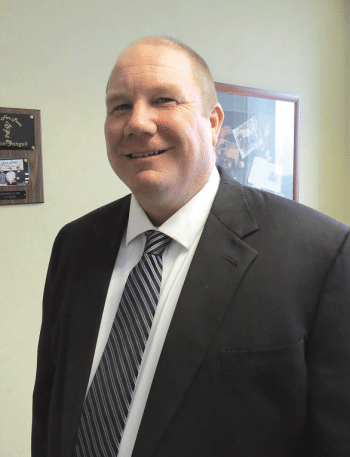
Education Sections
Banks, Schools, Colleges Team Up to Boost Financial Literacy

Roosevelt Charles

Roosevelt Charles says financial-literacy programs at STCC help level the playing field for students in need.

Janet Warren has seen the statistics, and met many of the people behind them.

“Thirty-five percent of households in Massachusetts have less than three months’ worth of savings, and 48% of Massachusetts consumers have subprime credit,” she said, citing a study conducted by the Corporation for Enterprise Development. “These statistics show that we have a real problem, and they illustrate the need for financial education.”

Furthermore, said Warren, vice president of marketing at Monson Savings Bank, “it’s worth noting how these statistics work together to create a cycle of debt and worsen financial insecurity. If someone with less than three months of savings faces an unforeseen expense, such as a broken-down car or a medical bill, they have to borrow to cover the tab. If that person also has subprime credit, the only option may be to take out a high-cost — often predatory — loan. It’s difficult for them to get a loan at an affordable rate.”

As a community bank, Monson has encountered many people in just that circumstance. While life’s circumstances are different for everyone, Warren said, many of them graduated from school and entered adult life without truly understanding the importance of credit, debt, savings, and many other facets of finance.

That’s why MSB is one of many area banks that have teamed with schools to reach young people with lessons in how to handle money.

“By teaching financial literacy in the schools, we can teach kids early how to become better savers, spenders, and money managers — so that, maybe, they won’t find themselves in that situation,” she said.

During the annual Statewide Summit on Financial Education — staged recently at the UMass Center at Springfield and sponsored by the financial-education coalition MassSaves — state Treasurer Deb Goldberg, the event’s keynote speaker, talked about how today’s students don’t grow up with the same exposure to financial education as she did, and how it needs to be reintroduced in public schools, as early as the primary grades.

“I believe we can embed into the curriculum financial skills that kids will need,” she said, recalling the bank passbook she received as a child. “Once in a while, my parents would drive me to an actual bank so I could see what’s going on. That’s how you learn. Kids today can program any iPhone, download any app, but ask them to look at these pieces of money and explain to me a penny, nickel, quarter, they can’t do that. It’s fascinating. My feeling is, let’s step back and start with the basics again.”

Polish National Credit Union has a well-established branch at Chicopee Comprehensive High School that doubles as a way to help students — both those who use it and those who work there as part of their education — learn about finance.

“We employ students — we go through the process just as if they’re going to apply here at the main office — and we train them,” said Jennifer Gallant, the credit union’s chief financial officer.

“Then, once the summer comes and the school branch is closed, we bring the employees over here as summer interns,” she continued. “A lot of the students who have worked at the school branch have enjoyed it and stayed on with us in a greater capacity when we’ve had openings at other branches. Some have even gone on to finance in college.”

Even for students who are casually exposed to the Chicopee Comp branch, she told BusinessWest, “it’s an eye-opener to how finance and banking works. I think it also helps encourage all of the kids in the school to at least look into a savings account, a checking account, what else the credit union has to offer, and how it benefits them — to get them on the right road economically.”

Between efforts like the summit — which drew representatives from many banks, schools, colleges, and financial-education organizations — and efforts by community banks and nonprofit entities to reach out to both students and adults, increasing focus is being placed on the broad issue of financial literacy.

After all, “when we talk about financial literacy and educating kids about what they need to understand these decisions they will be making, we are creating an economic foundation in the state that is stable, breaking down inequality,” Goldberg noted. “Through financial education, we see that, when we invest in people, we’re empowering people to invest in themselves.”

Education for Life

It’s not just happening at the K-12 level, said Kelly Goss, associate director of the Midas Collaborative, a statewide organization that focuses on financial literacy and connecting people with a range of financial resources.

“Our bread and butter is our matched savings account programs,” she noted, referring to a number of different programs that, in partnership with public and private organizations, provide low-income individuals with savings accounts and match their contributions. Clients generally use the funds for one of three purposes: home buying, small-business development, or post-secondary education.

Chicopee Comp students Chad LePage and Ludmila Kaletin

Chicopee Comp students Chad LePage and Ludmila Kaletin work as tellers in the school’s Polish National Credit Union branch.

One of those — a program being conducted at Springfield Technical Community College (STCC), Bunker Hill Community College, and Northern Essex Community College — establishes a savings account for participants, where up to $750 in savings is essentially tripled to $2,250 through matching grants by the college and the federal government. The resulting money must be put toward future post-secondary education expenses.

During the one- to two-year period of the matched savings program, the students also join peer groups, attend workshops, and participate in individual coaching sessions to build their financial skills, rectify financial issues, learn about the economy, and engage them in planning for the future.

“Students receiving the matched savings are required to take eight hours of finance education outside of their course work,” Goss said. “The school provides workshops — teaching them what is credit, what is debt, what is the significance of having a bank account? Some of these students have never had a bank account before.”

Roosevelt Charles, director of access and student services at STCC, said the college ramped up its financial-literacy initiatives — including its partnership with the Midas Collaborative — about a year and a half ago, when administrators noticed students dropping out for financial reasons, who didn’t have the knowledge to access different public benefits or navigate the financial arena, period.

“We’ve done a few other things to level the playing field as related to financial literacy,” he added. “We collaborate with Single Stop USA, a national community-college initiative that provides space on campus where students can go for a variety of public and community benefits. Students can apply for food assistance, housing, fuel assistance — all these benefits, all those resources, in one area. We do have a large percentage of students seeking those benefits.”

The school has also teamed up with MassMutual through that corporation’s LifeBridge program, which offers free term life insurance to families in need. These programs and others, Charles said, represent an effort to offer students both tangible financial resources and education and guidance in putting them to use.

“Once we get students talking about their knowledge — or lack thereof — as related to accessing resources, they realize there are other things out there — ‘did you know MassMutual is offering free life insurance?’ It’s amazing for us; we didn’t expect to get this granular in terms of community support. But, over past two semesters, these conversations have motivated us to go back out into the community and seek out additional resources to offer.”

On the state level, Goldberg said, the recently created Office of Economic Empowerment, led by Deputy Treasurer Alayna Van Tassel, is seeking to create more such partnerships between the state, schools, and businesses. Goals include expansion of Credit for Life fairs and more matched college savings accounts like those pioneered by Midas.

Goldberg said studies have found clear correlations between financial literacy at a young age and college enrollment, or vocational or technical training, after high school.

“Why is that important here in Massachusetts? Well, where is our economy? Biotech, high tech, higher education, healthcare — so we need to make opportunities available to kids,” she explained. “If we provide opportunities to educate, kids will seize upon it.”

Breaking Barriers

In short, Goldberg claimed, financial literacy may be the key ingredient to financial stability across Massachusetts, because it affects so many areas of life.

“All the work we do around teaching kids, teaching women, teaching veterans how to empower themselves is not a partisan issue; it’s an issue that creates opportunities for folks, and candidly, if we can empower people to take care of themselves, they don’t need [as many] safety nets,” she told the summit attendees. “Financial challenges impact every one of us — children to adults, students, teachers, advocates, and policy makers.”

MassSaves, which was created in 2011, complements its work in schools and colleges with financial trainings — “train the trainer” sessions, Goss called them — with the United Way and other community-based organizations that deliver financial-education services. But it all starts with those outreaches into schools.

“The reality is, we need financial education to be taught at every level,” she said. “We want to see it in the curriculum as early as possible, so people grow up with it as an early tool, like math. Why would you not? Particularly in this day and age, it’s really difficult to function without a knowledge of finance and access to a bank account. It’s certainly a barrier for those who don’t have that access.”

Warren, who serves on the steering committee of MassSaves, said Monson Savings Bank became a strategic partner with the organization a little over a year ago, in an effort to help members of the community become more financially confident and capable.

“Here at the bank, we do have people coming through the doors on occasion who can’t get a loan, who may not even be able to get a checking account because they have outstanding balances with other banks,” she told BusinessWest. “That’s why we’ve gotten involved in this. We’re a community bank, which means we’re here to help the community, and we want to help everyone who comes through our doors.”

Now, the bank can direct those customers to MassSaves, which can hook them up with a financial coach by phone, e-mail, or Skype, and connect them to other financial resources they might require.

“It’s definitely needed, and that’s why we’re working on this issue in this manner, in this broad collaboration with lots of different partners,” Warren said. “Really, the more, the merrier. Everything we do collectively is a positive thing.”

Starting with a child’s first introduction to pennies, nickels, and quarters.

Joseph Bednar can be reached at [email protected]

Cover Story Entrepreneurship Sections
VVM Accelerator Participants Continue the Quest for Traction

Jessica Lauren with some of her Olive Natural Beauty products.

Jessica Lauren with some of her Olive Natural Beauty products.

Traction.

Webster has many definitions for that noun, including ‘the adhesive friction of a body on the surface on which it moves’ — and that’s why it’s used frequently, and often with accompanying adjectives, by companies selling tires.

That’s also, although more loosely, why it’s part of the lexicon among those who launch new businesses — and, perhaps more importantly, those who sometimes help finance them.

Indeed, traction is a precious and often hard-to-calculate commodity in business. It is an inexact measure of how effectively a product or service is gaining acceptance, credibility, and, yes, sales.

So, in many ways, the first annual Accelerator Awards, staged recently by Valley Venture Mentors, represented a highly competitive contest of traction — which of the 30 companies in the first cohort of VVM’s Accelerator Program had it, and which ones could gain a lot more of it if they had some more capital to work with.

If the numbers written on the ceremonial checks handed out at the awards ceremony on April 30 are any indication — and most involved would say they are — then Jessica Lauren has certainly achieved some traction with Olive Natural Beauty Inc.

This is a venture that boasts a growing line of products that, as the name suggests, uses olive oil as its base ingredient, but separates itself from others that do the same by the all-natural quality of every item on the ingredient list.

Lauren won a check for $35,000, the largest amount handed out that night by a panel of judges, each of whom had, in essence, $20,000 to apportion and were free to dispense it any way they chose. Lauren intends to stretch those dollars about as far as humanly possible, allocating them for everything from more aggressive marketing programs to building inventory to taking on a strategic partner, as she seeks to take her company to the proverbial next stage.

“It costs money to run a business, and anything would really help push us to the next level,” she said, adding quickly that the amount on her check constitutes far more than ‘anything.’ “This is going to be huge for us.”

For this issue and its focus on entrepreneurship, BusinessWest talked at length with Lauren and others from that first cohort who successfully communicated a level of traction for their businesses to both their peers and those aforementioned judges.

Dave Waymouth, for example, took home a $32,500 check to advance his veture, PetSimpl, which markets a device — one he believes is a vast improvement over anything currently available — that can help pet owners keep track of their furry loved ones.

Lightspeed Manufacturing in Haverhill is now producing the so-called Pip, named after Waymouth’s terrier mix, which in many ways inspired this business (more on that story later).

Waymouth is taking orders, and he expects his product to officially hit the market this summer and be in several outlets in time for the holidays.

Meanwhile, Jake Mazar and his partner, Soham Bhatt, hit their highly competitive market with Artifact Cider roughly a year ago. They now have their product in 40 liquor stores and eight bars along the I-91 corridor, and intend to use the $20,000 they won to help pay for a part-time salesperson to increase their cider’s reach and strengthen its brand.

The accelerator project’s first cohort has 27 more stories like these. They are all different, but there are many common denominators, especially that quest for traction.

Getting a Grip

‘I love you guys, but … no way.’

That’s one of the qualitative assessments used in conjunction with actual numbers (1-9) on the score sheets employed by so-called ‘herds’ within that first accelerator cohort as the entrepreneurs judged their peers and fellow competitors in one of the early phases of the process that decided who received checks on April and how big they were.

Dave Waymouth

Dave Waymouth says his ‘Pip’ device, which helps pet owners find lost loved ones, is a vast improvement over what currently exists on the market.

That phrase obviously pertained to someone who would score a ‘1’ or ‘2,’ and thus it wasn’t used often, if at all, said Paul Silva, executive director of VVM, as he noted that the 30 companies chosen to be in that first cohort were clearly among the more promising startup ventures in this region — and well beyond, as things turned out.

Other assessments, used far more often, included ‘weak story and not enough customer validation,’ ‘somewhat agree/you got me onto the right side of the fence,’ ‘believable story but not enough customer validation,’ and ‘a rare unicorn of perfection,’ which would constitute a ‘9.’

The unicorn has become the unofficial symbol of VVM, and it was on display prominently at the awards ceremony. It represents an ambitious goal, something rare, but also (at least in the VVM universe) something real.

Finding a unicorn is the unstated mission of all the entrepreneurs involved with the accelerator program, said Silva, noting that these individuals went through a rugged period of learning and assessment designed to provide tough love, mentoring, and, for several ventures, very-much-needed cold, hard cash.

Those aforementioned herds were comprised of five entrepreneurs each, and the herds did not judge those in their own group, said Silva, adding that they gathered scores to six questions (statements, actually) — ranging from ‘the company has proven, in-depth understanding of their customers and the customers’ pains’ to ‘the company has a proven revenue model, logical pricing, and has an accurate handle on all applicable costs; they know what can kill them!’ — to effectively narrow the field to 12 finalists.

This smaller field was then assessed by the group of 14 judges, who are also investors, who heard 10-minute presentations from the finalists and then could follow up with more questions and input during a trade-show period before the awards presentation.

Lauren obviously impressed those judges, with both what she’s accomplished to date and the potential to soar much higher.

Like the others we spoke with, Lauren said her venture was born through a mix of necessity and both experience with other products on the market and frustration with them.

“Growing up in an Italian family, olive oil was an important part of our lifestyle in terms of being healthy and taking care of yourself and your skin,” she explained. “And when I went to college, I went to work for an apothecary, and that experience really opened my eyes to the cosmetics industry in the U.S., because there are literally no regulations — there are tons of ingredients that go into cosmetic products that are not regulated or tested or approved by the FDA or any other organization.”

What evolved over time, then, was a business focused on the many beneficial properties of olive oil and featuring the transparency and natural ingredients missing from most products made in the U.S.

She started with a lab in her kitchen, testing various products and providing them to friends and relatives, who started asking for more. And, as she said herself, “the rest is history.”

Explaining in more detail, she said olive oil has become, in many respects, a gourmet product. She is riding that wave, certainly, but in a unique way.

Her products have achieved traction in a number of ways, she said, noting that she’s sold more than 400,000 units to date (like a true entrepreneur, she got more precise, offering the number 404,000). The products are sold through 30 retailers in the U.S. and Canada, and Lauren is in serious negotiations with a major chain she opted not to name that will greatly improve that number if all goes well.

Perhaps most importantly, she’s getting some solid reviews, which are crucial because of the sheer volume of competition.

For example, Michelle Phan, founder of the website ipsy.com, which helps consumers wade through the myriad products on the market through reviews and recommendations, tried some of Lauren’s lip balm and discussed it glowingly in one of her online videos.

As part of that PR and marketing push toward which Lauren wants to direct some of her winnings, she’s striving to win some exposure in People, Good Housekeeping, and other publications with a strong focus on health and beauty and that feature companies making such products.

If all goes as planned — and she expects it will — sales volume, currently around $250,000, should eclipse $1 million in 2016.

A Breed Apart

Waymouth said Pip, his terrier mix, went missing early one evening a few years ago. As anyone who’s been through such an ordeal would understand, this was quite a traumatic experience.

“We live near busy roads, and he sees every car as something with a friend in it,” he explained, adding that, fortunately, the dog was found just a few hours later.

But the experience left Waymouth frustrated by the pet-protection products available on the market — and determined to build the proverbial better mousetrap. He calls it a “LoJack for your pet,” a reference to the vehicle-tracking system designed to help police recover stolen vehicles.

“I’m a big tech guy, so I assumed there were GPS trackers that did this,” he said of his thought process after Pip — now the company’s ‘spokesdog’ and the face of the venture, pictured on the business cards and website — was found safe. “But when I looked, everything was too big for him, or it had horrible battery life.”

At the time, he was enrolled in the MBA program at the Isenberg School of Management at UMass Amherst, and decided to enter a business-pitch competition and make his case for a more effective product. He finished third in that contest and then went through several more rounds where he flushed out the business model and came up with a way to make the product smaller and with longer battery life.

He eventually prevailed in the extended competition, winning a total of $30,000 to build a prototype. He was then accepted into MassChallenge, which helped create connections to Verizon and other strategic partners and make the concept reality.

The Pip uses mostly the same cutting-edge technology found in a smartphone to send a text message to the pet owner when the animal in question leaves a so-called ‘safe zone’ — the owner’s home and area around it, as well as a several-foot-wide area around the pet while it’s being taken for a walk, for example. With the press of a button, the owner gets turn-by-turn directions to locate the animal. When the pet is in that safe zone, the device stays in a low-power mode, Waymouth explained, thus greatly extending battery life.

The first manufacturing run will be for 1,000 of the devices, he said, adding that many orders came in through a Kickstarter campaign, and others continue to trickle in through the website. That will be followed by a run of 5,000 and perhaps another of that size if demand warrants.

The Pip will soon be available on Amazon, and Waymouth is expecting that it will become an in-demand item for the upcoming holiday season. The current sticker price is $99, with a $5 month charge for the cellular connection, or $199 for the ‘unlimited option.’ Over time, and as the technology improves, he expects those price points to come down.

While getting ready for the Christmas season, Waymouth is also in hard pursuit of capital for the venture, and is finding many interested parties.

“I’ve gotten more interest than I can really deal with, which is a great problem to have,” he explained, noting that negotiations continue on a first round of financing he expects will approach or exceed $500,000.

One of those interested parties is the Springfield Venture Fund, he said, adding that its participation will require him to move his headquarters from Northampton to Springfield (that’s one of the conditions of the fund, backed by MassMutual). Either way, the company fully expects to stay within the 413 area code.

“We’re planning on staying in this region,” he said. “We want to be a Western Mass. success story.”

Core Business

Those same sentiments were echoed by Mazar, who said his aptly named product is fast gaining that all-important traction in this area.

Elaborating, he gave a rather loose definition of an ‘artifact’ as something created by man, and from another era, that’s been discovered or rediscovered. Hard cider, he went on, was a popular and potent potable in New England a few centuries ago, primarily because the soil here was more suitable for growing apples than it was for cultivating the hops needed for beer.

Dave Mazar says Artifact Cider

Dave Mazar says Artifact Cider is establishing itself within the fastest-growing segment of the alcoholic-beverage market.

And cider remained popular until Prohibition, when many of the apple trees planted more than 100 years earlier were cut down, and in the time it took to grow new ones, many Americans had switched allegiance to beer, he said, continuing the history lesson. But over the past five years or so, hard cider has made a comeback, with a number of products occupying package-store shelves.

The Artifact Cider Project, as it’s formally known, is part of the wave, said Mazar, but the product differentiates itself in what is now the fastest-growing segment of the liquor market by the way it’s made — with local apples and unique blends.

The story begins, sort of, several years ago, when Mazar was diagnosed with celiac disease, an autoimmune disease of the small intestine caused by a reaction to gluten, which is found in wheat and similar crops, including hops.

“I couldn’t have beer, so, prompted by that diagnosis, I discovered cider,” he said, adding that this interest was shared by Bhatt, a friend since middle school whose aptitude in science, engineering, and culinary arts has effectively complemented Mazar’s background in business — he was a consultant for several years — and, most recently, farming.

“Local agriculture is my passion in life, so Artifact is a combination of our respective professional backgrounds,” he noted, adding that the venture was launched on a virtual shoestring in 2013, and the first cider was introduced in June 2014.

Today, the company has three brands, or blends: ‘New World,’ the first product; ‘Wild Thing,’ described as a “supremely tart, sessionable” cider; and ‘Colrain,’ named after the Franklin County town where the apples used to make it grow.

They come in kegs and 22-ounce bottles, or “bombers,” said Mazar, adding that the obvious goal moving forward is to sell more of them, and the $20,000 won through the accelerator program will certainly help with that assignment.

“One of the things we want to do with the money we received through Valley Venture Mentors is hire a part-time salesperson to help build the brand,” he explained. “We’re mostly focused on our existing accounts; we’re not trying to grow too quickly.

“Eventually, we’d like to get our cider into Eastern Mass. and Boston, but we’re really focused on the Pioneer Valley as our home base,” Mazar went on. “We want to be successful here before we expand too broadly.”

Two marketing interns, one from Smith College, the other from Mount Holyoke, will be working for the company this summer, he noted, adding that they’ll be handling, among other things, cider tastings and other events to introduce or reintroduce people to cider and the Artifact label.

Money Talks

Speaking for all those who took home ceremonial checks from VVM, Mazar said the money comes at an important time and provides needed fuel as the company looks to grow its brand.

“We’re a small company, so getting capital at this stage is going to change things quite a bit for us,” he noted. “We really bootstrapped this company — we started it with our own personal finances, and we’ve done everything on the cheap. We’ve made the money we started with go quite a long way.”

Such is life for the startup business owner looking to take an idea from drawing board to reality — and gain that precious commodity called traction.

The companies in this first cohort all have some of it. The challenge — and the mission — is to earn more.


George O’Brien can be reached at [email protected]

Architecture Sections
Dietz & Co. Marks a Milestone with Some Imaginative Initiatives

Dietz & Co. Architects owner Kerry Dietz

Dietz & Co. Architects owner Kerry Dietz in the lobby at the UMass Center at Springfield, which the firm designed.

Kerry Dietz says talk about what to do for the 30th anniversary of the architectural firm that bears her name started last fall, four or five months before the actual anniversary date.

There were discussions about some sort of party, she told BusinessWest, meaning one of those affairs with a deep invitation list including a wide range of clients, elected officials, and area business and economic-development leaders.

But those talks never got very far.

“You can have a party and get a caterer, and everyone can sit around and drink some chardonnay and eat some cheese; that would be cool,” she told BusinessWest. “And I love seeing all those people we’ve worked with over the past 30 years — it’s actually a lot of fun. But this just seems like a different place and time, and those kinds of parties…”

She never actually finished that sentence, but she didn’t have to. She’d already conveyed the message that the employees of Dietz & Co. Architects Inc. had decided to do something much more meaningful — and lasting — to mark a milestone that eludes many in this business, where one’s fortunes are tied inexorably to the peaks and valleys of the economy, and especially the latter.

Actually, they decided to do several things — starting with some much-needed work on the home of an 85-year-old resident on King Street in Springfield’s Old Hill neighborhood. As part of Revitalize Community Development Corp.’s annual Green-N-Fit Neighborhood Rebuild late last month, Dietz employees did some painting, cleaned out the yard, and repaired the decking on his porch, among other projects.

In June, employees will host a cookout for residents of the Soldiers Home in Holyoke and make a $5,000 donation for medical equipment. And later this year, they’ll fund $25,000 worth of needs identified by Springfield public-school teachers through the education-crowdfunding website donorschoose.org. That’s the same initiative to which comedian Stephen Colbert, in partnership with Share Fair Nation and Scansource, recently pledged $800,000 to fund every request made by South Carolina public-school teachers.

“We want to honor initiative … we’re about ideas; that’s what we do here,” said Dietz as she encouraged teachers to log on and submit a project. “We try and be a step ahead, and so we want teachers to be thinking about what kids need to know and what they need to do in order to learn.”

Finding the time to do all this will be a way of saying ‘thank you’ to the community, said Dietz, but it will also be an extreme challenge.

That’s because her team is quite busy right now as the company continues to recover and build its portfolio in the wake of the latest of many economic downturns Dietz has weathered over the past three decades.

“The recession hit us very hard, and it took a couple of years to pull out of that,” she told BusinessWest. “We had our best year ever last year, as in ever, ever, ever — off the charts ever — and I think this year looks to be similar based on our projections.”

Indeed, the list of ongoing and recently completed projects includes everything from the UMass Center in Springfield, which opened last fall, to the new, 21,500-square-foot senior center now under construction in Westfield and slated to open in September; from upgrades to several buildings on the campus of Worcester State University to the zero-net-energy affordable senior housing project in Williamstown known as Highland Woods; from a comprehensive building assessment of the historic Chicopee City Hall and its annex and planned restoration of its second floor to renovation of the Juniper Elementary School on the Westfield State University campus into the new home of the school’s Fine & Performing Arts Program.

As she discussed these and other projects, Dietz said the company has built a solid reputation over the past 30 years for work in a number of realms, in both the public and private sectors, and for meeting client needs — for ‘green’ design elements, more efficient workspaces, and everything in between.

Given its age and the depth of its portfolio, Dietz summoned the term ‘venerable’ to describe what the firm, now the largest in the region, has become, and it’s an adjective she and her staff wear proudly.

“We’re really busy, and I think part of the reason for that is we’ve been around for a long time, and all that experience comes into play,” she said. “People value that.”

For this issue and its focus on architecture, BusinessWest looks at how Dietz & Co. has drafted a blueprint for business success, as well as a working schematic for how to give back to the community.

Learning Curves

As she talked about her 30 years as a business owner and nearly four decades as an architect, Dietz said those in this field earn a good deal of their money — and hang most of those pictures of their work that dominate their lobbies and conference rooms — when times are good.

But it is the ability to slog through those times when things are far from good that often defines one’s career — and determines its ultimate path.

An architect’s rendering of Parson’s Village

An architect’s rendering of Parson’s Village, a zero-net-energy affordable-housing complex in Easthampton, and one of many projects in the Dietz portfolio.

To get her point across, she ventured back to the weeks and months just after 9/11. This was neither the longest nor deepest of the downturns she’s weathered — the one in the early and mid-’90s wins that first honor, and the Great Recession earns the latter — but it was perhaps the most frightening and career-threatening.

“I have never seen things dry up as quickly as they dried up,” she recalled. “Things just disappeared. People got scared; I’ve never seen fear like that.

“I remember meeting with my banker at one point,” she went on, “and basically saying, ‘here are the keys [to the business] — do you want them?’ Fortunately, he didn’t take me up on my bluff.”

Indeed, the company managed to weather that terrible storm and add several more pictures to the conference-room walls. The key to doing so was that aforementioned diversity as well as the diligence and sheer talent of the staff, she said, noting that the firm now boasts 20 employees and 10 architects.

That kind of success might have been difficult for Dietz to envision when she first decided to go into business for herself.

She started down that path after earning a master’s degree in architecture at the University of Michigan. Soon after graduating in 1977, she joined Architects Inc. in Northampton (see related story, page 31) and later became part of the team at Studio One in Springfield.

In addition to her architectural talents, though, she possessed an entrepreneurial spirit, and decided in late 1984 that it was time to put her own name on the letterhead and over the door.

“It seemed like the next logical thing to do,” she said with a touch of understatement in her voice. “It sounds like a rational decision, but it wasn’t, necessarily, nor was it a well-thought-out decision. I didn’t go read a book to see how you start a business, let alone an architecture business. I learned by doing.”

Fortunately, this was a time when things were good. The real-estate boom of the ’80s had just begun, and there was considerable work to be had.

“We rode the historic-tax-credit boom that ended when Reagan’s tax plans made it less lucrative,” she explained, adding that the firm enjoyed solid growth through the end of the decade, when the real-estate boom went bust and the well of projects dried up, offering a challenging, but nonetheless valuable, learning experience.

“I had no concept that things like that could happen,” she said of what turned out to be a lengthy downturn. “What did I know? We got through it somehow.”

There have been several ups and downs since as the company has amassed a huge portfolio of projects in sectors ranging from public housing to education to healthcare, said Dietz, adding that one thing she’s been able to learn by doing is how to read the economic tea leaves, try to anticipate the next downturn, and prepare for it to the extent possible.

“This is a very volatile business, and one of the things you have to have are some planning tools and some prediction tools in place, which I’ve developed over the years that allow me to look out a year and say, ‘oh, look, there’s no work in six months, what am I going to do?’” she explained. “So, every month, I’m doing an analysis of the future on both an accrual and a cash basis.”

Westfield’s new senior center

Westfield’s new senior center is one of two such facilities currently in the Dietz portfolio.

Looking ahead, she sees reason to be concerned about global instabilities and other factors such as national fiscal policies, but she believes the current period of modest growth and solid consumer and business confidence will continue for the foreseeable future.

Growth — by Design

This forecast is reflected, to a large degree, in the number of proposals for new projects being drafted by Ashley Soloman, the firm’s marketing coordinator, who puts the number at several a week on average.

It is also reflected in the current and recent projects list, which reveals not only the firm’s diversity and work across both the private and public sectors (especially the latter), but also current trends in building design and construction.

Indeed, several projects on that list involve new construction or renovation aimed at making the structures in question energy-efficient — or much more so.

One such project involves renovation of 209 units of elderly housing in the Boston suburb of Brighton that Dietz called “an energy monstrosity.”

“We’re looking at ways we can tighten this building up — strategies we can devise for decreasing energy use,” she explained. “Its claim to fame, if you can call it that, is that it’s one of the largest consumers of energy in MassHousing’s portfolio, on a cost-per-unit basis, and we’re hoping to reduce their status.”

Meanwhile, already under construction is a 40-unit, net-zero-energy affordable-housing project in Easthampton called Parsons Village, she went on, and the foundations were just poured for that aforementioned net-zero-energy elderly-housing project in Williamstown.

“Both of these are really exciting projects,” she told BusinessWest, because we sort of pushed the envelope, if you will, on envelope design, insulation levels, and looking at really sealing the buildings using good building-science technology.” Meanwhile, Chicopee City Hall is another intriguing project, said Dietz, adding that there will be a historic-renovation study to examine not only the exterior of the building, built in 1871, but also the feasibility of converting the long-unused meeting space on the top floor into a new chamber for the Board of Aldermen.

That study will also involve the historic stained-glass window in that room, which has been damaged amid deterioration of the ceiling.

Other work in the portfolio includes a series of projects at Worcester State University, said Dietz, adding that many of the buildings on the campus are now 30 or 40 years old and in need of maintenance and renovations aimed at greater energy-efficiency.

And while the company is being imaginative and cutting-edge in the field, it is doing the same, she believes, with its work within the community.

The company has had a long track record for giving back, said Dietz, and years ago, it decided to establish a donor-advised fund with the Community Foundation to help ensure that it could continue to be active, even during those downturns.

“We already had a fairly robust program for charitable giving,” she noted, “but this allows us to be even more … interesting and have a little more money to play with.”

An architect’s rendering of Highland Woods

An architect’s rendering of Highland Woods, a zero-net-energy senior-housing project in Williamstown, and one of many ‘green’ projects the Dietz firm has designed.

The company was to mark its 30th year — and celebrate its best year ever — by pumping $30,000 back into the community, she went on, adding that this number has since risen to $35,000. And the entire staff has provided input into how best to apportion those funds.

The projects eventually chosen reflect the company’s values, and in each case they also involve another of its strengths — teamwork, said Tina Gloster, the firm’s operations manager, noting that 25 employees and family members were involved on King Street, a large crew will be needed for the picnic at the Soldiers Home, and many individuals will be involved in deciding which school projects to support if requests exceed the available funds.

And they anticipate that there will be many to choose from.

The site donorschoose.org enables teachers in a given community to post a specific request, said Gloster, meaning materials or an activity that they cannot afford. Individuals and groups can go on the site and choose initiatives they want to support.

“Between August 1 and September 25, we’re making a big push to get Springfield public-school teachers to log onto this site and put their projects there,” she added. “And then we’re going to pick projects to fund in their entirety.”

There will likely be more projects than can be funded with $25,000, she went on, adding the company is encouraging other businesses and the community at large to get involved with the initiative, either in Springfield or other area communities.

“Rather than send us a plant and say, ‘happy 30th,’ we want people to fund a project,” said Dietz. “That’s a much more interesting way to help us celebrate.”

Drawing Inspiration

The actual 30th anniversary for Dietz & Co. came in February. As mentioned earlier, there was no party for clients, politicians, and friends.

More to the point, there wasn’t even anything small in-house for employees.

“We just couldn’t get our act together,” said Dietz with a laugh, adding that, roughly translated, this means everyone was simply too busy.

As in too busy with all those projects in the portfolio, and too busy with those initiatives within the community and the planning involved in making them happen. These are the things the company has managed to make time for, said Dietz, adding that the sum of these various parts constitutes a great way to mark a milestone and celebrate being “venerable.”


George O’Brien can be reached at [email protected]
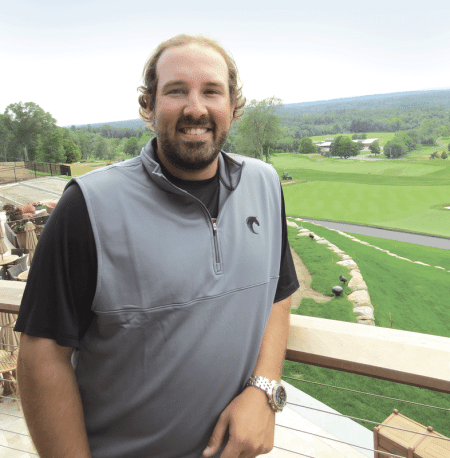
Features
Plan for Progress Gets a 10-year Overhaul

PVPC Executive Director Tim Brennan

PVPC Executive Director Tim Brennan

Tim Brennan acknowledged that it was a loose analogy, but thought it worked effectively.

He was comparing the Plan for Progress — a document first drafted two decades ago by the Pioneer Valley Planning Commission (PVPC), which he serves as executive director — to an automobile.

“They both need regular maintenance, like oil changes,” Brennan explained, noting that the plan requires periodic fine-tuning to reflect changes in everything from demographics to economic-development strategies to government funding priorities. “And they both need major engine overhauls.”

For the Plan for Progress, those overhauls come every 10 years — less-involved updates are undertaken every five — which means the one announced May 4 is the second since the document was first inked in 1994.

And it stresses a number of priorities for this region moving forward, especially the all-important matter of workforce supply and creating more of it. Many Baby Boomers have retired, and tens of millions more will do so over the next 10 years or so, said Brennan, and the task of replacing them will severely test the region and pose a significant challenge for virtually all business sectors, from healthcare to manufacturing to the huge service industry.

This isn’t exactly a news flash, Brennan acknowledged, noting that the Plan for Progress and a host of other reports have sounded the alarm on this phenomenon for more than a decade. But the situation — which was in many ways helped by the Great Recession and its impact on retirement-savings efforts, which forced many Boomers to stay in the workforce longer than they planned — will soon reach a critical stage, if it hasn’t already.

That means the region will soon have to address the matter far more aggressively, and effectively, than it has, despite all those warnings.

“On the talent side, we’re having this whoosh,” he said, using that term to describe the Boomers who have left the workforce or soon will. “Talent is job one; the most important issue for economic development isn’t tax breaks or raw materials or land — it’s really talent now.

“This has been going on for a while,” he went on. “But it’s becoming more intense, and all the projections for the next 10 to 15 years are for labor shortages. We need to intervene.”

There are many other focal points, or so-called ‘decade declarations,’ within the 27-page report, titled “2015-2025: Building Strategies for the Region,” which is available for viewing at www.pvpc.org. They come in three forms — goals, key opportunities, and key challenges — and all of them are regional in scope and focus.

Improving flow in the talent pipeline obviously falls in that last category, where it is joined by “fragile infrastructure systems” and “retention and growth of existing businesses.”

The updated Plan for Progress

The updated Plan for Progress identifies a number of goals, opportunities, and challenges, all with a regional focus.

The key opportunities, meanwhile, involve “leveraging new connections that significantly enhance the region’s economic competitiveness” — a reference to everything from enhanced rail service to broadband networks; “leading the Commonwealth’s clean-energy transformation while moving the region toward a balanced and diversified energy portfolio”; and “harnessing the economic-development potential of the New England Knowledge Corridor.” That’s something Brennan says both Western Mass. and Northern Conn. have essentially failed to do since the corridor was conceptualized 15 years ago.

As for goals, well, there are four of them, which essentially encompass both those challenges and opportunities:

• Develop and maintain a globally competitive and regionally engaged talent pool;
• Foster an environment where established, new, and growing businesses and organizations can thrive;
• Implement and enhance the infrastructure that connects, sustains, and ensures the safety and resiliency of the region; and
• Conduct economic-development activities in a regionally responsible manner, prioritizing collaboration and engagement.

Of course, putting goals, challenges, and opportunities — all identified by a large Plan for Progress coordinating council over the past 16 months or so — down on paper is only one step in the process, said Brennan, adding that the report also identifies specific strategies for reaching those goals and addressing concerns.

As an example, he cited the plan’s last major overhaul, which, among other things, identified a critical need to cultivate young leadership in the region. Strategies to address that matter included creation of what came to be known as Leadership Pioneer Valley, which has created an extensive program to groom young leaders and familiarize them with the region.

Regarding the stated goal of developing a talent pool, the report recommends strategies ranging from bolstering early education to improving K-12 achievement and graduation rates, to enhancing career and workforce training initiatives.

For this issue, BusinessWest takes a look under the hood at the latest update of the Plan for Progress and the priorities it has identified.

Borderline Opportunities

Over the past 15 years, Brennan noted, the Knowledge Corridor, the region stretching from the Vermont border to New Haven, has become a brand. Just how well-recognized a brand it is, both regionally and nationally, is a subject for debate, he said, but added that it clearly hasn’t become much more than a brand.

Moving forward, however, it must do so, he went on, noting that, when it comes to economic development and attracting and retaining employers, there is obviously strength in numbers. The corridor has those, he said, citing a combined population of more than 2.7 million people. It also has more than 40 institutions of higher learning, several major healthcare providers, an international airport, and a host of other assets.

All of these must be exploited and effectively sold, he told BusinessWest, because promoting the Valley’s place in this broader region is perhaps its best hope for growth, given trends Brennan believes will only accelerate in the years and decades to come.

“That critical mass makes us the 20th-largest market in the country, and that’s not inconsequential,” he said. “Our future fortunes are tied to moving beyond this being a brand, and putting as much substance as we possibly can into this and working together.

“It’s a whole new economic ballgame out there; we have to put a different team on the field, and we’ve got to play differently than we did 10 or 20 years ago,” he said, adding that the two states and their leaders will have to put aside the parochialism that his existed historically. “Our nation is going to morph into about a dozen mega-metropolitan regions, and we need to be part of that. I remember one guy said, and I’ll never forget this, ‘you guys better watch out, or you’ll become a cul-de-sac in New England.’”

Harnessing the potential of the Knowledge Corridor is one of the opportunities identified by the report, said Brennan — and they are opportunities, he added, even if some people don’t necessarily recognize them as such. He puts the corridor, those aforementioned ‘connections’ — especially rail service — and the potential to lead the state’s clean-energy transformation firmly in that category.

Regarding rail service, which Brennan has long advocated as a potential economic engine, the emphasis moving forward must be on not only enhancing north-south connections — which have dominated the discussion and the progress made to date — but expanding east-west connections as well.

At present, there is one train a day (the Vermonter) running from Vermont to Springfield, and real potential to bring perhaps a dozen trains a day running between Springfield and New York. A Springfield-Boston connection is further from reality and will come with a hefty price tag, probably hundreds of millions of dollars, said Brennan, but there is considerable interest in one, there have been some signals of support from the Baker administration, and a 2024 Boston Olympics may provide the needed incentive to get the job done.

In the years to come, Tim Brennan says, the Knowledge Corridor must become much more than a brand.

In the years to come, Tim Brennan says, the Knowledge Corridor must become much more than a brand.

“We think this has a lot of benefit potential,” he said of rail service in any direction. “Wherever you have a place where trains land, whether it be at Union Station [in Springfield] or one of the platforms to the north, you get these sort of hotspots of development around it — a quarter-mile or half-mile around the station, you tend to get a development surge.

“If you have enough service and it’s reliable out on that rail line,” he went on, “young people and seniors tend to gravitate toward this kind of living situation more and more.”

He cited Boston as an obvious example, even with all the problems that visited the Massachusetts Bay Transportation Authority this past winter.

“We’re not arguing that we’re Boston, but we have a toehold on north-south connections to New York,” he explained. “And if we can offer good, robust, reliable service … we’re an affordable area, and people can commute from here. We think we can capture folks, and that’s one way to build the talent pool in the Valley.”

As for the movement away from fossil fuels, this could be an opportunity to create jobs, said Brennan, and also maneuver around what is becoming a growth-stifling problem with natural-gas distribution.

“I think there’s a transformation going on,” he said of what some call a nationwide trend toward greener sources of energy. “And those who lead it are going to be in a better situation to be economically competitive.

“The numbers seem to indicate that we’re a leader inside a state that’s a leader,” he went on. “So let’s keep that going.”

Going into Labor

While the report urges action on the many opportunities it identifies, the main thrust of the document is its focus on the talent pool — how to ensure there is a deep one for the years and decades to come, and the sense of urgency that must be attached to efforts to address this concern.

“One of our biggest assets in the Valley and the Knowledge Corridor is one of the most highly productive workforces in the country,” said Brennan. “But the question we’re facing is, how do we replace those men and women and keep that asset in place?

“On the supply side, we need lots of replacement troops,” he went on, adding that, while the situation hasn’t reached a critical stage (at least in some sectors) because many individuals are working longer than they anticipated a decade ago and others have embarked on what’s known as ‘soft retirement,’ where they’re still in the workforce but on a part-time basis, serious crunch time is fast approaching.

The emphasis isn’t solely on numbers, he said, adding that the accumulated talent must possess the skills required by businesses — and there will be many of them — with ‘help-wanted’ signs out. “On the demand side, you have lots of jobs that are opening, but do the bodies have the skills to fill those posts?” Brennan asked rhetorically, adding that, too often, the answer is ‘no.’ “So it’s a two-pronged problem.”

The region’s employers, not to mention workforce-related agencies such as the regional employment boards, have long recognized the existence of a skills gap, Brennan went on, and there have been efforts to address it.

Moving forward, there must be more initiatives such as Training & Workforce Options (TWO), created by Springfield Technical Community College and Holyoke Community College to assist employers with the challenge of training individuals for specific jobs, and Westfield Vocational Technical High School’s new program to train people for jobs in the aviation field.

“We need to intervene over the next decade,” said Brennan, “so that, by the end of this 2015-2025 period, we’re not wringing our hands about how we had a problem, we forecast it, and yet we didn’t do enough it to change it.”

Such intervention efforts must involve a number of players, including the workforce-development agencies and the region’s many colleges, he said, adding that the focus will be on everything from early childhood education to training and retraining those already in the workforce or on the outside looking in, to stemming the so-called brain drain.
“There’s a lot of talk about how we get more of the public and private colleges to offer internships in jobs that are in the career paths of young men and women, so they get a job as they come out with their degree,” he said, adding that the talk needs to turn to action. “The message has gotten through, but we need a lot of implementation out there to tackle this for the long term.”

But talent is only one of the issues facing area business owners and managers, said Brennan, noting that one of the updated plan’s goals is to foster an environment where established and new businesses can thrive.

Like efforts to grow the talent pool, meeting this goal will be a multi-pronged effort, he said, adding that there is a great deal of entrepreneurial energy in the region and thus a large number of startups and early-stage businesses. Likewise, there are a number of businesses led by Baby Boomers who will be retiring soon and are thus facing the many daunting issues involved with transitioning to the next generation — or deciding if there will be a transition.

These ventures will need assistance in forms ranging from capital to succession planning to, yes, talent, Brennan said, noting that the region must build on an already-significant support network.

“When we did a growth-business study with the Donahue Institute, they said the good news from the recession period was that most of the small businesses hung in there — we didn’t have an avalanche of closures; they sort of held their ground,” he explained. “And now, many of these companies are growing; what resources will they need in order to continue growing?

“Many of them need an infusion of capital, and some of them are so small that they can’t get away from the oven or the drill press to go look for help,” he went on. “We need to create ways to get information to these small businesses in a user-friendly way, and we need to make these services more seamless so they don’t have to go here for this and there for that.”

Driving Forces

Like the original Plan for Progress and the first 10-year update, this latest document is intended to serve as a road map of sorts, said Brennan, identifying preferred routes and speed bumps on the way to a more prosperous future for the Pioneer Valley.

With this latest overhaul, the region now has some directions to follow, he went on, adding that, if area leaders stay on course, they should reach the intended destination.

But the road ahead has a number of curves, he implied, and the region would be wise to heed both the speed limit and the many caution signs.

George O’Brien can be reached at [email protected]

Meetings & Conventions Sections
Smith College Conference Center Offers a Slice of Paradise

Smith College Conference CenterAddie MacDonald was offering a quick tour of the Smith College Conference Center.

He started in the front lobby and quickly moved on to the main meeting room, ticking off its various amenities — including a host of seating possibilities, state-of-the-art audio-visual systems, ample parking, and a slew of catering options — as he walked.

“And then … there’s that,” he said, gesturing out the huge windows covering one side of room.

‘That,’ of course, is Paradise Pond and the many views of it and the surrounding grounds that are perhaps the best selling point of this relatively new entry into the highly competitive local market for meetings and conventions.

Intriguing even in winter, the pond area is exceptionally beautiful in the spring and fall, said MacDonald, manager of the conference center, adding that the views — from the Paradise Room, as that aforementioned main meeting facility is called, to the deck nearby and many of the other rooms in this complex — certainly help explain why this facility has become an attractive option for groups of several sizes since it opened to the public only four years ago.

But there is more to this venue than what’s visible out the windows, or experienced up close if one chooses to venture outside during a break in the proceedings in question — which almost everyone does, said MacDonald.

There’s the location — downtown Northampton and, more specifically, the Smith campus, which boasts everything from century-old buildings to its famous botanical garden (designed by the firm headed by Frederick Law Olmstead, who also conceptualized Central Park), to the pond and its waterfall — which is something decidedly different among meeting venues. There are also the many catering options available, said MacDonald, adding that the facility’s kitchens have been used by many of the city’s renowned restaurants to prepare meals for clients.

Addie MacDonald

Addie MacDonald says the Smith College Conference Center is off to a good start because of its mix of scenery and amenities.

Addie MacDonald says the Smith College Conference Center is off to a good start because of its mix of scenery and amenities.
[/caption]Until very recently, these views and amenities could be enjoyed only by Smith faculty and invited guests. Indeed, the conference center, or at least the main building in the complex, was once the Faculty Club and then the College Club, said MacDonald, meaning it was open only to faculty and staff and was, as he put it, the “social epicenter for the academic mission of Smith.”

“For years, there is where faculty would come to wine and dine and entertain lecturers who would come from out of town, or interview potential candidates,” he explained, adding that the conference center is comprised of two buildings — the 1950s-era former Faculty Club, and a century-old building eventually acquired by the college that was believed to be the home of a buggy-whip manufacturing facility. “And this was ultimately a place where they could freely speak, exchange ideas, develop coursework, and invite other professors from local colleges.

“Over the years, it became more and more popular, and the college decided to open it up to the Northampton general public — and then well beyond,” he continued.

Mostly through word-of-mouth referrals, it quickly became the site for a wide array of functions — from weddings to corporate retreats; from holiday parties to meetings of the U.S. Fish & Wildlife Service.

“They do retreats, and once or twice a year they might meet here to discuss policy — I think they like looking at our pond because they can identify the various ducks that are coming and going from there,” MacDonald joked, referencing the fish and wildlife agency.

He told BusinessWest that Smith has become more aggressive in its marketing of the conference center in recent months, and it can certainly no longer be considered a hidden gem or best-kept secret.

It now stages more than 25 weddings a year, and the calendar, especially for those warmer months, fills up quickly.

“In many respects, this is like a classic startup business with a great infrastructure behind it,” he said of the venture. “And it’s gone well — we’ve picked up business even faster than we anticipated; the location has really attracted a number of people.”

For this issue and its focus on meetings and conventions, BusinessWest takes in the views at the Smith College Conference Center and examines why it has quickly become a venue of choice for many different types of groups.

Setting the Stage

MacDonald brings an intriguing background to his role as manager of the conference center.

Indeed, the Vermont native eventually settled in New York City, where he worked for years for the Directors Guild of America, handling a number of screenings and movie premieres in Gotham.

“It was the classic New York job in many ways — a lot of late nights and meeting many interesting people,” he explained, adding that there were several factors that motivated him to come back to New England and get this startup successfully off the ground.

The deck, with its views of Paradise Pond

The deck, with its views of Paradise Pond and the many forms of wildlife that inhabit it, has become a popular spot at the Smith College Conference Center.

“New England is in my blood, and my wife and I really knew that we wanted to find a place to settle down and find a community,” he explained. “We found all that in Northampton and Smith.”

But there are still quite a few of those late nights that he was in many ways hoping to leave behind, he went on, adding quickly that this is a good thing because it’s a clear sign that the conference center is off to a strong start in its bid to become a player in the region’s meeting and conventions market.

“We hit the ground running, because part of my charge here was to bring in new business, and people from Northampton and beyond, across Western Massachusetts, have always been eager to come to campus, utilize our facilities, and take advantage of the many resources we have here — and, quite frankly, impress their clients, because the view and this location are unparalleled.”

As MacDonald mentioned, the conference center, which was given a facelift in early 2014 — one that opened up the lobby area and gave it a new façade — is more than one room with a great view. Offering a more elaborate tour, he and Merrilyn Lewis, associate director of the Events Management Office at Smith, stopped at a number of smaller rooms that are appropriate for a number of different types of events.

There’s the Oak Room, which can accommodate 75 for a reception, 100 for theater-style seating, and 55 for a seated dinner. There’s the adjacent lounge, which can host 50 for a reception, said Lewis, adding that clients can book both rooms for a slightly larger event.

There’s also the so-called Directors Room, which can seat 15 for meetings, and Meeting Rooms B and C, which can accommodate six and 15 people, respectively. Meanwhile, the lobby and adjoining deck, which can accommodate 75 for a reception, has become a popular alternative, in part because it brings guests even closer to the beautiful surroundings and allows more of the senses to get some exercise.

“Everyone likes it out here, and it’s part of the attraction; not many venues have an outdoor location that’s this convenient,” said MacDonald as he stepped onto the deck, noting that various forms of wildlife often come into view, including some otters that recently established residence nearby and have put on some good shows for guests.

the conference center at Smith

Addie MacDonald says the conference center at Smith is much more than a room with a view.

The venue is a natural for weddings because of the facilities and surroundings, said MacDonald, adding that the center has booked several, some involving individuals, especially students, who have connections to Smith, but also many others who don’t.

And already, a number of businesses, nonprofit groups, and even government agencies have discovered the conference center, said Lewis, noting that Yankee Candle, headquartered in nearby Deerfield, has hosted a number of events there, as has Baystate Health, the Northampton School District, United Way of Hampshire County, and others. Some of those groups are based a few blocks or a few miles from the campus, but many others are headquartered in Springfield and points further south and east.

“Sometimes, when you’re staging a company retreat, it’s nice to hold it away from the office in a completely different setting, which frees up thinking,” Lewis explained. “And that sentiment has brought a lot of people here.”

And while the spring, summer, and early fall are easily the busiest months, the center books a number of corporate outings and annual meetings in the winter, and the venue has hosted a number of smaller holiday parties as well.

View to the Future

Looking ahead, the conference center’s obvious goal is to add more events to its calendar, said MacDonald, who told BusinessWest that he expects this will happen as more individuals and groups come to the facility for the first time.

This will lead to more word-of-mouth referrals, he noted, as well as repeat business — and there has already been a good amount of that.

“We’ve been very fortunate to have a number of repeat clients because of the convenience, location, and simplicity of it all,” he said, adding that a number of businesses and nonprofits have returned several times.

They obviously liked what they saw — both literally and figuratively.


George O’Brien can be reached at [email protected]
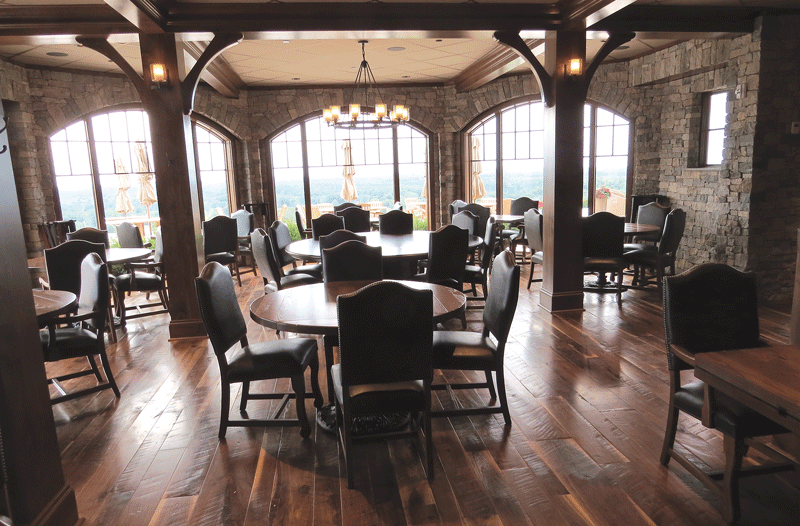
40 Under 40 Cover Story The Class of 2015
The Top Young Business and Community Leaders in Western Massachusetts

Diverse.
That’s a word that could be used to describe any of BusinessWest’s classes of 40 Under Forty winners. But with the class of 2015 (see the list below), an adverb like ‘very’ or ‘extremely’ would sem to be necessary.

That’s because this group of winners represents virtually every sector of the economy — from financial services to manufacturing; retail to healthcare; technology to nonprofit management; education to law. They also show the seemingly innumerable ways to give back to the community — from serving as a Big Sister to teaching young girls how to cheer; from service on nonprofit boards to work repairing homes in Springfield’s neighborhoods; from taking a leadership role in an Extreme Makeover project to service on the town of Orange’s School Building Committee (see the profiles of the five judge’s HERE).

The Class of 2015 will be feted at the annual 40 Under Forty Gala, set for June 18 at the Log Cabin Banquet & Meeting House. Always one of the most anticipated events of the year and best networking opportunities on the calendar, the gala will feature lavish food stations, entertainment, and the introduction of this year’s class, with individuals walking to the podium backed by a song of their choice. Download the flipbook of this year’s 40 Under Forty HERE

Tickets to the gala are $65 each, with tables of 10 still available. Tickets can be ordered by calling (413) 781-8600, ext. 100, for more information go HERE.

40 Under Forty Class of 2015


Presenting Sponsors:

NorthwesternMutual900pxParagus200x130px


Sponsors:

Fathers&Sonns200x130pxIsenberg200x130pxHNElogo200x130pxMoriartyPrimack200x130pxUnitedBank200x130px


Partner:

YPS200x130px


Photography for this special section by Denise Smith Photography

Features
Common Capital Program Helps Individuals Fuel Small Businesses

Common CapitalBeverly Weeks spent close to two decades as a librarian at West Springfield High School, so she understands the importance of researching matters thoroughly.

And that’s exactly what the now-retired Weeks did several months ago when she decided to reel in one of her investments, which she determined was too heavily focused on fossil fuels, and redirect that money toward something far more sustainable — and rewarding.

That research took her to Common Capital’s Community First Fund, which pools investments from people like Weeks and loans them to individuals trying to get a business off the ground or to that proverbial next level.

And that’s where her search ended.

“I was looking around for alternatives — I was searching for investments that would go back into my community, and this struck me as a good one,” she told BusinessWest. “I liked the fact that I would be making a loan that then makes it possible for a venture to get on its feet or add a new aspect or product to its business.

Claudine Baj

Claudine Baj says loans channeled to her through Common Capital have helped her expand her kitchen and bring in needed help.

“And I like the fact that it’s a loan, so the money keeps circulating,” she went on, adding that, as part of that extensive research she conducted, she read how Common Capital, formerly the Western Mass. Enterprise Fund, assisted some of those businesses crippled by the fire in a Hadley strip mall in the fall of 2013. “It’s rewarding to lend a helping hand — or a helping dollar, as the case may be.”

Such sentiments are exactly what administrators at Common Capital had in mind a few years ago when they decided to become part of what is now a national trend toward creating community loan pools to assist fledgling businesses.

Chris Sikes, Common Capital’s CEO, said this movement, if it can be called that, can be traced to New Hampshire, and it has quickly spread to many other areas of the country.

That’s because the concept is fairly simple, and — to the growing number of people who, like Weeks, desire investments that that can in some way be categorized as ‘sustainable’ — it’s also quite appealing.

Here’s how it works locally: the Community First Fund will accept donations of any size from $500 to $50,000 (the old floor was $1,000, but it was lowered to enable more people to participate). The loan term is three years with a 2% annual rate of return (better than most currently advertised CD rates certainly), with interest paid to participants semi-annually. Common Capital’s initial goal was to raise $500,000, but that has been passed — approximately $600,000 has ben amassed to date — and the new target is $1 million.

Contributions are pooled and placed in Common Capital’s general fund, where they are loaned to a diverse and growing roster of entrepreneurs who need some capital to make an important step forward, whatever that might be.

People like Claudine Gaj.

She started the Magic Spoon, a catering business, in 1998, and, over the ensuing years, has recorded steady if unspectacular growth. By early last year, she had come to a point most entrepreneurs reach, where she really wanted and needed to bring in help.

Jerry Zalucki, seen here with his wife, Suzanne

Jerry Zalucki, seen here with his wife, Suzanne, says that, when banks wouldn’t listen to his plans for his fledgling business, Common Capital would.

First, though, she needed to expand her facilities and add equipment, and to do that, she needed capital. She has found it through two loans facilitated by Common Capital and channeled through the Samuel Adams Brewing the American Dream loan program, launched by the Boston-based company’s founder, Jim Koch.

“I went to a Brewing the American Dream event, a meet-and-greet, and I got to meet Jim Koch,” Gaj recalled. “He said, ‘where do you want to be?’ And I said, ‘I really want to hire someone who has skills so I can get out of the kitchen, do more marketing, and be the boss, not the business.’

“He said, ‘what’s stopping you?’ and said, ‘I need to remodel my kitchen,’” she went on, adding that the second loan ($8,500) came through in January. She has, in fact, hired someone, and is “getting there” when it comes to bringing in more business.

Baj is, in many respects, the type of small-business owner that Common Capital assists, said Sikes, adding that the unofficial mission behind the Community First Program is to put more companies like Magic Spoon in the portfolio.

Thus, the program represents the quintessential win, win, win scenario. Donors win because they enter into totally safe investments (loans are secured by Common Capital) with a decent rate of return while spurring economic development and job creation in the region; loan recipients win because they secure financing they probably couldn’t receive from traditional sources; and the region wins because the fund is fueling a recognized surge in entrepreneurial activity.

For this issue, BusinessWest takes an in-depth look at the Community First Fund and the many different ways it can measure success.


The Ride Stuff

Jerry Zalucki was searching for the right words. It’s not that he didn’t know what to say — he certainly did. He just didn’t know how, at least without offending a large group of business professionals.

He was trying to describe the commercial-lending environment in early 2011, just a few years after the Great Recession, and, more specifically, what it was like to be on the other side of the table from those doing the lending — or not.

“Let’s just say … well, let’s just say … it wasn’t a good time to be out there for looking for a loan,” he told BusinessWest, adding that it was his misfortune to be seeking some capital at that time for a venture called Auto Custom Leathers, an offshoot of a larger enterprise that had been sold.

It specialized in after-market leather and vinyl auto interiors — its current marketing slogan is ‘cover your ride with our hides’ — and Zalucki was able to use his own money to get the business into what he would approximate as first, maybe second gear.

“We had about 1,000 patterns, and I had the know-how, the knowledge, and the market idea, and thought I could make a go of it,” he recalled. “I had a little bit of money and did what I needed to do to get it going — but I knew it wasn’t enough.”

Indeed, to gain any real speed, Zalucki knew he needed capital, but the banks weren’t bashful about saying no, without even really hearing him out, at least in Zalucki’s estimation.

“You know when someone looks like they’re listening, but you know they’re not really listening … that’s how I felt. I had an idea, I did the numbers, I crunched everything, but no one cared,” he recalled, adding that a friend put him in touch with Sam Ortiz, director of Lending at Common Capital, who not only listened, but asked a number of questions.

Fast-forwarding a little, Common Capital was able to award Zalucki a $100,000 loan and a $50,000 line of credit. He used that capital to buy some equipment and expand the venture. His workforce went from eight to 15, and to accommodate the new growth created by that expansion, Common Capital awarded him a second package totaling $225,000.

“If it wasn’t for them, there’s no way I would have continued, and no way all this would have happened,” said Zalucki, adding that, while he’s not exactly in the driver’s seat, figuratively speaking, he certainly has his business on the right road.

In essence, Common Capital was created to help people like Zalucki and ventures like Auto Custom Leathers, said Sikes, adding that the Community First Fund, which accurately reflects the agency’s mission statement, was launched so the institution could assist more ventures like this one.

“Our goal as a nonprofit and as a community lender is to create economic opportunity,” he explained. “And central to that is creating a local, sustainable economy, and one of our main strategies for doing that is getting the community involved in its own economy.

“We have the ‘buy local’ movement, and we have the ‘invest locally’ movement as well,” he went on. “The Community First Fund provides an opportunity for people to invest locally and see their loans go into local businesses, create jobs, generate more local goods and services, and provide area residents and businesses more opportunities to buy local goods and services. We see this as a multiplier effect.”

In many respects, the timing for the launch of the program could not have been better. Indeed, several forces are coming together to make the Community First Fund a vehicle for economic development — and an attractive investment.

First, Baby Boomers — and also the generations behind them — are coming into money, record amounts of it, noted Sikes, quoting statistics showing that the Boomers stand to inherit something north of $30 trillion through what’s known as the ‘great wealth transfer.’ Meanwhile, many Boomers have done pretty well themselves, he went on, adding that many are seeking not only places to put their money, but places that meet a growing sense of environmental and societal sustainability — and responsibility.

At the same time, there is a great deal of entrepreneurial energy in the region, said Sikes, citing the efforts of groups such as Valley Venture Mentors and others to encourage entrepreneurship and mentor small-business owners. Also, with the arrival of MGM Springfield, there may be opportunities to do business with the casino giant for those with the wherewithal to take advantage of them.

Inevitably, most small-business owners will need capital, he continued, and some will need to turn to what would be considered non-traditional sources to get it.


Generating Interest

Chris Sikes, CEO of Common Capital

Chris Sikes, CEO of Common Capital, says the Community First Fund enables individuals to get involved with the local economy.

Helping to provide such funding is rewarding for Community First Fund participants on a number of levels, said Sikes.

“For the investor, it’s a chance to really feel and know that, financially, they’re investing in the community,” he said. “And that has a psychological, social, and even emotional impact on people, so they’re more concerned about the community.”

Elaborating, he said that, in the larger scheme of things, $500,000 or $1 million is not a large amount of money. But when one is talking about small (often very small) businesses, such an amount can go a long way and make a huge impact in the life of an enterprise.

“What we’re doing at Common Capital is really exciting, and we’re going to need a lot more local capital moving forward,” he explained. “Public monies are going to be diminishing, and the private investments are going to be more and more important.”

Those sentiments, or words to that effect in literature introducing and explaining the Community First Fund, resonated with Marty Wohl.

A Northampton-based dentist, he was, like Weeks, searching for investments that would do more than earn a respectable return. And he was motivated by the opportunity to get involved in a meaningful way.

“This program piqued my interest because, living in a community for a long time, you support different activities, causes, and charities,” he explained. “And this seemed a little like providing a fishing pole instead of a fish. It just made sense to provide funds that can be returned, but also make a difference.

“In a sense, it’s like a municipal bond, but obviously without any collateral or security or insurance,” he went on, adding that he became a participant nearly two years ago. “But being so local, it’s very effective for community building. And there’s a recognizable need for this, and that’s satisfying as well.”

Sikes said Wohl is typical of many donors to the fund in that he’s a professional from the Northampton-Amherst area (the northern portion of the region seems to be embracing this concept more than the Springfield area to the south), has a strong sense of community, and was looking for a sound, safe, and sustainable investment.

Moving forward, Common Capital’s goals are to grow the fund through wider participation, eventually improve the rate of return to make it more attractive, and perhaps give investors more control over where funds are directed — such as to a specific region or economic sector, Sikes told BusinessWest.

To reach more potential participants, Common Capital will more aggressively market the concept; to date, it has relied on word of mouth and information on its own website, common-capital.org. And one of the most effective ways to market the fund is simply to tell the stories of business owners who have been supported by loans from the agency.

“We want to get people excited about this, because it’s helping us do some great things in the community,” he explained. “We want to grow this fund and give it a broader impact across the region.”

Wohl’s first commitment to the Community First Fund will run its course in roughly a year. He’s already thinking about re-upping — he considers that a strong possibility — and might opt for a larger investment.

“I’ll decide that when the time comes,” he said. “Right now, I see no reason not to participate again.”

Weeks offered similar sentiments.

“I think this is something I may do again,” she told BusinessWest. “I didn’t give a whole lot the first time, but it was enough to make a difference, I hope, and I like that part about this.”


Bottom Line

Like everyone else who has secured a business loan, Baj now has some dueling emotions.

She’s elated that she received the money and is excited about what it means for her and her venture. At the same time, she’s naturally a little apprehensive about paying it back and taking the step forward needed to generate that revenue.

“We’re going to do some additional marketing and do whatever else we need to do to get where we want to be,” she said. “I’m not a grow-by-leaps-and-bounds person; it’s through small, steady steps — that’s how I want to run my business, because I never want to be too far ahead of what I can really handle. This is an exciting time for us.”

The Community First Fund was created to place more people in such a state, said Sikes, adding that he believes the program will continue to grow, gain momentum, and help write more entrepreneurial success stories.

That’s because, as he said, there are multiple winners in this scenario, including people like Weeks, who want to lend a helping hand — and a helping dollar.


George O’Brien can be reached at [email protected]

Construction Sections
Union Station Project Moves to Critical Next Phase

Bob Aquadro

Bob Aquadro stands inside the gutted central concourse at Union Station. Inset: an architect’s rendering of the planned new concourse.

Springfield Mayor Domenic Sarno had probably been inside the old terminal building at Union Station a few dozen times since he was elected in November 2007, for press conferences, meetings with state officials, and assorted other gatherings staged to inform the public about its pending revitalization.

He had become quite familiar with the dark, dank interior of the old station, which has sat vacant and unused for more than 35 years, and many of its features, such as the terrazzo floor, some relics from the golden age of rail, the central concourse, and the famous clock stationed at its south end, its hands seemingly frozen in time.

So the mayor was somewhat taken aback when he walked in the 89-year-old building earlier this month as BusinessWest was offered a tour and update on the ongoing construction there.

He barely recognized the place, and for good reason.

The interior had been gutted right down to the brick walls and the structural steel support beams. The skeletal steel frame of the concourse, with its various-sized arches, was all that was left of the once-proud centerpiece. The clock was gone, and the tunnel that connected the terminal with Lyman Street and the rail platforms above was open for the first time in what is believed to be three decades. The mezzanine and third floors, also gutted to the walls, were inaccessible because the stairways to them had been torn down.

“Wow … this is really opened up,” said Sarno as he walked in the front entrance with Kevin Kennedy, the city’s chief development officer. “This place is huge.”

The work to gut the interior, revealing just how massive the landmark on Frank B. Murray Way is, represents some of the still-early-stage work in a massive, long-awaited, $76 million project to convert the long-dormant station into an intermodal transportation center and, hopefully, revitalize the area surrounding Springfield’s famous Arch. For Sarno and Kennedy, this is a multi-faceted economic-development initiative, one designed to restore a landmark but also create momentum and spur additional activity.

But for Bob Aquadro, senior project manager with Holyoke-based Daniel O’Connell’s Sons, it’s merely the latest — and also one of the largest, most challenging, and most complex — projects in a long career in construction.

Indeed, this multi-phase endeavor entails both new construction — especially a six-level parking garage and adjacent bus terminal — and historic renovation of both the station’s interior and exterior. Meanwhile, it also involves a host of constituencies, especially the two railroads — Amtrak and CSXT — that own the rails above the station and run several trains over them each day at speeds sometimes exceeding 40 miles per hour.

This project also features some rather tight deadlines and extremely difficult work — with both of those elements in evidence with efforts to waterproof that aforementioned tunnel area, one of the next steps in this intricate process.

“This is one of the most complex processes that I have seen in many years — there are a lot of players, and there’s a lot to put together to make this come off properly,” Aquadro said, referring to the tunnel work specifically, but also the project as a whole. “And once we get the railroads on board, we have a detailed phase-in plan for going through their yard and digging up that tunnel.”

There will be many other challenges involved with this endeavor, and for this issue and its focus on construction, BusinessWest looks at how, collectively, they will make this project as intriguing as it is historic.

UnionStationOldDays

Union Station

At top, Union Station not long after it opened in 1926. Above, an architect’s rendering of the renovated station, bus depot, and parking garage.


Platform Issues

Union Station wouldn’t be the first Springfield landmark that Daniel O’Connell’s Sons has constructed — or reconstructed, as the case may be.

Indeed, the company handled the massive rehabilitation of the of the Memorial Bridge in the early ’90s, and it also handled the $60 million initiative to build a new federal courthouse on State Street, a three-year project that was completed in 2008.

Aquadro served as project manager for the federal courthouse work, as he did for construction of the new, $80 million Taunton Trial Court, his most recent major assignment, and another endeavor that stretched through three building seasons.

“Projects I tend to get involved with are generally very lengthy,” said Aquadro with a laugh, adding that work to revitalize Union Station and build its related components will certainly continue that trend. By the time a ceremonial ribbon is cut in 2017, he will have spent close to four years on this assignment.

As he talked about the project, he and Clerk of the Works Leroy Clink stressed that there are many moving parts and a number of intriguing elements — starting with the station itself.

It is coming up on its 90th birthday, said Aquadro, and it is certainly showing its age — not to mention the fact that it has spent more than half its lifetime is serious decline or complete dormancy.

Indeed, like most all of the grand rail facilities, many of them called Union Station, built in the first two decades of the 20th century — many conceived to replace earlier structures that ushered in the era of rail travel — Springfield’s landmark fell victim to the rise of air travel and the nation’s interstate highway system, both of which began altering the landscape in the 1950s.

Changes in how Americans got from one place to another eventually led to the destruction of many of those stations, including, famously (or infamously as the case may be), New York’s Pennsylvania Station, torn down in the early ’60s. Others fell into serious decline and were eventually revitalized and often repurposed. That list includes Washington D.C.’s Union Station, New York’s Grand Central Terminal, Boston’s North Station, Worcester’s Union Station, and many others.

Springfield’s Union Station had to wait much longer than those facilities, but perseverance, especially on the part of U.S. Rep. Richard Neal and Kennedy, who once served as Neal’s senior aide, finally paid off.

Plans to convert the station into an intermodal transit center and mixed-use facility, which have been on the drawing board for more than 20 years, are finally becoming reality, although most of those mixed uses proposed over the years — everything from an IMAX theater to a day-care facility to various forms of retail — have been shelved or scrapped altogether.

What survived were plans to restore the station to something approaching its former glory — at least in terms of aesthetics — and outfit it to accommodate expanded rail service within the region, and also build a new facility that would handle intercity, and perhaps intracity, bus travel.

Work at the station has actually been underway for well over a year now, with much of it focused on asbestos removal — an intricate and time-consuming effort — and then demolition of the station’s former baggage area to make way for the new bus facilities.

Given the station’s advanced age and decades of dormancy, crews spent considerable time assessing its condition and looking for possible surprises, said Aquadro, adding that designers and engineers needed to know what they were up against moving forward.

“That’s one of the reasons we did all this work early, to help the designers see what’s here, because it is very difficult,” he told BusinessWest. “We had to remove a lot of asbestos, and just removing the roof gave us an awful lot of information. There were some surprises, but it goes along with the investigation; this structure was built under different building standards than what we use today, and all of that had to be looked at.”

The $76 million Union Station project

The $76 million Union Station project is a mix of new construction and historic renovation.

Dry Subject Matter

Until recently, most of the work at Union Station was conducted out of the public’s view, with asbestos removal and other steps inside the terminal, said Aquadro, adding that the physical landscape started changing with the demolition of the baggage building, which is not complete.

And it will continue to change in a number of ways over the next several months with the start of construction of the parking garage, the bus depot, and a new road that will connect Frank B. Murray Way with Liberty Street.

Still, much of the work will go on behind the scenes, said Clink, including the upcoming work to waterproof the tunnel area and safeguard the complex from rain water.

“The waterproofing that the original builders put on this facility has failed; for this to become a working train station, that water has to be stopped,” he explained, adding that decades ago there were efforts to restore the tunnel without dealing with the water problems, and they met with disastrous results.

“This passenger tunnel is such a challenging piece because there are so many parties involved,” he went on, listing Amtrak, CSXT, and the Mass. Department of Transportation as just a few.

Dealing with these parties has been time-consuming, frustrating, and, yes, expensive, he added, noting that rail officials charge the city (and therefore those budgeting this project) for the time and effort negotiating how the trains will continue running throughout this process.

But all that has occurred to date will likely be a relative walk in the park compared with what’s to come, said Clink, adding that the waterproofing work on the track level must be carefully orchestrated so as not to seriously disrupt rail service, while also keeping construction workers safe.

Elaborating, he noted, as Aquadro did, that all rail service cannot be halted while crews for the railroads essentially remove or raise track, and the construction company that wins the bid for this stage of the project builds what amounts to a waterproof membrane around the nearly century-old tunnel. Instead, the work will be done in five stages, one set of tracks at a time, with CSXT actually laying some new, temporary track — known as a shoo-fly track — so trains can effectively travel around the work in progress.

This work is called positive-side waterproofing, said Aquadro, and it cannot be done in cold weather, which means the clock is ticking. Winter is eight months away, but that time will go by quickly, and Aquadro estimates it will take perhaps five or six weeks to complete each of the five phases.

“It’s a very tight timetable — there is very little margin for error,” he told BusinessWest, adding that the original starting date was April 1, which is now well in the rear-view mirror.

On the Right Track

Making the terminal building itself more weathertight will be much easier, said Aquadro, adding that water problems there were caused by leaks in the roof which will soon be addressed.

“And once it’s watertight, it’s sheetrock and studs, and off we go,” he said, referring to work to build out the old train station and its central concourse, which will have new and appropriate finishes and of obviously a more modern look.

The exterior of the building, while it still appears solid, needs some work as well, he said, adding that, when this project is completed, Springfield will have a unique and functional blend of old and new.

Like the trains that run above it, this project is all about moving parts, he noted in conclusion, and making everything run on time.

It’s a challenge — actually, a series of them — that he’s attacking head on.


George O’Brien can be reached at [email protected]

Landscape Design Sections
Landscapers Transform Backyards, Public Spaces into Recreational Areas

Stephen Roberts

Stephen Roberts shows off a gas firepit that Elms College recently installed in a courtyard.

Last summer, a successful businessman asked Stephen Roberts to construct an edible forest on several acres of his backyard property.

“He said he wanted to go home after work and have a place where he could ‘devolve.’ He grew up on a farm and loves gardening and the outdoors,” said the owner of Stephen A. Roberts Landscape Architecture and Construction in Springfield.

The design Roberts created includes fruit trees, a trail, and a woodland area with plants that range from elderberry and pawpaw to wild ginger and wintergreen, that can be picked throughout the growing season.

Although the request was unusual and most people aren’t looking to create their own forest, local landscapers say a growing number of clients are spending money on backyard retreats that provide them with a place to entertain and enjoy the outdoors.

“Nature is very important to people’s well-being, and they travel great distances to experience mighty landscapes with mountains and oceans,” said Roberts. “But travel takes a lot of time and energy, and since people can create attractive spaces in their backyards where they can relax and spend quality time with families and friends, they are continuing to invest in outdoor rooms with amenities.”

Justin Pelis agrees.

“People are bridging the gap between their home and the outdoors,” said the co-owner of North Country Landscape and Garden Center in Westhampton. “Years ago, people simply planted shrubs and mowed their lawns. But today, they want to spend more time outdoors and are moving away from aesthetics to the experiential.”

Justin Pelis

Justin Pelis says people want the experience of growing fruits, vegetables, and herbs in their backyards with their families.

He added that an increasing number of young families want to grow vegetables and fruits with their children, watch birds and feed them, and cook outdoors in spacious kitchens boasting built-in, stainless-steel appliances.

“People are also looking to create wildlife habitats, and many want to grow wine-bearing grapes and hops,” he said. “Due to the large number of local microbreweries, people are being inspired to produce their own wine and beer, so we have been holding seminars in our garden center to teach people how to grow grapes.”

He noted that participants are taken on a tour of the nearby Blackbird Vineyard, where all of their questions are answered.

“Organic gardening and composting is also becoming popular, and we get many requests from people who want to grow their own food,” Pelis continued. “They are looking for an experience that begins with planting seeds and ends in harvesting what they have produced.”

Steve Prothers, who owns Amherst Landscape & Design Associates and has designed more than 3,000 commercial and residential landscapes, agrees that people want their backyards to be as pleasing, attractive, and fruitful as possible. Natural landscapes are in style, and he said swimming-pool areas are being updated by replacing concrete with natural stone or Travertine tiles, which come in white, tan, cream, and rust-colored varieties.

“They give the area an Old World look,” Prothers said, adding that his company specializes in hardscapes that includes patios, retaining walls, walkways, and pool surrounds. Many clients ask for a pergola, because its mini-roof gives an outdoor space the definition of a room.

“It’s a very decorative feature that frames in an area and creates an intimate space. But a pergola can also be functional because it can provide shade,” he said, noting that roof rafters can be placed close together to block the sun, or the structure can be planted with scented vines, such as wisteria or bougainvillea, that give it a tropical feel.

Pelis has built pavilions with roofs over patios that people use as sitting areas. “They put TVs in them, and the patio can extend beyond the sitting area,” he said.

In fact, patios are becoming more popular than decks because they require less maintenance. “Patios give people more flexibility to expand and can be built with pavers, which come in a wide variety of contemporary styles. Some look like wood, others look like granite, and some are very modular,” Pelis said.

Since landscaping is an ongoing process, many people have their yards done in phases and add a new area each year. However, the work often begins with creating new entryways to the house.

“Permeable pavers are being used to replace concrete,” Prothers said. “They have a softer look than concrete and allow water to be absorbed and carried away from the home.”

Nic Brown and Steve Corrigan

Nic Brown and Steve Corrigan say many towns and cities are adding spray parks for children and adults to enjoy.

Plans with a Purpose

The desire to create a backyard oasis gained momentum in 2008 when the economy tanked and so-called ‘staycations’ became a household word. But local landscapers say many people held off on projects due to uncertainty over jobs, and pent-up desires are more apt to be realized this summer than they were in the past.

“The recession impacted landscaping projects, but now that the economy is improving, I think we will get more requests,” Roberts said.

Coveted plans typically include backyard areas designated for specific activities. “It’s not unusual for a family to want a cooking area with a built-in grill, a place to sit and eat, a firepit, and another space with an outdoor couch and a coffee table,” Roberts said.

Stephen Corrigan agrees. “More and more people are spending money to create outdoor kitchens and living areas with TVs in a protected area,” said the owner of Mountain View Landscapes and Lawncare in Chicopee.

In fact, interest in outdoor cooking is heating up, and Roberts said his firm has built outdoor kitchens that include granite or faux-stone countertops and built-in appliances such as refrigerators, grills, and rotisseries. “People are taking grilling to the next level.”

Firepits have burned brightly for some time, but today, many people are turning to gas to light up the night. “People love to gather around a fire, and if they use gas, all they have to do is press a button,” Roberts said, adding that Elms College recently had his firm redesign a central courtyard that now includes a large gas firepit with Adirondack chairs. “It is turned on every afternoon and has become a popular gathering place for students and staff members.”

Another advantage of a firepit is that it can create a focal point in an outdoor living room. “People put furniture around it in the same way they would put it near a fireplace inside their house,” Prothers said.

Steve Prothers

Steve Prothers says many homeowners and businesses use pergolas to create an outdoor room, which can be aromatic if covered with flowering vines.

Water features are also in demand, but instead of swimming pools, most people are choosing simple but soothing options such as waterfalls. “They are beautiful and attract birds, but don’t require much maintenance,” Roberts said.

One client with a back problem installed a hot tub surrounded by beautiful plants with a waterfall a short distance away that could be lit up at night. “He could sit in the hot tub in the evening, enjoy the sight and sound of the waterfall, and get relief from his pain,” he noted.

Roberts added that small ponds or plunge pools are still popular. “But people don’t want to use chemicals in them. They want biological filters,” he said, explaining that the ponds he installs are typically four to five feet deep with ledges that people can sit on.

Pelis said his clients are getting away from ponds, but do want water features that look natural, and often choose a fountain or pondless waterfall that pours into a rock filtration system. “They want the sound and sight of water without having to do a lot of maintenance,” he explained, adding that another option is to have water flow from the undersides of raised patio walls into a decorative bed of stone, which filters it into a concealed basin, where it is recycled.

Plantings play an important role in landscape design, and Prothers said ground covers and plants that provide seasonal interest throughout the year are in fashion.

“But landscaping is an ongoing process, and many people do their yards in phases,” he said. “They establish an area, live with it, and then grow their plan. A good landscape design takes into consideration what things will look like five to 10 years down the road.”

Pelis added that native plants such as milkweed, which attracts Monarch butterflies, along with wildflowers and species that attract bees, have become popular as people seek to create natural environments.


Natural Alternatives

Local landscapers expect the season to begin late this year due to the volume of snow. “Spring is in the air, but people have just started to come out of hibernation,” Roberts said.

Corrigan agreed. Although his company is often working by mid-March, this year, the timeline will be pushed out until mid-April.

Most of his business is commercial, and trends are also emerging in that arena, with water conservation and stormwater runoff among the ingredients that weigh heavily in public projects today.

“Permeable pavers are an attractive, green solution that take the place of concrete and asphalt; they allow as much water as possible to be kept on the site,” said Project Manager Nic Brown.

In some cases, it is funneled into rain gardens, said Corrigan, adding that Mountain View has built parking lots with rain gardens at the perimeter where very porous soil absorbs and holds water before any overflow goes into the sewer system.

He cited the Massachusetts Green High Performance Computing Center in Holyoke and a new science building at UMass Amherst as examples of structures where water drainage has been curtailed, and said some systems are designed so rainwater and melting snow from the roof are channeled into a filtration system of tanks that feed rain gardens.

His company recently won a regional award for its work on the town square in Mansfield, Conn., in conjunction with the architect who designed it. The area is the focal point of a newly created neighborhood that contains four five-story podium buildings with 414 rental units and 101,553 square feet of commercial and retail offerings at street level adjacent to the University of Connecticut.

“We used gray and black permeable pavers in the park,” Corrigan said, showing off a photo of the attractive design. “Traditionally, pavers are installed tightly together over a gravel base with two inches of sand. These were placed three-eighths of an inch apart over a 12-inch base of crushed stone.”

Another growing trend is spray parks, and new ones will be built this year in Agawam, Springfield, Greenfield, and Northampton.

“Cities and towns are replacing swimming pools and wading pools with spray parks; they have become more and more popular in the last three to five years,” Corrigan said, adding that they provide safe, cost-effective areas where people can congregate and relax during the hot summer months.

The spray features can be programmed to go off during times set by the town, city, or organization that builds them. When someone presses the mechanism that activates the system during the specified time, the features begin to spray water in a preset sequence, and children quickly learn to run from one station to another.

“Some sprays come up from the ground, while at other stations, buckets set ten feet in the air fill with water and dump it on people beneath them,” said Corrigan. “There are hoops with water sprays that kids can run through, sprays that spurt like a geyser, and ones that look like flowers. They have come a long way in recent years.”

Growing Desire

The desire to spend time outdoors in public and private spaces continues to grow, and whether someone is planning a commercial or residential project, environmental concerns are taking an expanded role in today’s landscaping projects.

Roberts said his customers are requesting blueberry bushes, strawberries, and herbs as well as small plots where they can grow vegetables. Other landscapers report similar requests and agree that enjoying a backyard involves far more today than it did a decade ago.

“Whether people are outside watching birds, picking berries, or watching TV with their friends, they want an experience,” Pelis said. “It’s been a long, cold winter, and although we may get a later start on landscaping than we have in the past, we expect these trends to become more prevalent than ever.”

Features
Toastmasters Helps Members Do More Than Talk the Talk

Toastmasters DPart0415aIn her role as a credit analyst for TD Bank, Alicia Raymond spends most all of her time crunching numbers and helping to gauge risk. She’s not often interacting with clients or making presentations.

But with an eye toward the future, she knows that, to advance into commercial lending and one day have her own portfolio of clients, she must build confidence and improve her communication skills.

And those are the primary reasons why, nine months ago, she joined he downtown Springfield chapter of Toastmasters International, an organization that, as the name implies, has 313,000 members in 14,650 clubs in 126 countries around the world.

“I never felt comfortable doing it,” said Raymond, using that collective to describe the broad range of what would be considered public speaking. “It was something I knew I needed to work on if I wanted to advance.”

She first entered the room — in this case, a donated conference room at Cambridge College’s downtown facility in Tower Square — with curiosity and trepidation (more of the latter, to be sure), but soon found the group the group to be laid back, and that put her at ease.

Still, she remembers being quite nervous for her first two-minute speech, on a topic she can’t even remember. That’s because there have been so many since, and in the process of giving them and participating in a host of other exercises, including the regular ‘Table Talk’ sessions, during which random topics are discussed, she has greatly expanded her comfort zone when it comes to speaking in front of other people.

Alicia Raymond

Alicia Raymond understood that she needed to gain confidence and improve her communication skills to advance, and has done both through Toastmasters.

Meanwhile, she’s gained critical feedback and can measure improvement in several ways — from her considerably more-relaxed state to a marked decrease in the number of times she says ‘um’ or ‘ah’ when speaking in general.

In all of these respects — from the reasons for joining to first impressions to the results — Raymond is very typical of the people who find Toastmasters and often stay with the organization for years, if not decades, said Shera Cohen, who certainly speaks from experience.

Indeed, she had those same sentiments, fears, and emotions when she first attended a Toastmasters meeting nearly three decades ago, and she’s watched hundreds of others experience them as well.

“I didn’t give a speech for nine months after I joined — I could have given birth in the time it took to finally give one,” said Cohen, who heads up In the Spotlight, a nonprofit group that promotes the arts, and also leads the Springfield Armory Alliance, another nonprofit. “I was nervous about being judged and that I would not be coherent at all, and that I would use all those filler words like ‘um’ or ‘ah’ or ‘er,’ and that I wouldn’t sound professional.”

She eventually overcame all that with the help of a good mentor within the club, started with a short speech, worked toward longer ones, garnered invaluable repetition, and improved continuously.

Shera Cohen

Shera Cohen says Toastmasters provides a positive environment where members can progress at their own pace.

That’s what the organization has helped thousands of people achieve worldwide, said Cohen, unofficial president and spokesperson for the downtown Springfield club. She told BusinessWest that, while common perception holds that Toastmasters will help members give speeches in front of 400 or 500 people, or, as the name implies, give a toast at a wedding (and it will do that), it is more focused on building confidence, making people more comfortable in a range of settings, and enabling participants to think on their feet — an important skill in many professions.

Membership has brought a number of benefits for Sharon Gates, who owns a franchise of Conference Direct and assists clients of all sizes with finding sites for meetings and conferences. In that role, she’s making presentations to business owners and making pitches to prospective new clients — skills she was looking to improve, and has.

“I would say the difference is substantial,” she said when comparing things before she found the Springfield chapter through a web search three years ago and now. “Before I arrived, there was a lack of confidence with public speaking, and the nerves took over. Now, I’m much more in control; the more you do something, the more comfortable you get.”

For this issue, BusinessWest talked with several members of the Springfield chapter about how Toastmasters has helped them overcome what is widely considered one of society’s greatest fears — public speaking is right up there with flying, death, heights, the dark, failure, rejection, and spiders — and gain needed self-confidence along the way.

Speaking Up

Ellen Freyman has been a practicing attorney for more than 30 years. She focuses primarily on real-estate and business law, which means she spends almost all her time at her desk or at the Registry of Deeds, rather than in the courtroom.

But when she’s not at work, she’s active with one of many groups she supports in various ways, including the Affiliated Chambers of Commerce of Greater Springfield, which she currently serves as board chairman.

When she took on that responsibility, she understood that it would place her behind the podium — not often, but enough. And not for major policy speeches, certainly, but for general remarks, such as welcoming an audience, introducing a speaker, or kicking off a program.

She knew she could do all those things, but also knew she wanted, and needed, to do them better, and especially without the prepared notes that made her remarks seem, well, scripted, which they were.

That’s the primary reason why, even though she’s probably less than a decade from retirement, she chose to join the Springfield chapter of Toastmasters, and why she’s going to make a strong commitment to improving her recent attendance at meetings; she wants to get better and become more comfortable behind a microphone, and when speaking in general.

“Every time I speak in front of people, I need to use a script, and I’d love to be able to be more extemporaneous,” she said, noting one specific goal. “Overall, I want to feel comfortable — and more confident — when I’m up there talking.”

This is a common theme among those who join Toastmasters, said Cohen, adding that the Springfield chapter is one of three public groups regionally — the others are in Northampton and East Longmeadow — along with several private chapters at MassMutual.

There is a one-time entry fee of $20, she said, adding that annual dues are $48, with that money going toward rent, advertising, manuals, and local, regional, national, and international competitions, among other expenses.

Membership in the downtown Springfield chapter is capped at 20, and it is around that number now, she said, adding that individuals join at all ages, represent a wide range of professions, and arrive with a singular goal of controlling and overcoming their fear of public speaking.

This is accomplished through a very structured format designed to ease people into speaking in front of others, she noted, adding that all meetings unfold in a similar fashion.

There are generally one or two formal speeches given each session, she said, adding that members progress through a series of speeches carefully outlined by Toastmasters International, starting with shorter ones and progressing to longer, more involved talks — and always at the member’s pace.

“We don’t rush people,” Cohen said, recalling her own hesitation with giving a speech. “When they’re ready, they’re ready.”

While some members give speeches, others handle a variety of other roles, including timing the speech, counting the ‘ums’ and related words, and providing feedback.

This last individual, the ‘designated evaluator,’ is coached to provide positive feedback, with the accent on positive, to help build confidence, not shatter it.

“Everything is done kindly — we start with something good to say, and we end with something good to say; we clap all the time,” Cohen explained, adding that feedback is offered to address everything from body language to the smoothness of the delivery, all with the goal of helping the speaker improve.

“We give the results at the end … some people might not want to know, but others want to know exactly how they did,” she said. “I say ‘so’ a lot, so I want to know how many time I say that word.

“People gradually get into it, and it really helps when there’s a mentor, whether a formal one or an informal one,” she went on. “Toastmasters encourage the experienced members to help the newbie; I had a mentor whom I didn’t ask for; he was a little tough on me. But it worked — he encouraged me.”

Each meeting also features a segment called Table Topics, which, as the name suggests, involves a topic — almost anything except politics or religion — discussed around the table.

People don’t know what the topic is until they hear it, said Cohen, adding that it could involve a current event, an upcoming holiday, asking someone to comment on their favorite vacation, or another topic that could generate a wide range of responses and encourage participants to think quickly.

“Some of the topics are really simple, like, ‘what are you going to do for Easter?’” she explained. “But the ones that ask you to think a little more are interesting; some of the answers are funny, and some are very serious.”

The Subject at Hand

These Table Talk sessions have been particularly helpful for Dave Malloy, client services manager for United Personnel in Springfield. In that role, he handles everything from client retention to improving the recruiting pool, and is often interacting with the many types of clients the company has.

Dave Malloy

Dave Malloy says Toastmasters has helped him most with extemporaneous speaking — getting him to think quickly on his feet.

Previously, he handled business development at National Ambulance in Springfield and worked for several manufacturers on the operations and logistics side of the business.

He’s been involved with Toastmasters since 2008, or roughly since he discovered that what he needed to improve his communication skills and ability to organize thoughts was repetition, something this organization provides in large quantities.

“What I first thought about Toastmasters was, ‘this will help me give presentations in public to 20 people, 50 people, or more — and that’s certainly something that someone can work on and polish,” he said. “But where it’s really helped for me is with Table Topics, which is more devoted to spontaneous speaking, or extemporaneous speaking, as opposed to having prepared comments.

“To me, that’s where I find more value, because it’s allowed me to be better in my work in terms of being more responsive to people,” he went on. “In the old days, when someone would come up to me at work and they’d have a question, I would feel like I’d have to go back to my desk, research things, and figure out what my answer is. Through Toastmasters, when someone asks me a question, I feel more comfortable, and I can draw from the knowledge I possess more readily, and I think that’s from practice.”

All that practice has made him a better, more valuable employee, he told BusinessWest, because he’s more efficient and can respond to people more quickly and effectively.

“That’s what comes from having to respond and comment on a topic when, a minute earlier, you didn’t know what that topic would be,” he continued. “It teaches you to think on your feet — and where else do you get the chance to practice that?”

Gates agreed, adding that, above all else, Toastmasters has provided her with needed self-confidence she’s gained through various speeches, but also from those spontaneous speaking exercises.

“I pushed myself to attend the meetings, number one, and when I attend, I do some speaking, whether it’s a short speech or Table Topics,” she explained. “And that really pushed me to get in front of an audience, get the feedback, and get the repetition, which has allowed me to be much more comfortable.

“So much so,” she went on, “that I recently gave a presentation to 200 people. I was a little nervous, of course, but it was fine. I was in control, where in the past, I would not have felt in control.”

Raymond can’t speak with as much experience, but she uses very similar language to describe how the group is helping her with a recognized need.

“I’m still nervous when I get up in front of people, but it’s a much more manageable level of nerves,” she explained. “I’ve become less reluctant to get in front of groups — I have the confidence that now I can do this, whereas before I started, when someone said, ‘we need someone to present for such and such,’ I would say, ‘pick someone else — not me, not me, not me!’”

Getting the Last Word

Malloy told BusinessWest that, although he’s been part of Toastmasters for eight years, he’s never considered his work with that group anywhere near done, because he needs to keep getting those reps he described as so valuable to his work and career.

“I will always need this. I know what the stats are — 98% of the public is afraid of speaking in public, or something like that; whatever it is, it’s a very large number,” he said. “I’m one of those people, and I’ll never not be one of those people. But what Toastmasters allows me to do is take this part of who I am and work on it.”

With that, he spoke for all those whose goal it is to speak more clearly and more effectively.

George O’Brien can be reached at [email protected]

Law Sections
Steven Schwartz Looks Back at a Lifetime in Law

Steven Schwartz

Steven Schwartz

Steven Schwartz considers himself a lucky person, because he’s spent a career doing exactly what he always wanted.

“Some people, when they’re young, they have a dream of what kind of profession or job they would like to have when they grow up,” he told BusinessWest. If he had forgotten his childhood dreams, he was reminded when his parents were moving and uncovered a paper he had written in the sixth grade at Washington School in Springfield.

“It was a combination of autobiography and future dreams,” Schwartz recalled. “I wrote that I would like to go to Boston University Law School, which I did, and I would like to be a lawyer. When I saw this, I was very surprised because, even while going through law school, I had never expected to become a practicing lawyer, but to be a businessman.

“But,” he quickly added, “I’m so lucky that I decided to practice law, as I’ve had the most wonderful career, and had the pleasure to work with so many fabulous people in this firm, and other law firms, in pursuing my craft.”

Prior to launching the firm that bears his name — Shatz, Schwartz and Fentin, P.C. — he and Stephen Shatz were legal-services attorneys working with a neighborhood program. “We were staff members, but in 1969, we decided to set up our own firm. For about two years, we had another experienced lawyer who joined with us. In January 1971, we established our own firm without him.”

Later that decade, Gary Fentin came on board and would eventually find his name on the door as well.

“At the beginning, we were in general practice,” Schwartz said. “When you start a firm, you want to eat, and you are not too selective in the areas you are going to represent — provided that your lack of experience is not a detriment to the people who come to you with problems. Fortunately, we had many friends who were experienced lawyers who we could call on to hold our hand and give us the guidance we needed to ably represent our clients.”

Eventually, however, the firm garnered more business, to the point where the partners began developing the niche work they most enjoyed.

“Steve Shatz was interested in real-estate development and finance and banking law, and I pursued a career as a business lawyer and an estate planner,” he explained. “Fortunately, after about five years, we could focus on these areas and become specialists in our field. Over the years, we’ve added other practice areas in our firm based on later hires and the interest those lawyers had in particular fields.

“Some of the areas we were engaged in over the years have been eliminated because of changes in tax laws,” he added. “But we have been able to attract people to our firm who are interested in the areas we were interested in, and we’ve expanded those practices substantially. We now have a bankruptcy practice, a tax practice, and a regulatory practice in the area of zoning and land use.”

Today, 13 attorneys specialize in a broad range of business-law work for both for-profit and nonprofit entities, including estate planning and elder law; probate and guardianships; real-estate development, permitting, land use, and zoning; telecommunications siting and permitting; affordable-housing development and finance; corporate and business planning; contract preparation and negotiation; business exit planning; bond financing; bankruptcy; litigation; and licensing.

It’s a different legal world than it was 45 years ago, Schwartz said, and not always for the better. But he can look back at that long-ago school assignment with gratification, recognizing that not everyone actually gets to live out their sixth-grade dreams.

Start to Finish

Schwartz, who graduated from Babson College in 1963 and earned his law degree at BU in 1966, concentrates his practice in the areas of family business planning, mergers and acquisitions, corporate law, and estate planning — a range of specialties that involves representing principals in family business planning, including exit planning; representing individuals and corporations in the purchase and sale of business enterprises; strategic planning for the future of clients’ businesses; and providing advice on financing alternatives through loans and venture capital.

It’s a mouthful, but it basically boils down to helping other people reach their goals like he reached his, and there’s satisfaction in that.

“I’ve always been very interested in business, and many of my clients have included me in discussions related to the future of their business — whether to do an acquisition or not, or how to finance the business’s future,” he explained. “This has been extremely rewarding, as I’ve always taken pleasure in the success of my clients. I also learned that I’m better-positioned to be a lawyer than a manager, which takes many skills which I lack.”

Schwartz’s skill at helping business owners steer their ships has been recognized regularly on annual lists of Super Lawyers and Best Lawyers in America lists.

“It turns out, when you represent a family-owned or closely held business, a basic knowledge — and, really, more than a basic knowledge — of estate planning is necessary to represent their interests,” he explained. “Over the past few years, as many of my clients have dealt with the issue of what to do with their business when they get to retirement age, we’ve been very busy — transitioning into issues of transferring the interests of the family business to the next generation, or establishing employee stock-option plans for the business to be transferred to its employees.”

What economists call ‘Great Transfer’ — a handover of about $12 trillion from those born in the 1920s and 1930s to the Baby Boomers — has been going on for some time. But that figure is expected to be dwarfed by an anticipated $30 trillion in assets that the Boomers will transfer to their heirs over the next 30 to 40 years in the U.S. alone.

For that reason, attorneys who work in business planning are doing so at an intriguing, and busy, time in the country’s history. “Transitioning is a hot topic,” he noted, “mostly for people who own businesses.”

And with some of his clients dating back decades, Schwartz, in some ways, has had a hand in the region’s economic development over the years by helping businesses form, grow, and transition.

Love of the Game

As for Schwartz, he has no plans to transition into retirement, although communication — he’s watched landline phones and faxes give way to smartphones, texts, and e-mail — makes it easier these days to conduct business remotely. “That’s given me the opportunity to work from a different place and not retire, and still be effective at my craft.”

What makes him effective, he told BusinessWest, isn’t just knowledge and almost five decades of experience, but also a sincere love for his calling.

When he started practicing, he said, “I always felt that lawyers were interested in making a living, but their love of what they did was more important to them than the financial rewards. Today — as in many fields — the fact that there are so many lawyers means more financial pressures, and that makes the business end of the practice more important.”

Which leads to developments that confound the old-school side of Schwartz, even as his own firm has acquiesced to the times.

“I cannot remember any law firms back then having a marketing staff on board, or hiring outside agencies to service the law firm in that capacity,” he said. “I think a lot of it has to do with technology. In the early days, our new clients would come from referrals from bankers and insurance agents. Today, we get referrals for new clients from media advertising, public relations, public seminars, social media — and still some traditional referral sources.”

He even took a self-deprecating swipe at his own attire, which today involved a turtleneck and sport jacket. “That’s one substantial change,” he said. “I would never come to the office without a jacket or tie. That wouldn’t have been the case in the ’60s.”

Plenty has changed since then, of course, and many companies Schwartz helped off the ground in those early days have closed or transitioned to new owners — or, in many cases, are still growing, still contributing to business life in the Pioneer Valley.

“A lot of my clients are older,” he said, “and at some point, I’ll be dealing with their estates, which is necessary but very sad for me. I have clients in their 90s still working.”

Joseph Bednar can be reached at [email protected]

Cover Story Golf Preview Sections Sports & Leisure
Golf Industry Adjusts to a Changing Climate

GolfPreviewDPlayersART
While golf courses in the Pioneer Valley will certainly be opening earlier than those east of Worcester — where close to nine feet of snow fell in less than two months and temperatures have not induced much melting — they will be getting down to business later than what would be considered normal or desirable.

And that has Kevin Kennedy a little worried.

The head professional at Springfield’s two municipal courses, Franconia and Veterans Memorial, told BusinessWest that golf seasons have a tendency to reflect how — and often when — spring begins.

“I really believe that, if you get off to a good start in the spring, it trickles down to club sales and everything else — everyone’s raring to go,” he explained. “I’d rather have a good spring than a good fall; if they don’t excited about golf in the spring, some people may not get excited for the whole year. A good spring start is imperative.”

However, it looks like area courses won’t be getting that good start. As BusinessWest went to press on April Fool’s Day, the professionals we spoke with were predicting it would be at least another week and probably two before anyone would be putting a peg in the ground.

Kevin Kennedy

While many in the golf industry are content to whine about business, Kevin Kennedy says, he prefers to be optimistic about the present and future.

That’s a few weeks later than normal — many courses are typically able to open in late March — and this year it’s after Good Friday, which is usually one of the busiest golfing days of the year. In fact, area courses with a lot of snow will likely kick off after the Masters tournament (April 9-12), which has become a symbol to many golfers in colder climates that it’s time to get out and play.

And a slow start certainly isn’t what courses need at a time marked by myriad and, in some cases, historic challenges for the industry — everything from the lingering effects from the recession, especially when it comes to discretionary spending, to an oversaturation of the local market when it comes to courses (although that’s certainly not a recent phenomenon); from continued discounting and price stagnation that has many consequences, to societal changes that have left many people, especially younger audiences, with little if any appetite for an activity that consumes five hours or more.

Yet, despite all this, there is optimism to be found among the pros we spoke with, who said they’re learning to adapt to this new environment.

E.J. Altobello, long-time professional at Tekoa Country Club in Westfield, said the course registered “minor growth” in 2014, another season that started later than what would be considered normal, a byproduct of predominantly solid weather during the summer and few lost weekend days. Overall, he said the golf market has stabilized somewhat after several challenging years immediately following the Great Recession.

“We’ve been pretty steady the past several years,” he said, referring to both Tekoa and the regional market in general. “I think we’ve managed to stop some of the bleeding from six or seven years ago. We’ve had minor growth — nothing off the charts — and that’s what we’re probably going to see this year.”

Mike Zaranek, head pro at Crumpin Fox, a higher-end course in the Franklin County community of Bernardston, agreed.

“We had a good year last year, with about the same number of rounds as we did in 2013, which I really can’t complain about in this golf world,” he said, adding that this was despite a similarly late start, April 19 to be exact. “Our membership has been hanging on — the numbers are steady, which, for our neck of the woods and this business climate, is pretty good.”

Even Kennedy, despite his apprehension about a late start, takes a decidedly glass-is-more-than-half-full attitude as he talks about the local market, the state of the sport, and the industry’s prospects for the future.

“I tend to be a little more optimistic than many,” he said. “There are some people in the industry, and not just locally, who prefer to sit around and whine about the golf industry and how bad it is. It’d definitely challenging, but I think the game is healthy, and we can grow it.”

Still, challenges abound, and for this issue and its focus on sports and leisure, BusinessWest looks at how they are forcing clubs to bring their A-games to the table in order to post some solid numbers.

Par for the Course

To summarize the state of the game and the environment in which clubs are operating today, Kennedy summoned some numbers to get his points across.

“In 1995, there were about 25 million golfers,” he said, noting that was the year before Tiger Woods joined the PGA tour and inspired people of all ages to not only watch the sport on TV, but take it up. “And in 2013 there were … about 25 million golfers.”

In between, or roughly around 2000, there were maybe 31 million or 32 million, he went on, noting that this surge, fueled by Woods and a strong economy, was greeted with a wave of new course construction that was country-wide and included Western Mass.

Indeed, this region saw the construction of several new tracts, including the Ledges in South Hadley, the Ranch in Southwick, and, most recently, Cold Spring in Belchertown.

“The overall supply of golf courses skyrocketed — every developer wanted to build 100 condos with courses around them,” said Kennedy, talking about the scene nationally, adding that demand is currently what it was two decades ago and much less than at the start of this century.

Mike Zaranek

Mike Zaranek says courses like Crumpin Fox can’t compete on price, so they must focus on value and providing an experience.

The laws of supply and demand dictate that there would be some attrition, that some courses would fail, he went on, noting that this happened nationally, with several hundred courses closed or soon to close.

But it hasn’t happened regionally, where the inventory has only grown.

And that has left clubs and their managers to take whatever steps they deem necessary to compete, he went on, adding that this means keeping prices stable (the two Springfield courses have not had an increase the past three years, for example), adding value wherever possible, focusing on good customer service, and, in many cases, marketing themselves far more aggressively than they did years ago.

Altobello agreed, and noted that the greater inventory of courses, even just a few new layouts, impacts everything from daily fee play to league play to the myriad outings and charity tournaments staged each year. And it all matters when there is already little margin for error.

“We’ve lost a few tournaments to some of the newer courses,” he said, noting the Ranch specifically because of its proximity. “Every new option out there hurts a little bit and dilutes the business for the rest of us.

“The real issue around here is saturation,” he went on. “It’s great for the consumer — this is a wonderful place to play golf — but not so great for course owners and operators.”

Using his own specific competitive situation, or “micro-climate,” as he called it, to illustrate his points, Altobello said that, although he’s competing against courses across the Pioneer Valley, the situation in his own backyard is especially intense.

Indeed, there are six public or semi-private courses in Westfield and neighboring Southwick alone — Tekoa, East Mountain, and Shaker Farms in Westfield; Southwick Country Club, Edgewood, and the Ranch in Southwick — along with two driving ranges and a par-3 course. And they serve only about 65,000 people, said Altobello.

“That’s a huge number — this is a tough environment to compete in,” he told BusinessWest, adding that a few of those courses are offering “ridiculously low” yearly rates to woo members and keep the daily time sheets full.

Given this competitive climate, Tekoa and other higher-end courses are forced to compete on quality, because they can’t compete on price.

“I certainly feel that our facility is a little better, and hopefully that wins out in the end,” he said, adding quickly that, while quality is important to some, increasingly, the golfing public is being motivated by rates and deals.

That’s because there are so many of them — available through coupon books, Groupon, Golf Now, and other online phenomena, and individual courses looking to drive traffic, especially on the slower weekdays, through golf-and-lunch specials.

“Some people are just looking to get out quick and get the lowest price available,” said Altobello. “It’s different strokes for different folks.”

Zaranek agreed. “People will ask, ‘what’s the special of the day?’ and ‘how much is this going to cost me?’” he said, adding that many will look to do better than the prices posted at the counter. “Everyone wants a deal — that’s the battle you fight.”

At Crumpin Fox, where daily rates average around $100, the club has to specifically focus on those for whom quality and excellent course conditions are a priority, he added.

“There are some places south of us where people can play three rounds for what it costs to play one at Crump,” he explained. “Our job is to get them to come up and understand the value attached to that high-end daily-fee golf course — how you’re treated, the experience you get, the golf holes you remember, the conditions you play under — and make it worth their trip once, maybe twice a year.”

Course Corrections

Meanwhile, there are many other challenges for club owners and professionals — everything from declining sales of clubs (generally, people are holding onto equipment longer than they did even a few years ago and buying last year’s models at a fraction of the cost of new sticks) to a younger generation that seemingly has no patience or passion for a game that takes so much of their time.

“The retail side of the business has changed considerably since the recession of 2008 and 2009,” said Altobello. “Guys aren’t spending money like they used to, and the equipment makers have trained people on when to buy; the 2015 driver is $400, but the 2014 driver is now $149. Is the 2015 driver $250 better than the 2014 model? Probably not. And when the next new driver comes out, people will know to wait it out.”

As for attracting younger audiences — and even those a little older who have similarly stiff competition for their time and attention — clubs are doing what they can to spark interest and hold it.

But it’s an uphill battle.

“Young kids want instant gratification — they want to pick up their phone and play a game, they want to go do this and then do that,” Kennedy explained. “Five hours? If I tell my daughter she’s going to have something good in five hours, she looks at me like I have seven heads. Five hours? How about five minutes? That’s what they have patience for.”

Despite those sentiments, clubs are being more aggressive with programs aimed at attracting younger audiences and, when possible, keeping them in the game, said Zaranek, noting that Crumpin Fox has pricing programs for families and juniors. Meanwhile, it is stressing options for time-strapped individuals, such as nine-hole outings or even playing a handful of holes.

Clubs are also working hard to keep younger individuals and families interested in golf through that challenging period when they are otherwise preoccupied with their career and their family.

Altobello said an all-too-common pattern is for young people to start playing the game in high school, maybe stay with it through college — although that’s challenging as well — but then drop the game when the responsibilities of parenthood and their career consume most all of their time.

“I don’t think the 17-and-under crowd is playing any less than they were 10 or 15 years ago,” he explained. “But I think that, as they get into business and get into their 20s, it seems like we lose them for about 10 to 12 years.

“The whole dynamic of the family has changed over the past 25 or 30 years,” he went on, adding that, while this isn’t a recent phenomenon, societal changes have amplified its impact. “Today, both parents are working, and kids are into more things — and parents need to be there, whether it’s a soccer game or practice or dance. It’s a time factor.”

The challenge for clubs is to try to keep people in the game, he went on, or at least make sure they get back into it when their children get older and time is more plentiful.

There are some positive developments, said the pros we spoke with, although the impacts are more likely to be felt down than the road than in the present.

One is the retirement and pending retirement of the huge Baby Boom generation, said Altobello, adding that this constituency has two things the golf industry requires — time and, generally speaking, disposable income. And many have the wherewithal to retire early.

“The real factor for most people is time,” said Altobello. “If you have a family and you’re working, you just don’t have a lot of time. Anyone who’s retiring early, people in their late 50s and early 60s — that really helps out, and we’re seeing more of those people, men and women, out there.”

Spring in Their Step

It will probably be at least mid-April before they’ll be out on many of the courses in this region.

That later start will only add to the many challenges facing golf-course owners today as they deal with changing societal patterns, lingering effects from the recession, a time-challenged population, and, yes, the weather.

In this climate, ‘steady’ is a reasonable goal and, in the end, a good number on the scorecard.


George O’Brien can be reached at [email protected]

Sections Travel and Tourism
Seuss Museum Expected to Provide Boost for Quadrangle, City

AWDS5Neighborhood-Overview

Top: an artist’s rendering of one of the scenes to unfold on the first floor of the planned Dr. Seuss museum, set to open in June 2016. Above: kids visit Ted Geisel’s statue in the outdoor sculpture garden.

Top: an artist’s rendering of one of the scenes to unfold on the first floor of the planned Dr. Seuss museum, set to open in June 2016. Above: kids visit Ted Geisel’s statue in the outdoor sculpture garden.

Holly Smith-Bove says that, over the years, the bulk of the phone calls and inquiries from visitors to the Springfield Museums — maybe 80% of them by her estimate — have concerned the “Dr. Seuss Museum,” even though there isn’t one.

There is a sculpture garden featuring Seuss characters, as well as the author himself, on the museum grounds, which helps explain all those inquiries, she said. Still, many assume there is a museum attached to that hugely popular attraction. Meanwhile, there’s also an image of the Cat in the Hat on the museums’ logo, creating additional expectations.

But another huge factor is simply the strong international pull of Theodor Seuss Geisel, the most famous children’s author of all time — an estimated 600 million copies of his various works have been sold in 95 countries around the world — and knowledge of his many connections to Springfield, his birthplace, said Smith-Bove, president of Springfield Museums. And thus it is with a good deal of relief — and anticipation — that such questions will now be given a different answer.

Specifically, that the Amazing World of Dr. Seuss Museum will open its doors in June 2016 in the William Pynchon Memorial Building, which once housed the Connecticut Valley Historical Museum.

The new facility will be highly interactive and have a strong literacy component, said Kay Simpson, vice president of Springfield Museums, who spearheaded the Seuss museum project.

She told BusinessWest that the first floor of the Seuss museum, some 3,200 square feet of exhibition space, will house “The Amazing World of Dr. Seuss,” a permanent, bilingual exhibit deigned to introduce children and their families to the stories of Geisel, promote joy in reading, and nurture specific literacy skills.

“The exhibit is really focused on Ted Geisel growing up in downtown Springfield, and how the sights that he saw and some of the characters he encountered later appeared in his books,” said Simpson, noting that there are many connections, including Mulberry Street, just a few blocks from the Quadrangle, which was the focus of his first book, And to Think That I Saw It on Mulberry Street.

The second floor, meanwhile, which is due to open roughly a year later and is what Simpson called a “work in progress,” will house additional exhibits, including a planned re-creation of Geisel’s studio, an exhibition about the making of the sculpture garden, and other related displays.

“We’re calling it ‘Ted’s Room,’” said Smith-Bove. “It might include his writing desk — setting up his studio as if he just left it.”

The new museum is expected to generate perhaps a 25% boost in overall visitorship to the Quadrangle (currently about 400,000 annually), said Smith-Bove, adding that the attraction has strong potential to bring a number of economic benefits to the City of Homes, especially if the museum concept can be built upon in ways to include other city landmarks.

Holly Smith-Bove, left, and Kay Simpson

Holly Smith-Bove, left, and Kay Simpson say the new Dr. Seuss museum will bring many benefits, including a boost in sales of Seuss items in the gift shop.

Indeed, museum officials are already pondering such possibilities as Seuss walking or driving tours that could possibly include his childhood home on Fairfield Street (currently on the market), his alma mater, Classical High School, the site of his maternal grandparents’ bakery on Howard Street, and other sites.

They also envision packaging a Seuss experience with other facilities honoring artistic and literary figures, such as the Mark Twain Museum in Hartford, the Norman Rockwell Museum in Stockbridge, the Eric Carle Museum of Picture Book Art in Amherst, and others.

For this issue and its focus on travel and tourism, BusinessWest takes an in-depth look at plans for the Seuss museum and talks with those involved about how it might prompt visitors to explore not only the worlds Geisel created, but the city that inspired so much of what he drew.

Rhyme and Reason

Simpson told BusinessWest that discussions concerning a Seuss museum began in 2002, not long after the Dr. Seuss National Memorial Sculpture Garden opened, and it became immediately apparent just how powerful a draw the children’s author and his famous characters were.

“It was a huge attraction the day it opened to the public, and it still is today,” said Simpson, noting that, because people don’t have to purchase admission to visit the garden, it is hard to keep an accurate account of visitorship, but she estimates at least 100,000 people a year.

From a qualitative standpoint, she said the sculpture garden has been a hit with people of all ages, and it has attracted cars bearing the license plates of nearly 50 states.

“When the kids come onto the Quad, the minute they see the sculptures, they immediately run toward them — it’s very meaningful for people,” Simpson noted, adding that, while it is mostly a spring and summer phenomenon, weather doesn’t stop many of the faithful.

“I’ve gone out onto the Quad even during the chilly autumn,” she noted, “and you’ll see someone in the middle of a rainstorm with an umbrella just reading the text from the sculpture that represents Oh, the Places You’ll Go.”

And many of those visitors, as Smith-Bove noted, want to know where the Seuss museum is.

While there has long been a desire to create one and meet that recognized need, Simpson explained, many pieces had to fall in place for such a facility to become reality.

Such pieces included physical space, a problem that was solved when the various collections in the Pynchon building were moved to the new Lyman and Merrie Wood Museum of Springfield History in 2009, freeing up that square footage. Another was gaining the blessing of Geisel’s widow, Audrey, and Dr. Seuss Enterprises, an organization that zealously promotes and protects the Seuss name and brand, while still another was funding.

In many respects, Simpson said, those challenges were woven together.

“We had a conceptual plan for the first floor of the Pynchon building, which had received approval from Dr. Seuss Enterprises, but they had a condition,” she explained. “And the condition was that we had to raise all the money that we needed to execute that conceptual plan before we started any construction or fabrication.

“It’s been like a patchwork quilt,” added Simpson of the efforts to create the museum, adding that a key stitch came from a $1 million appropriation from the state, which, when added to roughly $600,000 and other donations, including a $150,000 gift from the Institute of Library Services, gave the Museums more than the $1.5 million needed to greenlight the project and begin work.

Following an extensive RFP process that yielded responses from firms across the country, the Springfield Museums contracted with a design group comprised of 42 Design Fab, based in Indian Orchard, and 5 WITS Productions and Boston Productions Inc., both based in Norwood, to create the interactive elements for the first floor.

The new Seuss museum

The new Seuss museum will focus on the many connections between the author and Springfield, including early vehicles produced in the city.

Visitors will enter the exhibition through a large entry hall designed to simulate elements of And to Think That I Saw It on Mulberry Street. In succeeding galleries, they’ll explore a series of environments that replicate scenes from Geisel’s imagination and encounter life-sized, three-dimensional characters and places from the books.

Character Witnesses

Overall, what’s planned for the two floors of the Pynchon Building, a Georgian Colonial Revival style structure, is a celebration of the author, his works, and his many connections to Springfield, said Simpson and Smith-Bove, adding that childhood literacy will be an important component of the facility.

That’s because one of Geisel’s primary motivations for his many children’s books was to get young people excited about reading, said Simpson.

Indeed, starting with The Cat in the Hat, published in 1957, he launched what became known as the I Can Read It All By Myself Beginner Book Series, which would also include The Cat in the Hat Comes Back, One Fish Two Fish Red Fish Blue Fish, Green Eggs and Ham, Hop on Pop, and many others.

“We’re going to be a resource for the community in terms of emphasizing reading and the importance of reading,” she said of the new museum. “And our exhibits will have literacy built into them.

“For example, the interactive displays will teach kids how to rhyme and have really fun rhyming games,” she went on. “They will teach letters of the alphabet, and they provide places where families can read together — little reading nooks. There will be a focus on vocabulary with a ‘word wall.’”

As for Springfield connections, there are many, said Simpson, noting that, while the author never lived in the city following a brief return after doing graduate work at Oxford, his birthplace was always important to him, and many of its landmarks, as well as the inventions and products with which the city is most identified, can be seen in his works.

It’s all explained in a number of informational panels on the author now on display in the history museum.

One cites the stunning resemblance between the towers in the armory building on Howard Street (set to become part of the MGM casino complex) that sat across the street from his maternal grandparents’ German bakery, and a tower in The 500 Hats of Bartholomew Cubbins.

Another panel speculates on how the Knox automobiles and Indian motorcycles manufactured in the city early in the 20th century may have influenced vehicles presented in his books, while another cites how his paternal grandfather’s brewery, the Kalmbach & Geisel Brewery, may have inspired some of his drawings. And still another informs readers of how the animals in the Forest Park Zoo — which Geisel’s father served as superintendent after Prohibition torpedoed the family brewery — inspired the many creatures in his books.

“Ted grew up on Fairfield Street, which was not far from Forest Park; he used to go over to the park as a boy, and he always had his sketchbook with him,” said Simpson. “He would go to the zoo, and he would draw all those animals — he would spend hours doing that — and it’s believed that seeing all those animals inspired him to create all those crazy creatures you see in his books.”

These myriad connections help explain why the Seuss family and Dr. Seuss Enterprises determined that, if there was to be a museum devoted to the children’s author, it should be in Springfield, said Smith-Bove, adding that it will be the only facility of its kind dedicated to his life and work in the world.

And while it will be launched in the Pychon building, there are expectations that it may be expanded down the road, said Smith-Bove, adding that, in the meantime, the other facilities in the Springfield Museums could be utilized to provide a broader Seuss experience.

“We have five museums on our campus that can hold thousands of people,” she explained. “It’s up to us to make sure that we program each of the other buildings. In the art museum, we can have Seuss’s artwork; in the history, we can talk about his life; for the science museum, there’s the Lorax … there are many possibilities.”

These extend well beyond the Quadrangle itself, said Simpson, adding that Springfield Museums and city officials should work together to use those connections between Geisel and his hometown to bring more attention — and visitors — to the museums and the city as a whole.

“Ted really knew downtown Springfield — he went to Classical, he used the main branch of the city library [on State Street], and some of his books actually to refer to what was then called the municipal auditorium, Symphony Hall,” she explained. “So we were thinking that we could do a walking tour, which goes to the idea of cultural tourism.

“We’d be making connections between the museums and other sites in downtown Springfield,” she went on, “and would really get tourists walking around the city.”

When asked about the projected impact on the Quadrangle from the new museum, Smith-Bove and Simpson again flashed back to when the sculpture garden opened. The first few years it was open, it was a huge draw, they said, adding that visitorship to the museums grew by roughly 25% over that time.

A similar increase is expected from the new facility, along with a corresponding increase in the museums’ overall economic impact on the city, currently pegged at roughly $28 million.

And for the Springfield Museums themselves, in addition to the surge in visitorship, there is an expected trickle-down to facilities like the gift shop, where sales of Seuss-related items — from books to Cat in the Hat hats to plush toys — account for more than 25% of total revenues.

Chapter and Verse

The health and vitality of both the Seuss name and brand is evidenced by the coverage given the news of the planned Seuss museum, said Matt Longhi, the museums’ director of marketing and public relations, who tracks such things.

He said stories or notes have appeared in the Boston Globe, the New York Daily News, Time, Entertainment Weekly, and even the South African Art Times and Al Jazeera’s New York bureau.

More significant than the press is the manner in which the Seuss brand continues to grow — in scope and also in terms of revenue, said Simpson, adding that the Seuss name, and the books, have enormous staying power.

“Other book series just seem to fade out over time,” she explained. “But he just keeps getting more popular.”

In addition to staying power, it is expected that the celebrated author will have drawing power — in a figurative sense — which will bode well for the museums at the Quadrangle, the city itself, and all those who want to celebrate the life of Springfield’s most famous resident.


George O’Brien can be reached at [email protected]
Entrepreneurship Sections
Grinspoon Foundation Inspires Students’ Entrepreneurial Dreams

Bill Goldfarb and his wife, Melissa

Bill Goldfarb and his wife, Melissa, display products from Lefty’s Brewery at a Grinspoon conference.

Five years ago, Bill Goldfarb was a college student with an interest in making beer.

“I was going to Greenfield Community College, taking business classes,” Goldfarb said. “While I was there, a professor recommended I apply for a Grinspoon Foundation award, so we put together a presentation, and I was picked for a grant. That was the first funding I received for my company, and that helped me get my first set of brewing equipment. That was huge.”

These days, as Lefty’s Brewery celebrates its fifth anniversary, the Bernardston-based enterprise boasts 10 employees and about 250 clients — and can trace its success back to that one initial award from the Harold Grinspoon Charitable Foundation, the arm of the Harold Grinspoon Foundation that supports entrepreneurship efforts among young adults.

But the value of that $1,000 award went well beyond a dollar figure, he added.

“Obviously, the financial part was extremely helpful,” he told BusinessWest, “but just the encouragement from my professors, and the encouragement through the Grinspoon Foundation for student entrepreneurs, helped me lay the groundwork for a lot of business planning, as well as giving me the incentive that this was something I could do. It was my incentive to get the ball rolling.”

And roll it has. Lefty’s Brewery crafted 128 barrels in its first year; it’s on track for 2,000 barrels this year. “I’d say that’s decent growth, to say the least,” Goldfarb said. “Things are moving right along for us.”

His is not an isolated story.

Indeed, since launching his entrepreneurship programs in 2003, Grinspoon and his staff have supported more than 525 college students with more than $500,000 in grants, through a series of tiered programs aimed at different stages of the startup process.

“Harold’s vision is for college students to understand that entrepreneurship is not only a viable option, but also a prestigious one,” said Cari Carpenter, director of entrepreneurship initiatives at the Grinspoon Charitable Foundation.

“Over the past 12 years, we have engaged all 14 colleges in the Valley in an endeavor to collaborate to really support students exploring those career options,” she added. “I really think the fact that we have this intercollegiate collaboration, where each college has a faculty-member liaison on campus, and they encourage students to participate in our high-profile events, encourages business creation in the Pioneer Valley.”

Cari Carpenter

Cari Carpenter says the foundation encourages students to see entrepreneurship as a viable, even prestigious, career option.

For this issue’s focus on entrepreneurship, BusinessWest explores the many ways in which the Grinspoon Foundation and its programs are encouraging young men and women to turn their ideas and passions into viable businesses and gratifying careers — and, at the same time, give a boost to an emerging, and important, sector of the region’s economy.

From Idea to Reality

The foundation actually offers four types of awards each year, each aimed at a different stage of the startup experience: elevator-pitch awards for compelling ideas, concept awards for startups in the pre-revenue stage, Entrepreneurial Spirit awards for companies that have begun to generate revenue, and alumni awards for later-stage successes.

The foundation’s annual spring banquet — this year slated for April 22 at the Log Cabin in Holyoke, with keynote speaker Aaron St. John, co-founder of HitPoint Studios — attracts about 600 attendees, including budding entrepreneurs from all 14 colleges and universities. The event features the presentation of the Spirit awards and the elevator-pitch competition, which is financially supported by local banks and judged by commercial bankers.

Meanwhile, an annual fall event, typically drawing about 500 people, is positioned more as an educational program, with speakers and breakout sessions giving students an opportunity to learn more about entrepreneurship. “In many cases,” Carpenter said, “it’s their first professional conference.”

Parker Burr was one beneficiary of a Spirit Award, earning $1,000 last spring after being nominated by a professor at UMass Amherst. Combined with $200 he had won in a class competition, Burr put the funds toward his first piece of equipment — a hot-iron press — for a sock-making enterprise he calls Feat Socks.

“Feat Socks are printed by hand right here in Amherst,” he explained. “I’m basically trying to create a sock for every shoe; we don’t want to sell you a running sock, a dress sock, a business sock … we want your sock to go with any shoe. Our patterns and designs are a little more unique than the next company because we’re not printing hundreds of the same sock. These are handmade in Western Mass.”

Like Goldfarb, he said the Grinspoon award was critical to simply getting production rolling. “I’m still using the equipment I bought to print today. That’s what really got me going.”

Carpenter cited, as another example, Marcie Muehlke, who won an award several years ago that helped her launch Celia Grace, an Amherst-based company that sells fair-trade wedding dresses.

“She got married and couldn’t find anything in the parameters of fair-trade wedding gowns,” Carpenter explained, adding that Muehlke began working with seamstresses in Cambodia and India whose shops abide by safe working conditions, pay a living wage, and prohibit child labor. “Again, she called her award a vote of confidence that allowed her to get started.”

Many of the startups that benefit from Grinspoon’s programs were similarly born from a passion or an interest — everything from supporting overseas labor standards, as Muehlke does, to installing custom beer taps in bars, restaurants, and ‘man caves,’ as Audra Quintin decided to do as an MBA student at Bay Path University. Today, Wilbraham-based East Coast Taps continues to expand right along with the ever-growing craft-beer market.

“When I asked her how the Spirit Award helped her,” Carpenter recalled, “she said, ‘this really was one of the first votes of confidence in our idea. It allowed me to purchase some materials and make the first prototype and buy some marketing materials and really start to expand.’”

She returned to the concept of a ‘vote of confidence’ several times while talking with BusinessWest. “I think that’s a huge aspect of this. And when we do these high-profile events, and when students at the early stage of business see other students at the early stage, it’s very contagious to be part of all that energy.”

Reason to Believe

Lauren Way agreed.

“It’s not only money, but support,” said Way, director of the master’s program in Higher Education Administration at Bay Path University, who also advises students in Grinspoon entrepreneurship initiatives. “That money says people believe in you, and that alone has an emotional underpinning — ‘yes, this is real, what you’re doing is real, and we support it and applaud it, and we’ll give you money to advance it.’”

That’s a critical part of the foundation’s entrepreneurship initiatives, Carpenter said. “Mr. Grinspoon wants to reward them, not only with financial awards, but with public recognition.”

Not all ideas will be successful, of course, and some young entrepreneurs don’t find a winner with long-term potential until their third or fourth different attempt, she noted. And not every startup has designs on explosive growth.

“Lots of students have done less-scalable types of businesses — custom greeting cards, woodworking, we’ve had students start landscaping businesses … it just runs the gamut. When we go to events, we see the breadth of their ideas.”

Way said the Grinspoon programs have helped to cultivate a culture of entrepreneurship on campuses and collaboration among them.

Parker Burr

Parker Burr shows off some of the hand-printed offerings of Feat Socks.

“It’s a catalyst for the schools to work together in ways they otherwise wouldn’t work together and share best practices,” she told BusinessWest. “It’s also a catalyst for schools to make more of an impact on the community than they could do individually. Finally, it brings students together at these events in large numbers, where they get to know each other’s work as well as compete with each other.”

Way noted that grant applicants aren’t just young 20-somethings, but many are older adults with past business experience or startups well past the initial stages. She recalled one whose business was on track to make $1 million in its first year. “The [award] money doesn’t matter to her. But she really wanted that award.”

The reasons for such enthusiasm are varied. “Winning means you can put the recognition on your website and in press releases. You can call yourself an award-winning business. It’s huge. So, I feel like the foundation helps us reach students at both ends of the spectrum.”

At a time when local economic-development leaders are emphasizing the importance of entrepreneurship to the region’s vitality, Carpenter said, the collaborations being encouraged by these initatives is especially valuable.

“We feel like a critical part of this ecosystem. We are very closely tied into other initiatives and programs in the region,” she noted, making a point of crediting Valley Venture Mentors for its accelerator program, offering incubator support to burgeoning startups.

“College students have very developed mentoring programs, but once they graduate, once their businesses get to a certain stage, there isn’t a lot for them,” she went on. “[VVM] has created this mentoring program, and we have been a feeder with some of our awardees going into their mentoring programs, into their accelerator. They’ve been very supportive.”

VVM has also opened its doors to college students to work internships with companies in its accelerator — a win-win for the students to gain business experience, and the startups to gain low-cost assistance in taking their enterprises to the next level, Carpenter added. “We have a very nice relationship with them; they’re so supportive, and what they’re doing is so important.”

Dance Fever

Carpenter told BusinessWest how Grinspoon, after the spring banquet a few years ago, told her to add a dance competition. He wasn’t joking.

“So we give $100 awards for the 10 best dancers,” she said. “He was thinking, there’s so much positive energy at this event, and it dissipates when people walk out the door. So he wanted to capture that fun and energy. It’s really fun; the students love it.”

The exuberance of the spring event finds a counterpart in the nitty-gritty of the fall seminar, Way said, and together, they inspire and educate potential entrepreneurs — two ways of encouraging the next generation of business successes. “They come together with students from other schools, and say, ‘wow, this is a viable career path for me.’”


Joseph Bednar can be reached at [email protected]

Cover Story
Rick Sullivan Settles into New Role as EDC President

Rick SullivanHaving been a mayor, Richard Sullivan Jr. understands how city leaders think. But he wants them to broaden their horizons.

“Cities often don’t focus on the importance of regional development,” said Sullivan, the new president of the Western Mass. Economic Development Council (EDC). “I understand the parochialness; every community wants development they think is appropriate for their community first.

“But there also needs to be a realization,” he continued, “that all the cities and towns of the region need to be strong and growing — that it’s good for neighboring communities when jobs are created in Holyoke, Chicopee, Northampton, or Greenfield, because people from surrounding communities are going to work at those companies and do business with those companies.”

The EDC, which Allan Blair led from its inception 19 years ago until his retirement last fall, has strived for decades to create region-wide vitality, but in some ways, the challenge is greater now, Sullivan said.

“We would rather have growth opportunities happening in neighboring communities than in other parts of the country,” he told BusinessWest. “We live in a time when businesses, for the most part, don’t have to be in any one city or town; they can be really flexible. So we need to really sell the attributes we have as a region.”

To do that, he continued, “we’ve got to change the way we look at ourselves in Western Massachusetts. “There are so many great attributes of the region, so we need to be confident that this is, in fact, a good place to work, to do business, to live. We understand we have needs, but we’re coming from a good place, and we need to tell that story.

“It’s easy to fall into the trap of thinking that good things only happen here when the economy is strong and something spills over from Boston,” Sullivan added. “But I think it’s time Western Massachusetts took the lead and became aggressive in telling our story. It’s a great story; so many good things are happening here. We need to go out, get to the table, and get our share of wins.”

State of Affairs

Sullivan has traveled a wide and varied road to his latest assignment. After serving as Westfield’s mayor from 1994 to 2007, he headed up the state Department of Conservation and Recreation before Gov. Deval Patrick brought him into his cabinet in 2011 as secretary of Energy and Environmental Affairs, a role in which he oversaw six environmental, natural-resource, and energy-regulatory agencies.

From there, Patrick tapped him to be his chief of staff, where he remained through the ex-governor’s second term last year.

“Having spent the last seven and a half years in Boston, I’ve been able to make some contacts there. And I learned that Western Mass. really needs to get a seat at the table when there are growth opportunities; we need to be able to tell the story of Western Mass.,” he said, using as one example the region’s wealth of talent in precision manufacturing.

“You’re seeing growth in the economy of Eastern Mass. as companies ramp up and take new technologies to scale and begin manufacturing. Here in Western Mass., that’s one of our strengths — we can do those manufacturing processes. We can be competitive with other parts of the country; they don’t need to go to some southern state. We need to be at the table on this.”

Allan Blair, who led the EDC from its inception in 1996

Allan Blair, who led the EDC from its inception in 1996 until his retirement last year, forged a number of key partnerships among education and workforce-development entities.

But he doesn’t want to limit his gaze to the east when persuading companies to consider the Pioneer Valley and the Berkshires. “We also have to look south, down the Route 91 corridor — now known as the Knowledge Corridor — from New Haven up through Franklin County; that’s an important part of the economy in Massachusetts. We are well-positioned here in Western Massachusetts. The future is bright.”

Sullivan often brings up the concept of “telling our story,” something he did for years serving in Patrick’s administration.

“I did feel an obligation every day, as member of the cabinet, to bring the Western Mass. story to the table,” he said. “Certainly, it was really easy with Gov. Patrick, because he was very cognizant of the whole state, every single day. He has a home in Richmond, and he has a special place in his heart for Western Mass.”

But telling the story in Boston and spearheading a number of initiatives creating positive change are two different challenges, he went on. “Western Mass. has taken a regional approach for a long time, perhaps out of necessity because we’re smaller than most regions, and we need to band together. The EDC is a place where all voices can be convened. We are well-positioned to be that strong voice.”

The job was an attractive one, he said, opening up as Patrick neared the end of his last term as governor. “I’ve got a long history with the EDC, dating back to my time as mayor of Westfield and working on a project there.”

Actually, he quickly added, he was still City Council president when the EDC and the Westmass Area Development Corp. brought forward plans for Summit Lock Industrial Park, which eventually attracted CNS Wholesale Grocers as its largest tenant. “That was certainly a real turning point in the organization and the region, and allowed Westmass Development to move forward.”

Three Buckets

The EDC’s role in the regional economy is a broad one, boasting affiliations with local chambers of commerce and business improvement districts, Westmass, the Greater Springfield Convention and Visitors Bureau (GSCVB), Westover Metropolitan Airport, and Valley Venture Mentors. But Sullivan said its key focus can be narrowed to three “buckets”: precision manufacturing, higher education, and entrepreneurship, or the innovation economy.

“Precision manufacturing is really the invisible backbone of the economy of Western Mass.,” he explained. “There are a couple of large manufacturers, but there’s a whole network of smaller advanced manufacturers that call Western Mass. home — and have for generations.”

If the industry is a regional calling card, Sullivan said, it’s one the EDC and its partners need to talk up, since these are businesses that don’t typically focus on bringing attention to themselves.

“We need to help them by taking the conversation out there,” he said. “The individuals running these businesses, frankly, don’t have time to be the voice touting this industry, the importance of this network in Western Mass. That’s part of what we need to do as the EDC.”

The industry’s biggest issues revolve around talent and skill sets — not just to fill the jobs available today, but the wave of openings on the horizon over the next decade.

“The workforce on the floor right now is older, and a lot of jobs will come open in the next five to 10 years,” Sullivan said. “So we’re working with the technical schools, the community colleges, and other universities here in Western Mass., working with the Regional Employment Board, to develop really specific education and training.”

A good example is CNR Changchun Railway Vehicles, the Chinese company planning to launch manufacturing operations in Springfield — a project expected to generate more than 100 construction jobs but, more important, up to 250 permanent jobs in the plant. But those positions will require specific skills and certification, as do many manufacturing jobs.

“Manufacturing jobs today are clean, high-tech, IT-driven jobs, and they’re jobs that provide enough income for you to have good quality of life, a good middle-class living,” Sullivan said. “We want to make connections with the rail-car company and other manufacturers in the region and grow the industry here.”

The second bucket, and one that’s related to the first, is the higher-education system in Western Mass. “It’s strong in Western Massachusetts, which is important for an educated workforce,” Sullivan said. “It’s an important business sector here, and we need to tell the story of our schools of higher education here.”

The reason, of course, is to build the skilled workforce that will not only stay in Western Mass., but will develop their own enterprises and scale them up.

“I met with the college presidents,” he said. “They’re willing to step up and play those roles. That’s exciting.”

The third bucket is intertwined with the second, and that’s the region’s innovation economy, built largely through entrepreneurship. “You can see tangible growth in the sector. You see emerging technologies and clusters like Amherst or the Holyoke Innovation District or here in Springfield, with Valley Venture Mentors and commitments from companies like MassMutual and the Davis Foundation, to name just two.”

Innovation crosses all industries, Sullivan continued. “It can be IT-related or biotech-related. There are some great opportunities when you look at issues like clean energy and water technology and innovation.”

From his years dealing with environmental issues on the state level, Sullivan is well aware of the importance of the burgeoning green industries in Western Mass. and projects like a federally funded drinking-water-innovation center at UMass Amherst, tasked with finding solutions for cleaning up the world’s water supply.

“You can go down to the Cape and look at nitrate contamination, but clean water is a global issue,” he said. “And there’s no reason why it can’t be centered here in our region. If we can capture that market, it plays into the good work we have started with innovation and entrepreneurship.

“I think it’s a really exciting time for the region as a whole,” he went on, “and the EDC has a great opportunity to really set the agenda for the region around business growth and business development.”

Games and Gaming

Other EDC-affiliated organizations, like the GSCVB, have their own priorities. “I want to be supportive, plug in where I can be helpful,” Sullivan said. “Mary Kay [Wydra, GSCVB president] is clearly the professional there. The perfect example of that is work on Boston’s Olympic bid and where Western Massachusetts can plug into that. The EDC can be the larger regional voice, but they obviously have the experience to do the nitty-gritty work.”

While Boston’s bid is far from a sure thing, another recreational draw, MGM Springfield, is definitely on its way, breaking ground this spring on an $800 million casino complex in Springfield’s South End. That poses more opportunities — and challenges — for the EDC.

“Obviously, we’ve got construction that’s going to take place,” Sullivan said. “I’ve had conversations with [MGM Springfield President] Mike Mathis, who has been a good partner, trying to plug into our local construction companies and subs, helping to train up the workers. We want our companies, our workers, on these construction projects. That’s the promise they’ve made, and they’ve been very good about keeping that promise.”

Long-term, because MGM is talking about 3,000 permanent jobs in the completed casino, “it goes back to workforce training and narrowing skills gaps,” he continued. “Some jobs will require a high-school or community-college degree, while some higher-level jobs will require more. As a region, we need to be able to do the training for long-term jobs in casino operations.”

The EDC also wants to facilitate connections between the casino and a host of potential locally based vendors, he noted. “We’d like local florists to provide services, or local linen companies, cleaning companies — all the functions that occur on a daily basis in casino operations. We need to make these connections here in Western Massachusetts. I think the EDC can play a role, both with the casino and the rail company — these long-term, large-impact projects — in making sure our local vendors get these jobs.”

Some of those vendors might not have the size to take on that work, he added, which is why the EDC wants to cultivate programs to help them grow. As for the rail-car operations, workers will need to be trained and certified to tackle that manufacturing niche.

“That process just doesn’t happen overnight,” Sullivan said, referring to both the casino and Changchun. “The time is now to make those impacts. Years from now, when things are under construction, that’s be a little late in the game. It seems early, but it’s really not, with the lead time involved with many of those functions.”

Moment in Time

If all that seems like a lot for the EDC to have on its plate during a crucial time in Greater Springfield’s history, well, Sullivan doesn’t deny that. But he’s encouraged by the fact that many different organizations have already made the connections to support the programs needed for further economic growth.

In addition, he’s gratified by the reception he’s received from area mayors, chambers of commerce, and other economic leaders in taking on his new role.

“Everyone has been very welcoming, and there’s a real sense of excitement — not about me personally, but excitement about the potential of the region and what can happen here,” he told BusinessWest. “So, I think this is a moment in time that, if we seize it, can have some long-term economic impact in Western Massachusetts. I have to say, I’m extremely excited about the potential.”

Joseph Bednar can be reached at [email protected]

Education Sections
MassMutual Partners with Smith, Mount Holyoke to Advance Data Science

WomanDataAnalystsDPartGareth Ross says a pipeline of data scientists, or people who possess skills related to the emerging field, is critical to the future of every company. But he also knows it’s difficult to find, attract, and retain qualified job candidates.

“It’s a very, very specialized area. The analytics involved are very complex and require a doctorate in statistics, computer science, or both,” said Ross, MassMutual’s senior vice president of Data Analytics and Target Markets.

Indeed, studies show there are not enough qualified individuals to analyze, interpret, explain, and make use of the enormous amounts of data spawned by modern technology, which range from the online behavior of Facebook users to outcomes of medical procedures, to the purchasing habits of shoppers. The information has merit because it can be used to increase sales, save money, and anticipate the products and services that consumers need, want, and are likely to buy.

“About two years ago, MassMutual hired four data scientists from Boston to determine whether they would be useful,” said Ross. “And within six months, it became absolutely clear just how valuable they were.”

However, when the company began to seek more people proficient in the field, it quickly became evident that it was extremely difficult to compete with Internet giants such as Google that were scooping them up and paying them six-figure salaries. After thinking about the problem, MassMutual officials realized that the machine learning, statistics, and computer science programs at UMass are among the top 10 in the nation, and the Five Colleges are renowned for their education, so they made the decision to resolve the quandary by hiring seven graduates with bachelor’s degrees related to data science and put them in a special training program.

“We told them, if they came to work for us, we would pay them to become data scientists over a period of three years,” Ross told BusinessWest. “It is a different path than students would normally take to get a master’s or doctorate degree, but we are sending them to classes and supplementing their skills with projects here. They are incredibly bright, and we have paired them with our data scientists and built an office for them in Amherst.”

The program is so innovative that it has attracted national attention, and students from as far away as California have expressed interest in it. However, Ross said the female graduates from Mount Holyoke and Smith have done exceptionally well, and since the data science field is male-dominated, MassMutual decided to form a partnership with the two women’s colleges and create a pilot program that will begin in the fall to help more women become versed in statistics and other data-science-related disciplines.

To that end, the company has allocated $2 million that will be given to the colleges over a four-year period. It will be used to pay for five new, non-tenure track positions and will also help support the development of classes associated with data science. Smith will get two new professors, and Mount Holyoke will hire three, but students can take classes from any of them as part of the five-college exchange program.

“We believe strongly in promoting women in science and engineering. There are not enough of them in these fields, and this program will increase the pipeline of students available to us and give us a way to tap into the talent at these two schools, which are among the best in the country,” Ross said, adding that the new professors will also provide week-long training modules during the summer for students already in the MassMutual program, which include a second group hired several weeks ago.

From left, Martha Hootes, Sonya Stephens, and Amber Douglas

From left, Martha Hootes, Sonya Stephens, and Amber Douglas say 23 faculty members at Mount Holyoke College have been working to create a program that will allow more students to gain knowledge in data science.

Ross said the company is building algorithmic procedures to help underwriters determine what products their clients should purchase, based on information that includes their health and family histories, which is collected whenever a policy is sold.

“There is an enormous push to enhance profits with computer-generated recommendations,” Ross told BusinessWest, noting that their data scientists assign scores to the leads the company purchases, with the goal of determining who is most likely to buy life insurance, an annuity, a 401(k) product, or a long-term-care or disability policy. “We hope to build models that will predict what the customer will need next, and data gives us an efficient way to know our customers deeply in the same way that Google does.”

Numbers Game

These goals are in line with demand across the nation for data-science specialists. In fact, a recent report from the McKinsey Global Institute reveals that the U.S. needs to increase the number of graduates with skills to handle large amounts of data by as much as 60%, and predicts there will be close to 500,000 new jobs associated with the field in the next five years and a shortage of up to 190,000 qualified data scientists, along with a need for 1.5 million executives and support staff with an understanding of data.

The report adds that the use of big data will become a key basis for business growth, and companies will begin leveraging data-driven strategies to innovate and compete as they capture real-time information.

Those numbers — and those sentiments — underscore the importance of MassMutual’s initiative with the two women’s colleges.

Ben Baumer, a visiting assistant professor and director of the program of Statistical and Data Sciences at Smith College, is enthusiastic about the initiative.

“It’s a huge win for us because our goals are perfectly aligned,” he said. “Five years ago, we weren’t talking about this, but today virtually every industry or company is probably collecting data about something or believe it will be useful to them.

“But the problem they face is finding someone to analyze it,” he went on. “They must be rooted in statistics, be a good programmer, and be able to link data of different styles and sizes. Just creating an informative graphic can be enough to make a difference if it can be easily digested.”

He explained that the term ‘big data’ refers to the problems people have when the volume of data they have is too large to manage, and that, unlike information collected in a clinical medical trial, almost all of it is observational and obtained from places ranging from cash registers to web server logs.

Students are recognizing the importance of the subject, however, and Smith College has created a minor in applied statistics that is overseen by its department of Statistical and Data Sciences. “Enrollment in statistics and data-science classes has doubled over the last decade,” said Baumer. “It’s a national trend, and although the tech industry is a male-dominated field, we have an opportunity to change that. It’s the right time to do it, and the job market is exceptionally strong.”

Charles Staelin agreed, and said data scientists must be well-versed in math and statistics as well as computer science.

Gareth Ross says MassMutual wants to create a pipeline of female college graduates

Gareth Ross says MassMutual wants to create a pipeline of female college graduates well-versed in the field of data science.

“The tech industry is desperate to find people with these skills and is gobbling them up,” the Smith College professor of Economics told BusinessWest. “The demand for these courses has grown tremendously, and we are seeing students enroll in classes from six different departments. All of these courses are overenrolled because students realize they need to have some familiarity with statistics, as it’s a skill they will need in the workplace.”

Smith had already begun to focus on adding courses before MassMutual approached the institution, but funding that will pay professors’ salaries will make a significant difference. “It will help us to get this off the ground more quickly than we could have otherwise,” Staelin said.

Amber Douglas, associate professor of Psychology and Education at Mount Holyoke College, said the school is vested in the same goal, and the merger between statistics and computer science is helpful to professors as well as students.

“We have 23 faculty members from different backgrounds who have been collaborating to develop a curriculum across a variety of disciplines, and as we speak, data is being analyzed across genres in different time periods,” she said. “So, even if students aren’t going into data science, they need to take an introductory course in the subject so they can take part in conversations and consider the ethical implications of using it in the workplace.”

She noted that Mount Holyoke had been moving in a parallel direction with MassMutual before they collaborated to pilot the program. “Data science is the fastest-growing industry, and although some larger universities have undergraduate programs, they tend to be focused without the breadth that only liberal-arts colleges can bring to it,” she said.

Mount Holyoke hopes to create a minor and standalone major in data science, and has two pending proposals to establish internships through its Nexus Curriculum to Career Program.

Sonya Stephens, Mount Holyoke’s vice president for Academic Affairs and dean of faculty, agrees that learning about data science at a liberal-arts college yields myriad benefits.

“One of the things we do well is create flexible thinkers who can work collaboratively. That’s important, as data science involves a lot of collaboration because statistics, economics, computer-science skills, and communication skills are involved,” she said.

“We want to increase the number of women prepared to use this science, as everything we do is data-driven due to the increasing amounts of information becoming available,” Stephens added. “It is a critical skill in almost every domain and is about collaboration, creativity, and analytic ability.”

She added that the college has been extraordinarily successful in producing women scientists in a variety of fields.

“We’re thrilled to be working with MassMutual, because we have a similar agenda,” Stephens noted. “We want to advance understanding of the field and empower faculty to do their best with it, and we see this as an opportunity to work with not only a local firm, but one that has a national presence that will further our goals.”

Bright Futures

Since colleges and universities can’t turn out data scientists fast enough, creating a local pipeline of women in the field is a sure pathway to success.

Ross says MassMutual will use graduates to create ways to inspire people to purchase insurance products they need.

“Everyone wants to retire, be secure, and make good financial decisions, but 50% of Americans are underinsured, and 30% have no retirement. So, data science will help us to know our customers well enough to custom-tailor recommendations for them,” he said. “We want to drive people to take action, and having access to incredible pools of talent will help us make real progress. Our focus is to get the best scientists we can working for us.”

As the two women’s colleges and UMass continue to move forward on a parallel track with MassMutual, the hope is that graduates in this emerging field will help not only the financial services giant, but all companies in Western Mass. thrive in a world increasingly driven by technology.

Health Care Sections
Community Hospital Explores Affiliation with Baystate Health

Noble HospitalNine years ago, Baystate Health was in serious talks to bring Noble Hospital into its system, but the potential deal fell through late in 2006.

But that was a much different time, said Ronald Bryant, who became Noble’s president and CEO four years ago and is engaged in revived talks to become a Baystate affiliate — the fifth acute-care hospital, in fact, under the Baystate banner.

“It’s a different healthcare environment today,” he told BusinessWest, while being unable to specifically address what happened in 2006. “Noble is a different organization, and Baystate Health is a different organization. I can only deal with what’s in front of me.”

Specifically, that’s a financial and care-delivery landscape that has changed significantly for hospitals over the past decade, as economic pressures, technology costs, and regulations governing safety and quality have all increased, creating a perfect storm for small, independent, community hospitals like Westfield-based Noble.

For that reasons, the boards of trustees of Noble Hospital and Baystate Health have authorized the organizations to sign a letter of intent exploring, once again, the potential of Noble becoming a member of Baystate Health. That changing landscape, Bryant said, could make a merger a more attractive scenario for both entities.

“A few things are driving this change,” he said. “Obviously, the healthcare environment and new regulations are forcing hospitals to act differently from a reimbursement and quality angle. The market is being driven toward alternative payment methodologies and population health, and if we’re going to compete in those areas, we should be part of a system with greater resources.

“With that said, we’re all being measured more on quality today than at any other time. That’s only going to increase. If we want to maintain the quality we provide — and Noble has some of the best quality scores in the Valley — we want the resources and access that allows you to do that,” Bryant continued. “Because of the changing healthcare environment and demands on us to maintain quality and programs and equipment and our employee base, there’s pressure on community hospitals. As part of a system, we can ensure that we have healthcare in Westfield for many years to come. So, really, this is a product of the marketplace.”

Ron Bryant

Ron Bryant says community hospitals are being squeezed by a tighter fiscal environment and increasing regulatory demands.

It helps, he added, that Baystate and Noble are partners (along with other hospitals) in a regional heart-attack program that expedites emergency cases to Baystate Medical Center, the region’s designated angioplasty center. In addition, Baystate and Noble collaborate on telemedicine for stroke patients and women’s services, partnerships that have grown stronger since the failed merger in 2006.

“We have worked closely with Noble and its team of caregivers for a long time, and we recognize the excellent quality of care and compassion they provide to their patients,” said Dr. Mark Keroack, president and CEO of Baystate Health. “Given our common commitments to high-quality and high-value care, I share with our board members a strong belief that this potential partnership would serve the missions of both organizations and the needs of our communities.”

Taking Wing

The announcement comes just six months after Wing Memorial Hospital in Palmer officially became part of Baystate Health. Wing was the region’s third community hospital to join the system, following Franklin Medical Center in Greenfield in 1986 and Mary Lane Hospital in Ware in 1991.

Baystate officials said the Wing affiliation strengthens what the health system calls its Eastern Region, which also includes Baystate Mary Lane. Noble would represent a significant western expansion, as Noble serves patients from Westfield, Southwick, Agawam, and the hilltowns.

“We talk informally with many other organizations from time to time,” said Ben Craft, director of Public Affairs for Baystate Health, noting that the time seemed right to reconvene affiliation talks with Noble.

“It’s hard to pinpoint a formal start date, but our discussions with the Noble organization picked up in the past several months,” he told BusinessWest. “In the current environment, with all its change and strains, I’d say the majority of healthcare providers are looking at their current relationships and affiliations and any potential new ones, and assessing what’s going to be best for the patients and communities they serve.”

Craft said moves like the Wing merger and a similar potential move with Noble don’t spread Baystate Health too thin, but rather strengthen both the system and its individual hospitals.

“We believe a well-coordinated, cost-effective, and high-quality regional network of care is a critical element of the long-term health and success of our Western Massachusetts community,” he explained. “We believe this potential new relationship would help us better coordinate healthcare and wellness efforts, provide high-level care as close to home as possible, and reduce instances where patients need to travel outside their community for care when they prefer not to.”

Baystate and Noble have a history of working together, and this new partnership would be building on existing relationships, including referral relationships in which Noble’s providers already refer a significant number of patients to Baystate. Baystate Reference Laboratories provides clinical diagnostic services in partnership with Noble, which also maintains its own on-site lab services and Blood Donor Center.

“Our organizations already collaborate in many areas, including lab services, heart and vascular care, women’s services, and neurology,” Craft noted. “There is a strong referral relationship between Noble and Baystate. We’ve learned from these partnerships how well we can work together, and that leads us to believe that both organizations, and most importantly our patients, would benefit from a closer relationship.”

Bryant agreed. “Having a strong working relationship just makes the transition easier,” he said. “Any time you have an organization of their caliber so close, and they can help you bring more resources to your organization and to your patients — which they have been doing — it just makes any type of relationship going forward that much easier and stronger. The physicians are already familiar with each other at some levels, management is familiar with each other, and so are many employees. It makes for a more natural, fluid process.”

Bryant noted that many patients who come to Noble’s emergency room are transferred to Baystate, the region’s only level-1 trauma center and tertiary-care center, receiving referrals from across Western Mass. “In many ways, we’ve already been complementing them, and they’ve been complementing us for years.”

He emphasized the latter point, noting that Baystate isn’t the only organization bringing value to a potential merger. “We’ve done tremendous things in the community. Four years ago, we employed one primary-care physician; now we have 16 at Noble Medical Group. Our physician-practice group has gone from 35 employees to 70.”

In addition, recent improvements include a renovated patient wing; a new Comprehensive Primary Care Office building; a new, $450,000 Noble Walk-In Express Care service next door that sees some 1,100 patients monthly; a urology practice; new orthopedic offices; and comprehensive breast cancer services with a full-time breast surgeon.

“We’ve done more and more each year, and we want to continue to do that, to provide more services to the community,” Bryant said. “If we partner with Baystate, we want to be sure we complement them and they complement us. It would really be a win for Westfield and the surrounding area. You could walk into Noble Hospital with the confidence that we’re backed up by an academic, tertiary-care center with the status of Baystate Health.”

What’s Next?

Noble’s potential affiliation with Baystate Health now enters a period of review and due diligence within the organizations and in partnership with relevant regulatory and oversight bodies — work expected to occur over the next several months. In the meantime, Bryant and Keroack said, it will be operations as usual for both organizations.

“At this stage, we’re at the beginning of a discussion about this potential partnership, and patients should not expect to see any changes for the near future,” Craft noted. “I think we share with the leadership of Noble a lot of optimism about the potential in this proposed relationship, and we’d certainly apply that optimism to the future of Noble Hospital if we move forward.”

Added Bryant, “we’re in the due-diligence phase, where we share documents and regulatory agencies look at bylaws and financial-quality indicators. We want to make sure each organization is comfortable with the other. It’s a feeling-out process. Once we go through that and both sides are comfortable, then we’ll continue.”

Of course, there’s the matter of what a merger would do to Noble’s employment needs and which positions, if any, might be consolidated. Noble now boasts about 750 employees, while Baystate Health employs some 11,500 across its network of hospitals and other provider practices.

It’s much too early to say what might happen with staffing after a merger, Bryant told BusinessWest. “We do know, certainly, that there’s apprehension among the employees. That part is natural. But this is about increasing utilization and access to care in our community.”

“There’s a lot of complexity in healthcare today,” he added. “But this is a process — a natural process.”

And one that might become more common for community hospitals weighing the benefits of joining a larger system or standing alone.

Joseph Bednar can be reached at [email protected]

Cover Story
Roca Is Relentless in Efforts to Give Young People a Fresh Start

Christine Judd, director of Roca’s Springfield facility, with Kadeem Batchelor

Christine Judd, director of Roca’s Springfield facility, with Kadeem Batchelor, one of the “young people” now in phase 1 of the agency’s intense intervention program.

It’s called Roca — that’s Spanish for rock, as in rock solid. And it’s an apt name for an organization, created in 1988, that helps very high-risk individuals — those who have been incarcerated, are in gangs, have substance-abuse issues, and have dropped out of school — somehow get their lives on a much better track. Now four years old, Roca’s Springfield office is enjoying success with this daunting task by being, in a word, relentless.

David Rios says that, in the weeks and months after he entered the Roca program in Springfield last summer, “the street,” as he called it, kept trying to lure him back to a lifestyle that eventually landed him in the Hampden County Correctional Facility in Ludlow, and he was often tempted — very tempted.

And it’s easy to see why.

Indeed, the money he could make selling drugs was almost exponentially higher than what he earned shoveling snow, clearing fire hydrants, mowing lawns, and cleaning alleyways in downtown Holyoke — just some of the many assignments parceled out as part of Roca’s transitional employment efforts.

But what kept him from returning to the streets was something far more important — and powerful — than money.

“I’m the father of six now, and I saw myself either looking at them through glass and explaining to them why I was there, or being out with them,” he told BusinessWest. “I put my mind in a place where I wanted to be home and be able to see my kids and hug my kids.”

Helping all the “young people” — that’s the term this organization uses in reference to those it works with — who come through the doors find such a place is the unofficial mission statement for Roca, which was founded in Chelsea in 1988 and expanded into Springfield in 2010 and later into Boston.

Hampden County Sheriff Michael Ashe

Hampden County Sheriff Michael Ashe

The official mission is to “disrupt the cycle of incarceration and poverty by helping young people transform their lives,” and it carries out this mission through a four-year program that all those involved, from Christine Judd, director of the Springfield facility, to Hampden County Sheriff Michael Ashe, to people like Rios, described with the word intense.

“And it needs to be because of the people we’re working with,” said Judd, noting that Roca — which translates into ‘rock’ in Spanish — was designed specifically for individuals (in Springfield, males ages 17-24) who are seriously at risk, meaning they’ve been incarcerated, have no real work history, dropped out of school, and usually needed to be dragged into this program kicking and screaming.

She calls them “Roca kids.”

Ashe, sheriff for more than 40 years now, needed a few more words to describe this constituency. “In every urban area in America today, there is a population of young people who are over a cliff,” he said. “And what we’re trying to do is set up a safety net at the bottom. Roca is that net; no other nonprofit, no other education center has been able to connect with this population and get them to consider changing their ways.”

David Rios

David Rios says he found it tempting to return to the street, but he’s been steeled by a desire not to view his children through the glass wall of a prison visiting center.

The intensity it takes to make this connection and get people into, and then to stay with, the program is only heightened by the fact that the organization’s efforts are funded through what’s known as a ‘pay for success’ (PFS) model, which, as the name suggests, only pays for Roca’s services if and when better outcomes are achieved and days of incarcerations are avoided, thus reducing the burden to the taxpayers.

A year into the unique PFS initiative, Roca is hitting its numbers and actually exceeding them, said Lili Elkins, the agency’s chief strategy officer, noting that, of the young men retained in Roca’s model 24 months or longer, 92% had no new arrests, 98% had no new technical violations, and 89% retained employment for at least 90 days.

While still in its relative infancy, at least when compared with the facility in Chelsea, Roca Springfield is making major contributions to that success record. Last December, the operation honored its first ‘graduates,’ those who had successfully completed the four-year program and moved on to permanent employment.

Trevor Gayle was one of them.

He’s now a full-time employee of Chase Management, a Springfield-based property-management company for which he handles a variety of duties ranging from painting to maintenance to apartment-turnover work. He has his own place now and has been able to put the street in his rear-view mirror.

When asked if he thought such a fate was possible when he came to Roca, somewhat reluctantly, in the summer of 2011 — after spending six months in jail for sitting in the seat next to a friend who shot and wounded an individual as he approached their vehicle — he paused a minute and shook his head.

“No … I never thought I’d be here,” he said as he sat at what amounts to the conference room at Chase’s office, explaining that he didn’t find Roca — it found him. “Every day, I think about how many times I could have been put away or put in the dirt, just because of me hanging out there. I’m really lucky.”

For this issue, BusinessWest takes an in-depth look at Roca and how it manages to help people Gayle turn their lives around, stay out of prison, and beat the street.

Coming to Terms

Kadeem Batchelor said that, when he first arrived at Roca six months ago after spending four years at the Ludlow jail for “being young and following,” which translates into drug and gun crimes, he didn’t get the concept, or big picture, as he put it.

Suffice it to say, he gets it now.

“I was used to everything happening overnight,” he said. “Once I realized the concept that things don’t happen overnight, and once I calmed down and started listening, my outlook changed. Before I came here, I was ignorant and didn’t care; I’m much more mature now. Here, they show you how to face reality, stand up to your problems, just be a man about your situation and not try to take the easy way out.”

Such an attitudinal change is what Molly Baldwin had in mind when she founded Roca in 1988. The concept, as summed up in the marketing slogan ‘less jail, more future,’ was simple — use street outreach, data-driven case management, stage-based education, and employment training to reduce individuals’ involvement in crime, keep them out of jail, and help them get jobs.

Carrying out that mission has been anything but simple, but Roca has succeeded through partnerships — with constituencies ranging from law-enforcement officials to private business owners — that essentially involve the entire community in the work to keep young people on a path to success. “We’ve always operated with the attitude that everyone matters in life,” Baldwin told BusinessWest. “Today, many young people are having a lot of difficulties, but they, too, can make the changes to turn their lives around, and it’s a privilege to do this work.”

Roca’s success in Chelsea eventually caught the attention of Ashe, who, over the years, had created or adopted a number of programs to transition individuals from incarceration to the workforce, but needed a program that specifically focused on that ultra-high-risk constituency, which, as he said, was over a cliff, and possessed the requisite intensity to achieve results.

“We really liked the model,” he explained. “There is a relentless pursuit, or unyielding pursuit, of these people, and we knew that it took this kind of intensity, this kind of focus, to get young people away from a pursuit of drugs, violence, and gangs. Roca had the passion, the commitment, and the dedication to connect with this population.”

From the beginning, all those who became involved locally, at Ashe’s behest, understood the agency’s importance, its mission, and the many challenges to carrying it out.

Frank Fitzgerald, principal with Fitzgerald Attorneys at Law and a member of the original advisory board for Roca Springfield, said the City of Homes — like other major urban centers — has changed considerably since he grew up there.

“When I was a kid, we’d hang out on the corner; the cruiser would pull up, and the officer would crook a finger at us and put us in the back seat,” he recalled. “We’d say, ‘I didn’t do anything,’ and they’d say, ‘it’s not what you did, it’s what you’re thinking about doing.’ We’d be driven home to our parents, and the activities for the evening would be substantially curtailed.

“Today, in our core cities, it’s not like that — it’s serious crime,” he went on. “And this [Roca] is what we need; we need people out bringing these guys in, putting them through the program, and putting them to work. The economic benefit of someone who’s productive in society, as opposed to someone in jail, at the taxpayer’s expense, is huge.”

Trevor Gayle, a recent graduate of Roca

Trevor Gayle, a recent graduate of Roca, is now a full-time employee of Chase Management Service, whose owner, Sheryl Chase, saw an opportunity to help young men in the program.

The challenging demographic with which Roca works, as described by Judd, Ashe, and Fitzgerald, is captured in these statistics, supplied by Elkins: In FY 2014, the Springfield site served 140 young men in its intervention model, 97% of whom were Hispanic/Latino, African-American, or biracial; 97% had a history of arrests; 83% had prior convictions; 86% had dropped out of high school; 83% had a substance-abuse history; 81% were gang-involved; and 49% were young fathers.

Beyond these characteristics, many of the participants didn’t want anything to do with Roca — initially, at least — and that’s the way the agency wants it.

“If you want to be in, we don’t want you,” said Elkins, as she talked about all three Roca operations. “We’re an interesting program because we are truly focused on the highest-risk young men and the ones who are not able to engage in traditional programming. We joke with people and say, ‘if you’re able to show up for programming on your own, without us needing to harass you and drag you in, we’ll send you somewhere else because you’re too high-functioning, and you don’t need our services.’”

Judd agreed. “If you’re high-risk enough, and I’ve had a conversation with you and I deem you a Roca kid, we own you,” she said. “At which point, we’re relentless and we’ll stay on you, whether you want us to or not. Our outreach workers are constantly knocking on doors, and sometimes they’re slammed in their face; it’s a four-year program, and for that first six months, it’s about being relentless and building that relationship of trust.”

The Springfield program began with 50 such individuals and a staff of three. Things got started in a few rooms donated to the cause by Ashe, and the operation later moved into a small building on School Street. Its first day there, a tornado roared through the South End, just a few blocks away.

Since then, Roca has been an equally powerful force.

Work in Progress

Judd said the agency’s four-year program has three phases: the first six months (and there’s actually a phase within that phase); months six through 24, when transitional employment initiatives take place; and then the final two years, when the young people move on to outside placement with a number of area employers, including Beacon Management, Lenox American Saw, F.L. Roberts, Steven A. Roberts Landscape Architecture & Construction, and others.

Actually, work sometimes begins while someone is still incarcerated, so that when they reach Roca’s door, they know what the program is about and can, in some ways, hit the ground running, she explainedJudd added that, through that pay-for-success initiative, referrals come to Roca from probation departments, parole offices, the Department of Corrections, and the Department of Youth Services.

“We’ll go behind the wall in those facilities to meet with those young people and build those relationships before they get out,” she explained. “When they get out, we find their address, and we maintain contact; our whole goal is to get them into our building, and when they’re here, it’s very rare that they walk out without some sense of camaraderie, a sense of belonging, or a sense of family.”

Gayle recalls that he hadn’t been out of jail long after that shooting episode before those at Roca started looking for him. Actually, they went to his younger brother first, hoping he might be an intermediary and convince him to take part. Those plans didn’t go according to the script.

Christian Vasquez

Christian Vasquez, who arrived at Roca last summer, is working toward his GED and driver’s license, and possesses what he called a “new attitude.”

“My brother told me, ‘Trevor, you don’t want to do this — it’s the police after you again; what are they talking about, getting you a job? Don’t do it,’” he recalled, adding that, thankfully, he didn’t heed that advice. “I went down to Roca and decided to give it a shot; I didn’t want to keep getting incarcerated for things I didn’t do and wasn’t involved in, because that’s what it seemed like to me.”

But he admitted that it was difficult in the beginning. Indeed, like Rios, he said the street kept beckoning, and it was hard not to listen. Meanwhile, he didn’t take to the Roca way quickly or easily.

“In the early stages, I was being real belligerent, and they were telling me stuff that I couldn’t do, and I was upset because I couldn’t do it,” he recalled. “I was still in that phase where, if you tell me not to do something, I’m still going to do it anyway.”

Judd said such struggles are commonplace, and, as she talked about phase 1 of the program, she drew a comparison to the TV show The Biggest Loser and the beginning of those contestants’ experiences.

“That’s when you see the biggest behavioral change,” she explained. “The first time a young man walks into our door, his pants are down around his knees, he’s got his colors on, he’s representing his set. And his language and decorum are way off — he doesn’t look you in the eye, there’s no handshake … that’s the first 60 days.”


Transition Game

By the time those two months are over, there is usually recognizable change, she said, adding that the first phase of the program is dedicated to assessing an individual, achieving some measure of buy-in, and building the relationships and trust that will certainly be needed to get through phases 2 and 3.

The former involves transitional employment, she noted, adding that this takes place between months six and 24 and involves work four days a week for a host of employers, including the cities of Springfield, Holyoke, and Chicopee, as well as a few property-management companies, including Chase. The fifth day, Wednesday, is “development day,” said Judd, during which the young people work on everything from financial literacy to mock interviews to what she called “fatherhood class.”

The move from phase 2 to phase 3 equates to shifting from basic training to advanced programming, said Judd, adding that those who make this transition — and some make it more easily than others — become essentially temporary employees for several area companies, including the property-management businesses, F.L. Roberts, Lenox American Saw, and others.

“They either have a job or they’re still looking for a job, or whatever, but we’re working hard over the next two years to get them placed, get them in housing, or get them in school,” she explained. “This is where we say, ‘it’s time to put your big-boy pants on and do it. You still have our support; however, it’s time to grow up.’”

For phases 2 and 3 to meet their missions, and for participants to move on to graduation and permanent employment, Roca needs partners in the form of area employers willing to step forward and assist this still-high-risk demographic, Judd said.

Sheryl Chase became one willingly because she recognized the need, had some opportunities to help, and saw a responsibility to assist a constituency that many would prefer to ignore or designate as someone else’s problem.

“Roca is a great program, and its work is really important to the community,” said Chase, who now has a diverse portfolio that includes everything from single-family homes to a 50-unit apartment complex and manages 10 full-time employees.

She first became involved with the transitional-employment phase of the Roca program, using participants to help clear properties of the heavy snows last winter, before taking things to a higher level by hiring two men, one of them Gayle, full time.

The other hire didn’t work out, she said, an indication of how difficult it is for some to make the transition from the street to the workforce. “It’s tough going from making $1,000 a week selling drugs to making $12 an hour busting your butt; it’s a whole different mentality, and you have to answer to people in ways you’ve never had to answer to them before.”

Gayle is faring much better with the transition, said Chase, adding that the company is being supportive in any way it can. Indeed, while employees are required to have cars so they can get from site to site easily, that policy has been waived for Gayle, who either works with a partner or stays at one site all day.

“We understand the challenges he’s facing,” said Chase, “and are trying to help him succeed.”

Street Smarts

What Roca has been able to provide for both graduates and those still involved in its various phases is a sense of hope that they can leave the street behind and find something better, if not inherently more lucrative financially. It’s also provided both a desire to set goals and an attitude that they can, indeed, be met.

Gayle, 24, soon to be 25, calls them “power moves,” or big steps toward being successful in life. Getting a job was simply the first, he said, adding that he wants to eventually go back to school, become a great father to his son, own a home, and, most importantly, become a role model for his child.

“I feel like, if I can change everything around now, then when he gets older, when he starts acting up, because every kid goes through it … when he sees that and he sees how his father did it, he can definitely follow suit and do the same thing.”

As for Rios, he has three and half years to go before he graduates, but already he sees significant light at the of the tunnel.

“I see myself doing good; I see a lot of doors opening that I couldn’t imagine opening for me,” he said. “I’ve learned a lot, including stuff I didn’t even know that I could do.”

Christian Vasquez, like Batchelor, Gayle, and most others, was hard-headed when he arrived at Roca last summer after a short stint in prison that was nonetheless long enough to make him pledge never to go back.

But his stance eventually softened during that six-month period of transition Judd described. He’s working toward his GED and his driver’s license, is exploring possible paths to a career as a graphic artist, and has developed what he described as a new attitude.

“I’m carrying myself the right way, and I’m looking forward, not back at everything that happened,” he told BusinessWest. “I’ve changed a lot — I’m not the same person I used to be. I’m more calm, and I’m just striving for my goals like I’m supposed to. I’ve got stuff I’m looking forward to.”

Batchelor, meanwhile, is currently enrolled at Springfield Technical Community College, with designs on majoring in business, while also looking toward getting into comedy — he recently did a one-man show at Roca — or acting.

“Whatever you put your dream to, they’re here to support you,” he said of the staff and volunteers at Roca. “They can help you change your life.”

With that, he spoke for everyone who has somehow made it to and through Roca’s door.

George O’Brien can be reached at [email protected]
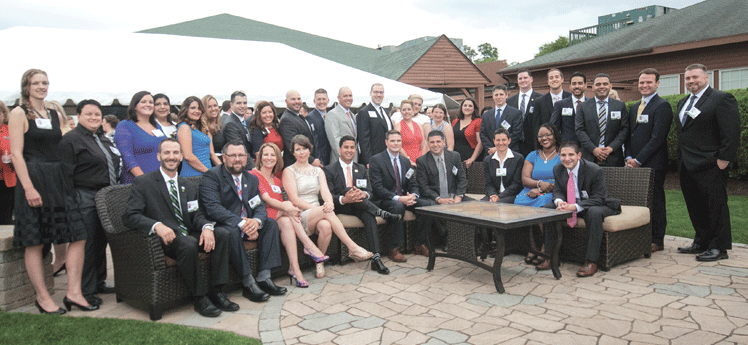
Environment and Engineering Sections
The Goat Girls Offer a Green Solution to Invasive Plants

Hope Crolius, seen here with Dan

Hope Crolius, seen here with Dan, says the goat business came with a steep learning curve.

Hope Crolius remembers that it all started … well, quite organically.

She had left a career as a writer — she started as a reporter with the Daily Hampshire Gazette and later freelanced, working for several area colleges — and was doing well with her next entrepreneurial venture, known as Artemis Garden Consultants, LLC, what she described as a “garden-revival company.”

The customer inquiry that changed and enriched her life in several ways came in 2010 from a landowner in Shutesbury who had a barn and pasture that hadn’t been visited by grazing animals in some time and was starting to fill in with what Crolius called “early-succession woody plants” — red cedar and certain kinds of cherries.

“I said flippantly — I wasn’t serious, but in a way, I was — ‘you should really just get some sheep,’” she recalled. “And he took me up on it — he said, ‘go for it,’ and I went for it.”

Actually, before going for it, she did a little research and quickly discovered that what this landowner really needed were some goats, not sheep, because the former ‘browse’ while the latter graze, an important distinction. And she went about getting some — not for him, as it turned out (although she didn’t really know it at the time), but for her.

“I was driving by a farm in Amherst and saw a herd of goats wandering around the farmyard,” she recalled. “I knocked on the door and said, ‘would you ever be interested in selling any of these goats?’ and she said, ‘I’d definitely be interested; we have too many of them.’”

Crolius eventually acquired three mixed-breed ‘mongrels’ that would form the foundation of an enterprise known now as the Goat Girls.

It’s known not only throughout this region, but across the state and in other parts of New England. That’s because there aren’t many operations like this in the Northeast — they are more popular in other regions — and also because there is a rapidly growing constituency that, like the landowner in Shutesbury, would prefer to clear brush and invasive plants in a decidedly green fashion.

Indeed, while this is definitely the off season for the venture’s 19 goats — who are spending their time enduring the cold (something they do rather easily) while dining on a large supply of donated Christmas trees, among other things — the spring’s schedule is filling up, and fast.

And it’s been that way almost from the beginning.

“Right away, the phone started to ring; people would say, ‘I hear you have goats to rent,’” she told BusinessWest. “This thing just happened, and it just took off.”

The Goat Girls’ 19 goats

The Goat Girls’ 19 goats are currently feasting on hay and Christmas trees, but soon they’ll have tastier fare, such as poison ivy and bittersweet, to munch on.

Today, teams of goats (usually six or seven to a team) are dispatched to jobs large and small, at a rate that averages $575 per week. Clients have ranged from homeowners looking to clear a portion of a two-acre lot to the administrators of the 64-acre Boulder Brook Reservation in Wellesley, who hired the goats and their herders to clear the poison ivy, wild grape, and bittersweet that started invading the premises after crews for a nearby landowner cut down nearly 100 trees in 2011, letting the sunshine in.

There is no five-year plan for this venture or something approaching a firm, long-term strategy, but there is already talk of expansion and perhaps even licensing or franchising the operation. Meanwhile, one new, and popular, twist is an intensive training course the company offers to those from outside its service region who may want to start something similar.

It all sounds easy, but there was actually a steep learning curve involving everything from pricing to goat maintenance and veterinary care; from the ins of outs of electrified fencing to simple math — how many goats does it take to clear a certain amount of acreage?

For this issue and its focus on environment and engineering, BusinessWest takes a look at that learning curve and how the Goat Girls, even though it remains a very small venture, has became a rare breed of business success story.

Branch Offices

While quite proud of what she’s done with the Goat Girls, Crolius stressed repeatedly that this concept is certainly nothing new or imaginative — at least not the part about goats doing the work of lawnmowers, pruners, and herbicides.

Indeed, she said goats are second only to dogs in terms of the origin of their domestication, and there are those who say they actually predate canines in that regard. Meanwhile, goats have been used to clear brush and unwanted plant species for centuries; during World War II, when gas was heavily rationed, homeowners, golf courses, and park superintendents used sheep and goats to keep their grounds in order.

More recently, goats have been used in forest-fire-prone states like California to clear the undergrowth that can fuel such a blaze and extend its life, and sheep now patrol a number of landmarks in Paris as an alternative to lawnmowers.

What is relatively new — again, at least in this region — is the notion of goats as a viable, profitable business, said Crolius, stressing the importance of both those adjectives.

This brings her back to that learning curve she mentioned, because, in her estimation, it took probably three years to “figure all this out” and enable this subsidiary to finish a year in the black.

By ‘all this,’ she was referring to everything from goat diet and nutrition to determining how much the animals could clear in a day, week, or month; from understanding good goat working conditions (they don’t mind heat or cold, because they’re essentially desert animals, but really don’t like rain or wind) to determining how many times a crew would have to return to a site to effectively subdue a patch of poison ivy (three or four, by her count).

There were also lessons in worker productivity (only females and spayed males, known as wethers, are used, to make sure the help is focused solely on their work).

The process of learning these and other things began not long after that Shutesbury landowner said ‘go for it,’ said Crolius, adding that her foray into goats was a natural extension of what she was doing at the time.

And that was fulfilling an entrepreneurial urge that took her far afield from journalism, quite literally.

“I gave up writing for something more physical, and also to have my own time,” she explained. “Of course, I learned that going into business for yourself does nothing of the sort — a 9-to-5 job looks positively luxurious right now.

“But I still wouldn’t trade what I’m doing for a 9-to-5,” she went on, adding that Artemis Garden Consultants specializes in what she called “non-mechanical dimensions of landscape care — anything but mowing and blowing,” with a heavy accent on weeding, edging, and mulching.

The Goat Girls

The Goat Girls venture now has a wide array of clients, each one looking for a ‘green’ solution to their landscaping problem.

“If someone’s yard is tired and overgrown, or they don’t have time to take care of it, we’ll come in and prune small trees and shrubs,” she noted. “We’ll weed … we give definition to things.”

Over the years, she had built up a large portfolio of residential and commercial clients, most of them in Hampshire and Franklin counties, and wasn’t exactly looking to diversify into four-legged brush clearing, but, as they say, opportunity knocked, even if she didn’t realize it at the time.

Crunching the Numbers

The goats Crolius purchased from that farm owner back in 2010 went for roughly $100 each, or a fraction of what a purebred Labrador retriever puppy might run.

But while the animals, at least the mixed-breed varieties, certainly won’t break the budget, the overall startup costs, though light compared to some other businesses, are not insignificant, she told BusinessWest. One must factor in housing for the animals — she’s renting about a quarter-acre within a large farm in East Amherst and built an elaborate pen/office complex on it — as well as transportation to get the goats to and from a job; the electrified fencing that keeps them focused on their assignment and not the roses, hostas, or geraniums that they will also eat; and other factors.

But there is certainly enough demand for ‘green’ landscaping services, not to mention the frequent requests for goats for children’s birthday parties, festivals, and other occasions, to recover those costs, said Crolius, adding that the key to profitability is analyzing the numbers, making smart decisions with resources, and creating a workable model, which, as she said, took some time.

Dan Green, president of the Green Internet Group, who helped Crolius get the operation off the ground and expand it, and currently handles the Goat Girls website, agreed, saying this amounts to a new business sector, one where the entrepreneur has to learn by doing.

“If you want to start a dry-cleaning operation or a photo studio, you have many other ones to compare benchmarks to so you can figure out where that curve should be,” he explained. “There are not a lot of comparison-shopping opportunities for a goat business.”

Over time, Crolius calculated that a team of seven goats could clear a quarter-acre in a week, or an acre a month, performance that varies with the density of the brush and the frequency of fence moving. This allowed her to effectively price and allocate her services for what usually amounts to a 28-week season.

But as she became more experienced, Crolius, like all successful business owners, learned new ways to become more efficient and, therefore, more profitable.

For example, she realized a few years in that she could reduce expenses significantly, and make customers even more happy (in most cases, anyway), by leaving the goats with a client for the duration of their assignment (they hang in a portable pen), rather than dropping them off and picking them up every day, along with their herders.

“You instruct the client on how to take care of them, and believe me, the clients can’t get enough of them; they change their water, they talk to them … they hate to see them go,” she said, adding that, because most clients have gardens, they’re even grateful for what the goats leave behind after all that munching.

While making her foray into goats profitable, Crolius has, along the way, taken a number of steps to make it more rewarding personally. One is an extension of what she called an apprenticeship program at Artemis Garden Consultants that enables young people to join the venture as interns and gain invaluable experience toward a variety of different careers.

“My joy in life is hiring young people and giving them the opportunity to have hands-on, on-the-job field training,” she told BusinessWest, referring to her gardening business while noting quickly that she has taken that same passion to the Goat Girls.

Indeed, as she was saying those words, as if on cue, Emilie Rabideau, a pre-veterinary-science major at nearby UMass Amherst, arrived to help tend to the goats.

“It’s a really good résumé builder,” she said, “as far as experience and learning how to manage a business at the same as you work with the animals.”

As for the training program, set to commence in a few weeks, Crolius stressed that she is not breeding competition, but rather creating opportunities for more goat businesses and, therefore, more ‘green’ landscaping.

Over the course of two intense days, attendees can learn about everything from field work to care for the animals to marketing their goat venture, said Crolius, noting that there are three sessions slated for this spring, and a great amount of interest has been shown.

Looking ahead, but not that far, because that’s difficult to do in this business, Crolius said expansion is possible, although there comes a point where simply adding more goats is not cost-effective. Meanwhile, licensing the concept is an option that’s being explored.

For now, she’s focused on honing that business model, providing opportunities for young people to learn while doing, and making the region more green while also making some overgrown areas, well, far less green.

Brush with Fame

As she wrapped up her talk with BusinessWest, Crolius went to assist Rabideau with letting the goats into the front portion of their pen for a late-afternoon meal of hay.

Before doing so, she issued a recommendation — more like a warning, actually — to steer clear, because the goats will not go around anyone who happens to be standing in their way once the gate is opened.

It was a warning well-heeded.

Soon, the extreme energy the goats exhibited as they raced for their dinner will be directed toward the eradication of brush and invasive plants of all types and at all manner of venues.

Spring is almost here, which means it’s time for the goats to shine and give a new definition to the phrase ‘green business.’


George O’Brien can be reached at [email protected]